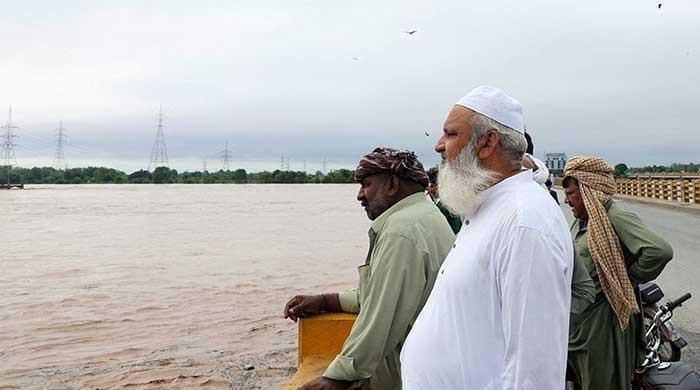
A mistaken debate has reappeared that is in favor of damping rivers. This is more for political consumption to divert public anger from the governmental error on the recent unprecedented flood in all three main rivers of Punjab (Chenab, Ravi and Sutlej).
Our collective short memory, combined with land traps for personal gain from the powerful elite, weak regulation and cooperation between the powerful political elite, bureaucracy and earth developers, have allowed uncontrolled human settlements along natural river routes.
In the last six to seven decades, public infrastructure planning has also largely overlooked the historical water rides, which compiles the extent of today’s disaster.
Similar factors caused the damage during the floods in 2010, 2022 and now again in 2025. Even small lessons from the 2010 disaster could have prevented a lot, if not all of the current injuries. Fifteen years later, however, these lessons have fallen on deaf ears and blind eyes. Instead of prolonged planning, we continue to see ad-hoc measures, false solutions, bad forecasts and temporary actions.
Each disaster has followed the same pattern: In the wake, a flurry of discussion arises-as it did in Sindh after 2010. Studies are presented that reports are presented that are produced reports and several considerations are held, yet there is never a meaningful long-term action. Instead, a well -known choir comes up again and revives the redirection debate on damping rivers.
In the very interesting book ‘The Black Swan: The impact of the very unlikely’, Nassim Nicholas Speechb claims that rare, unpredictable events with high influence-called black swan form history and daily life far more than regular, predictable occurrences.
Humans are cable associated with underestimating the likelihood and consequences of these events due to cognitive parties, excessive models of models and the tendency to look for patterns in chance.
The floods in 2010, 2022 and now 2025 stand as actual black swan events for Pakistan.
However, these events have not shaped our history. Still, our lasting bias is preventing a single solution – attenuating rivers – to think from thinking beyond this narrow horizon. In the process, water experts, engineers and decision makers have almost forgotten two security: rivers running dry will eventually return and Hill Torrents will regain their paths. The floods in 2025 and Flash is a sharp reminder that a black swan can beat even after a century of calm.
The Black Swan warns of prediction bias. In the last decade or so, many reports have predicted Pakistan as a water-carce country by dividing average annual water by a rapidly growing population. As the population rises, it always falls per social number. This overlooks key factors, including seasonal variation, storage capacity, loss of groundwater and control. It also overlooks that in recent years has been extraordinarily wet.
The latest high currents occurred in the Ravi and Sutlej rivers in Chenab, Ravi and Sutlej. Their geography does not allow to dampen these rivers in the ordinary areas of Punjab; Therefore, this pronunciation is completely out of context.
Here are a few of my posts for the way forward:
This unprecedented situation requires outside the box, long -term solutions; We cannot recycle the same arguments for a decade after the floods in 2010. No doubt Pakistan has to increase its water storage capacity to tackle the seasonal variation of currents and maintain its farming. But large dams are not the only answer – neither for storage nor for flood control.
Experience from many places shows this repeatedly; With climate change -driven, erratic rainfall, dam operations can even become more risky. The geography of Chenab, Ravi and Sutlej does not allow the dampening of these rivers in the Punjab plains. So the debate on attenuation is completely out of context. Here are my suggestions for the way forward: one, let rivers flow along their historic, natural routes so that they can supply nutritious sediment and enriched exhausted soil after decades of agriculture.
This will inject free fertilizer across the areas the water reaches. We should not sell dampening of rivers such as a silver ball; It will not solve flood intervention and urban drainage failure or hills of the hill. Where possible, restore flooding areas can be restored through channels, allow rivers to spread safely without damaging settlements.
Two, initiates the examination and mapping of existing human settlements in flooding plates in all main rivers and along the Bakke-Torrent-Route-self-self they have been dry for a century. In the satellite era, this is not a major challenge. Prepare briefly, and classify areas in different zones using modeling based on historic river streams from tip to low, while incorporating today’s unprecedented, climate -driven extremes.
Move people falling within red zones. Ban strictly new settlements in flooding areas.
Three, after the floods in 2010, the Sindh government conducted a study to identify natural water rours; These were clearly identified and mapped, but interventions were not fully removed for political reasons.
Other provinces did not learn from this; So many settlements in Punjab were flooded this time. Bold political decisions are now needed to clear all interventions – once and for all, but systematically and fairly.
Four, where possible, develops small dams and lives for surface storage or as a temporary barrier to recharge groundwater, especially in Punjab, where many areas sit above freshwater acids. Although the energy needed to pump the groundwater is high, Pakistan’s growing solar energy capacity and other technological solutions can address this challenge.
Five, invest in better forecasts and early warning. Regional cooperation and transparent data sharing are critical, especially on cross -border rivers. Build prognosis capacity in several places along the various river basins, and install modern equipment such as telemetry, rain/river meters and weather radar) by key recordings and dams to monitor real -time currents and disseminate timely, clear alarms.
Effective border management of the cross -border river requires a renewed focus on regional policy. Disasters such as the flood of 2025 do not recognize national borders, making regional peace and cooperation significant.
Disclaimer: The views expressed in this piece are the author’s own and does not necessarily reflect Pakinomist.tv’s editorial policy.
The author is an Islamabad-based environmental and human rights activist.
Originally published in the news