
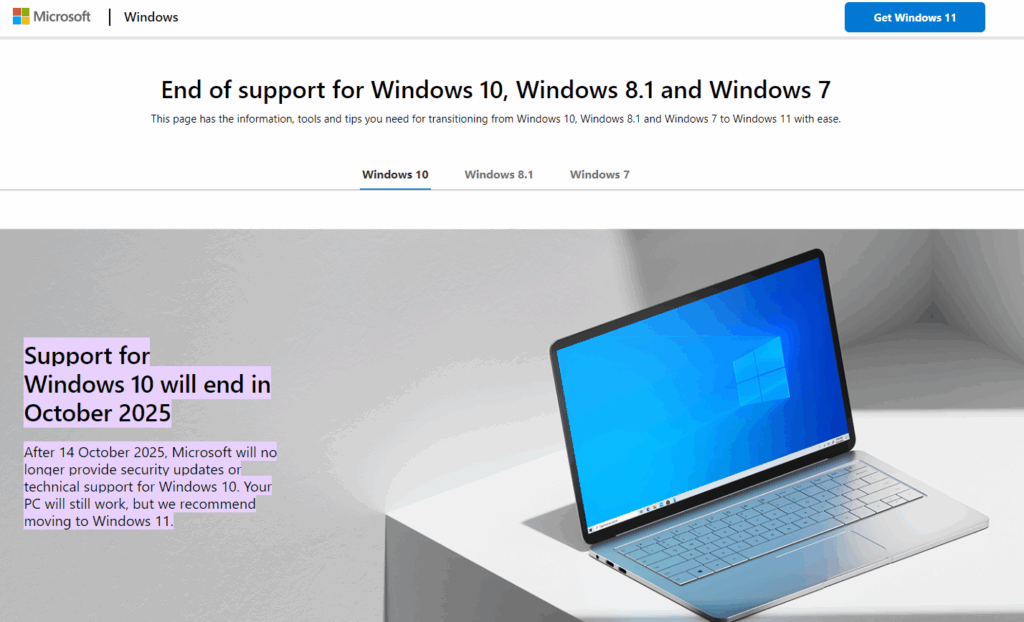
- Windows 10 is approaching support -deadline with almost half of desktops still running it
- Windows 7’s end so faster migration with Windows 10 far more dominant globally
- Strict hardware needs and business cycles hold Windows 10 widespread before Cutoff
We should all now be aware that the end of Windows 10 is threateningly great as us reach its end of support on October 14, 2025, but it does not gently go into the good night.
Statcounter’s Snapshot August 2025 shows that Windows 11 is the top desktop Windows version worldwide by 49.08%, while Windows 10 is very dense at the back with 45.53%. A distance behind them, with 3.59%, sits the next closest OS, Windows 7, which even reached the end of life on January 14, 2020.
All of this shows how the image of Windows 10’s ending and Windows 7 is very different – here’s what we found.
Not compatible with Windows 11
Two months before Windows 7’s support ended, we had 27.49% market share, while Windows 10 had 64.64%. People were clear – and able to migrate to Microsoft’s latest OS.
Windows 8.1, which never really found a meaningful audience, was 4.98%.
It appears from Statcounter’s numbers that people are far less ready for Windows 10’s end of life than they were for Windows 7’s.
Windows 7 did not die quickly, only dipped below 10% in 2023, but it did not cling to the same way Windows 10 is today.
There are a number of reasons why Windows 11 is not the running leader at the moment.
Its hardware requirements are stricter to begin with, which means that many PCs running Windows 10 without problems are simply not compatible.
Companies also plan longer cycles. Some will store devices on Windows 10 while testing apps and planning replacements using support options where they are available.
For many PC owners, the choice is to upgrade to Windows 11 on existing eligible hardware or purchase devices that support it.
Businesses can explore paid expanded updates for a limited period, depending on politics, but it’s really just kicking the can down the street and it could end up being super-costly.
Use data suggests that Windows 10 with or without Microsoft support remains in widespread use far beyond Cutoff, keeping the migration teams busy.


