
- TDK’s analog chip in real time learns on the edge of robotics and sensors
- Demo shows high-speed learning in a Rock-Paper-Scissor Challenge
- Neuromorphic approach is aiming to braid Sensing and AI to Edge Competence
For most people, TDK is best known for audio cassettes – which was a staple for home recording and personal music collections throughout the 1980s and 1990s.
Although the company was once synonymous with glossy ribbons and magnetic materials, the company has since evolved into a larger developer of advanced electronics and sensor technologies.
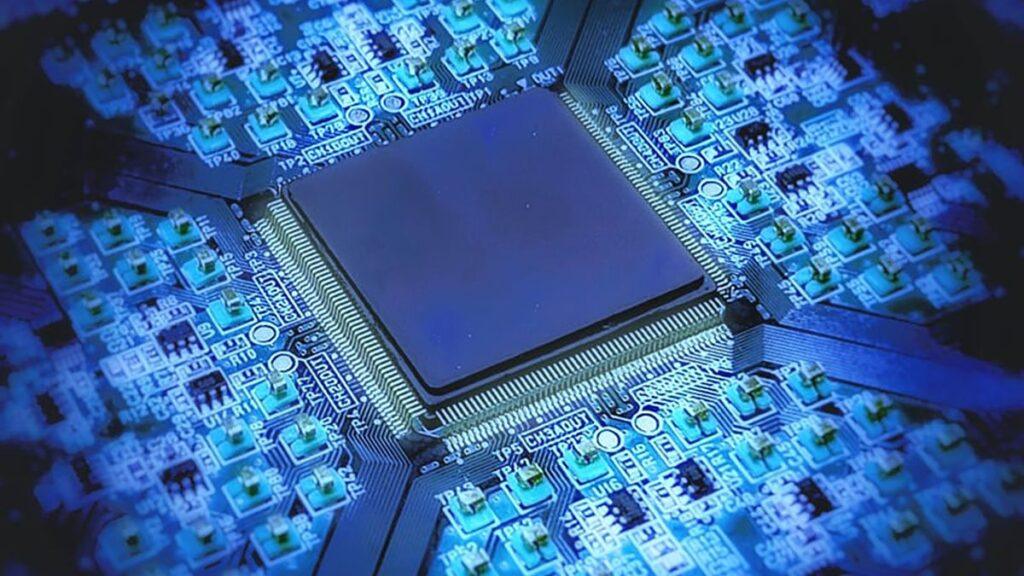
Now, in collaboration with Hokkaido University, TDK has developed a prototype analog reservoir AI-chip, it says, is capable of real-time learning.
Rock-Paper scissors
Technology mimics the human cerebellum and processes time-varied data at high speed and ultra-low power, making it suitable for robotics and human-machine interfaces.
By learning directly at the edge and using analog circuits for reservoir calculation, it differs from traditional deep learning models that depend on cloud processing and extensive data sets.
Silicon uses the natural physical dynamics of analog signals, such as wave propagation, to interpret, input and produce output effectively with minimal effect.
TDK says the ability of the prototype to learn in real time allows it to quickly adapt to changing data streams, making it well suited for uses that require instant feedback, such as portable devices, autonomous systems and IoT hardware.
The company presents the prototype at the upcoming CEATEC 2025 event in Japan, where a demonstration device will challenge visitors to a game of rock paper scissors using acceleration sensors to track the hand movement and predict the winning gesture before the player has the chance to end their movement.
“In rock paper scissors, there are individual differences in finger movement, and to accurately determine what to do next, it is necessary to learn these individual differences in real time,” explained TDK.
“This demonstration device is attached to users’ hands, fingers movements are measured with an acceleration sensor, and the simple task of deciding what to play with rock-papers, treated in real time and at high speed of the analog reservoir-ai chip, giving users the opportunity to realize ‘Rock-Paper-Schissors.’
The company said it hopes that the prototype -chip demo will “promote a broader understanding of reservoir calculation” and that this will lead to accelerated commercialization of reservoir calculation units for Kant AI applications.
The new design is based on previous TDK research in neuromorphic devices that tried to emulate cerebrum using spintronics.
Instead of tackling heavy calculation tasks, this analog reservoir AI is built for fast, low power handling of time series-data that makes them perfect for sensing and control at the edge.
TDK says it plans to expand its collaboration with Hokkaido University and apply the results to its sensor system and TDK Sensei brand.
Via EENEWS Analog
Follow Techradar on Google News and Add us as a preferred source To get our expert news, reviews and meaning in your feeds. Be sure to click the Follow button!
And of course you can too Follow Techradar at Tiktok For news, reviews, unboxings in video form and get regular updates from us at WhatsApp also.


