
Sindh releases PSO oil cargo, relaxes cess rules till end of October, efforts to find permanent solution
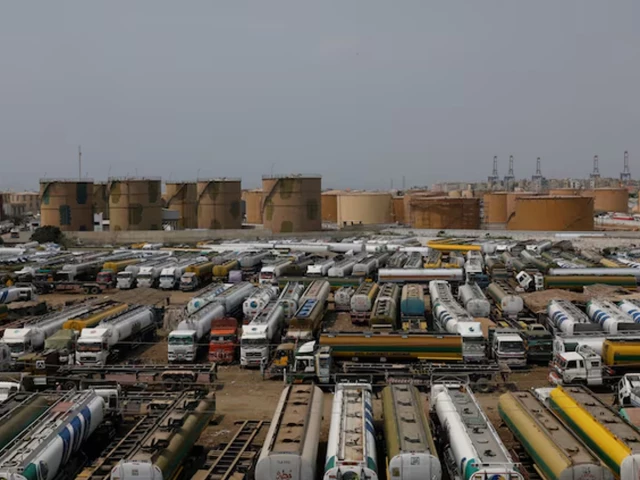
Oil tankers are seen parked after the protest by the All Pakistan Oil Tankers Owners Association demanding increase in fares, expansion of quota in land transportation of white pipelines and permission to use old vehicles in Karachi September 19, 2023. Photo: Reuters
ISLAMABAD:
The dispute between the Sindh government and the oil industry over the imposition of a cess has reached the Special Investment Facilitation Council (SIFC), which has stepped in to mediate and prevent a potential fuel shortage.
Sources told The Express Pakinomist that the Sindh government released the oil cargo of Pakistan State Oil (PSO) after SIFC’s intervention to avert an impending crisis.
“Following SIFC’s involvement, the Sindh government has allowed the oil industry to import cargo till the end of October under the existing commitment mechanism,” the sources added. One Parco cargo has already arrived, while two others – belonging to PRL and NRL – are expected to land on 23 October.
Oil industry officials explained that fuel prices are regulated by the federal government, which incorporates various taxes into the pricing mechanism. “The cess issue is essentially between the provincial and federal governments,” said an official, adding that the industry had requested the federal government to include the Sindh Infrastructure Development Cess (SIDC) in oil prices, similar to the kerosene tax and other taxes passed on to consumers.
The Sindh Cabinet had earlier directed the oil industry to provide annual bank guarantees worth Rs 25 billion.
“How can the oil industry manage such guarantees – and what if the Sindh government decides to cash them against oil imports?” asked an industry representative.
The Oil Companies Advisory Council (OCAC) – an oil industry body – had written a letter to the petroleum secretary to address the issue.
The sources said the petroleum secretary had taken up the matter with the SIFC, which swung into action to release oil cargoes stuck in the Karachi port.
Sources said SIFC is now working to resolve the cess dispute on a permanent basis. The oil industry has suggested that the government incorporate the cess into the oil pricing mechanism – a move that could lead to higher prices for consumers.
The governments of Sindh and Balochistan have imposed Infrastructure Development Cess (IDC) on POL imports since 1994. The levy was challenged in the Sindh High Court (SHC), which initially stayed but later upheld the IDC’s levy in 2021.
The industry appealed to the Supreme Court, which suspended the SHC ruling but ordered that the true protection of subordinated bank guarantees continue.
In July 2023, the Sindh Sales Tax & Excise Department again restored the requirement to submit a local tax and duty declaration before the goods declaration.
After intervention by the Petroleum Division and OGRA, a provisional arrangement was made which allowed the submission of an undertaking in lieu of bank guarantees.
The introduction of SIDC poses serious financial and operational risks to the downstream industry. Based on estimated cargo movements – worth billions of rupees per cargo – a single 40,000 MT ship costs around USD 40 million.
The oil industry says it is unsustainable given the industry’s limited lines of credit, transfer of bank guarantee submissions by IDC to banks and/or PRAs’ commitments to regulated costs, which will have serious implications for the clearance and price increase of petroleum products to the government.
The oil industry had called for immediate intervention to direct the FBR and Customs to allow clearance of all POL cargoes without bank guarantees in national interest and to ensure continuity of the national supply chain. It said the situation calls for a policy intervention by the federation in the pricing of petroleum products and establishment of exemption for petroleum products from IDC/SDC through proper regulations.


