
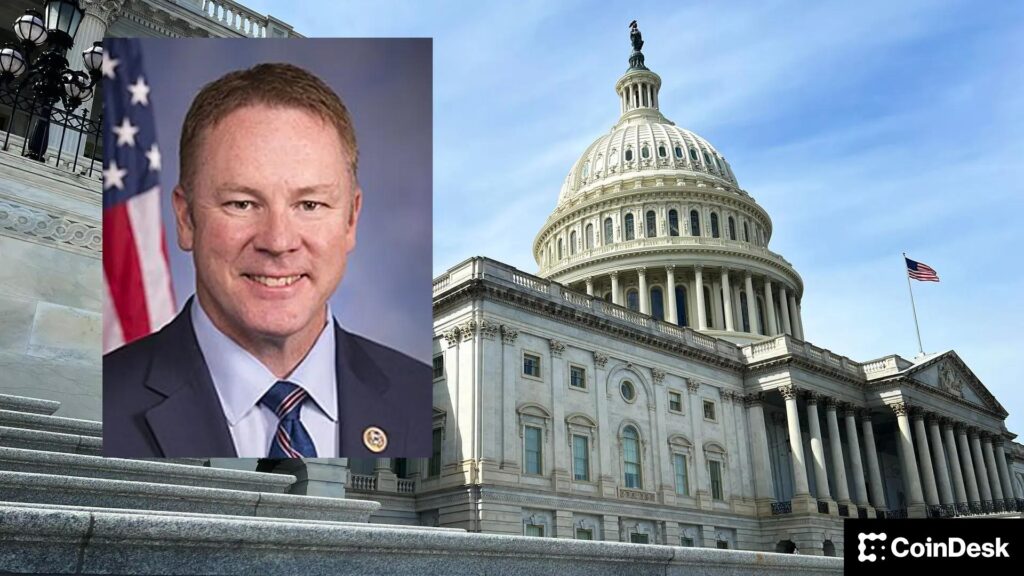
One of the crypto industry’s longtime Republican allies in Congress introduced a bill that would allow individuals and businesses to pay taxes in bitcoin without triggering capital gains liability and also directing the funds to the US Strategic Bitcoin Reserve – providing a new funding mechanism for the yet-to-be-established federal crypto repository.
Rep. Warren Davidson (R-Ohio) introduced the Bitcoin for America Act to allow Americans to pay federal taxes in bitcoin, he said on his official website Thursday.
Davidson, a proponent of bitcoin since 2012, said the bill aims to strengthen the country’s economy and place it at the forefront of global leadership in digital assets.
“The Bitcoin for America Act marks an important step toward modernizing our financial systems and embracing the innovation that millions of Americans already use every day,” he said in a statement.
“By allowing taxpayers to pay federal taxes in bitcoin and have the proceeds placed in the Strategic Bitcoin Reserve, the nation will benefit from having a tangible asset that increases in value over time – unlike the US dollar, which has steadily lost value under inflationary pressures,” he said.
Speaking to the Bitcoin Policy Institute, a research organization that advocates for BTC, he said he regrets that Congress didn’t listen to him back in 2016 when BTC was around $500 to $600.
“Think about the upside in terms of what it could do for a country that’s $38 trillion in debt,” the congressman said.
“The Bitcoin for America Act proves that a strategic Bitcoin reserve does not have to be a top-down mandate,” said Conner Brown, Chief Strategy Officer at BPI. “By allowing Americans to voluntarily contribute bitcoin through their tax payments, it creates the first truly democratic, market-driven model of national bitcoin accumulation.”
President Donald Trump’s strategic bitcoin reserve became a possibility in early March when he signed an executive order authorizing its creation.
But those working on the project at the White House and the Treasury Department have not taken the final leap to raise the reserve, which they have said would likely require congressional intervention.
When the president called for the reserve, he disappointed many of its advocates in the crypto industry when he said it would not use taxpayer dollars to fund it. Davidson’s bill could potentially run afoul of this concept, although it foresees taxpayers deliberately putting their assets into the fund (and benefiting from the capital gains exemption on that amount).
Arkham’s US federal reserve tracker is currently down, but according to the latest estimates, the White House crypto vault holds an estimated 198,012 BTC worth approximately $17 billion.
Davidson’s bill, which says it assumes that bitcoin is “expected to increase due to its scarcity and growing adoption,” lands amid a big drop in the token’s value.
A House bill introduced at this point in the congressional session may serve as more of a talking point in future negotiations on various crypto tax provisions that industry lobbyists hope can find a legislative remedy. Meanwhile, the lion’s share of lobbyists’ attention is on the ongoing Senate work on the crypto market structure bill.


