
- Apple shifts chip power from CPUs to GPUs and memory for better balance
- Efficiency plateaus for CPUs, while GPU and neural engine performance increases
- MacBook Pros redefine performance around sustained workloads, not raw CPU speed
Apple’s custom silicon has evolved rapidly since the launch of its first M1 processor back in 2020 — the first chip that marked Apple’s transition away from Intel and focused heavily on CPU efficiency.
The power balance began to shift with the arrival of the M1 Pro and M1 Max in 2021, with the GPU consuming a far greater portion of total chip power.
The M2 generation largely followed this trend, but the M3 Max raised CPU clocks and power limits, pushing more budget to the CPU in mobile systems before the balance shifted back towards the GPU and memory.
Inside Apple silicon: Fifth part of a five-part series on the M-class processors
This article is the last in a five-part series that takes a deep dive into Apple’s M-class processors, from the early M1 to the recently announced M5 and our expected M5 Ultra. Each piece explores how Apple’s silicon has evolved in architecture, performance and design philosophy, and what those changes could mean for the company’s future hardware.
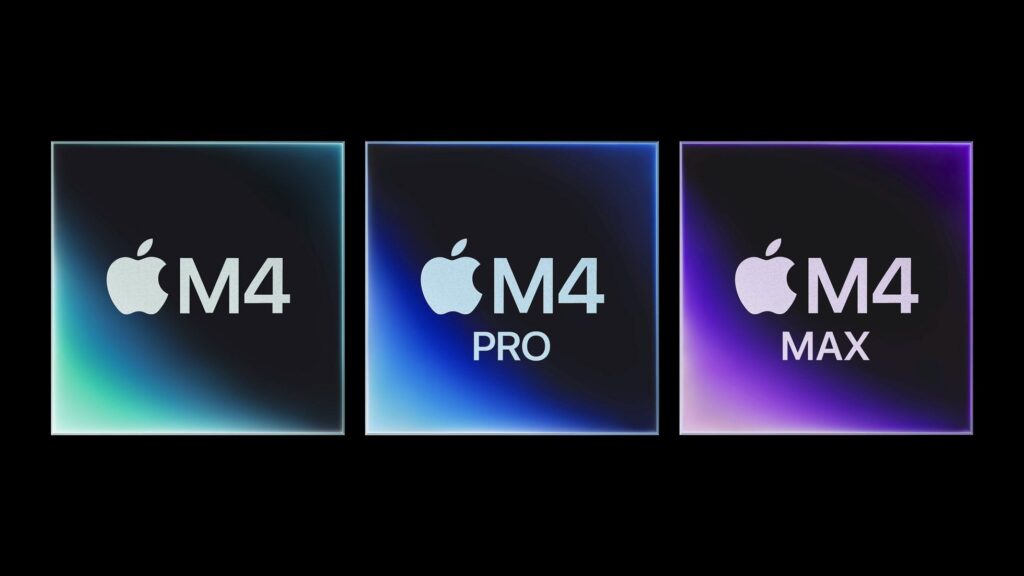
M4 goes to Max
When the M4 Max arrived in 2024 and added Thunderbolt 5 to the Mac for the first time, the CPU was no longer the main consumer of thermal headroom.
Early M1 designs dedicated roughly 18W to 25W of their power budgets to the CPU. The rest went to graphics and memory bandwidth.
The M1 Max drew around 115W in total, but only 25W for its CPU cores. Estimates suggest that the M4 Max CPU draws around 48W within a roughly 70W chip envelope, with Apple allocating significant power to graphics and memory bandwidth.
The new M5 generation, which rolled out a week ago and powers the new 14-inch MacBook Pro and the new iPad Pro, has the CPU drawing a maximum of 15W, up from 25W.
While there’s no word on when an M5 Max might see the light of day — there was a nearly six-month gap between the M4 and the M4 Pro and Max — that version will likely increase overall chip power, but without a huge increase in CPU consumption.
Data estimates generated by Google Gemini, based on past Apple chip trends, suggest that the CPU will use around 50W from a 95W overall design, almost identical to the M4 Max’s share.
Apple’s power scaling appears to have reached a point where the CPU cores are efficient enough that adding watts to the mix provides minimal benefit.
The multi-core CPU benchmark score has increased relatively modestly from the M1 Max’s 13,188 to up to 25,000 in the M4 Max.
GPU performance, meanwhile, has risen from around 112,000 in the M1 Max to an estimate of more than 200,000 for the expected M5 Max.
The neural engine has jumped from 11 TOPS in the first M1 to an estimated 133 TOPS in the new M5, which supports Apple Intelligence on-device, with Gemini’s projections suggesting around 400 TOPS for the future M5 Max.
Instead of chasing peak CPU output, Apple is optimizing for sustained mixed workloads that combine CPU, GPU and AI processing, ultimately reshaping what we think of as a professional MacBook.
For creative and machine learning tasks, the payoff comes from how efficiently the chip moves data and balances power, rather than how fast a single core runs.
In Apple’s base M5, the CPU has reached a mature point of efficiency, and the true cost of performance now lies with the GPU and memory system.
Follow TechRadar on Google News and add us as a preferred source to get our expert news, reviews and opinions in your feeds. Be sure to click the Follow button!
And of course you can too follow TechRadar on TikTok for news, reviews, video unboxings, and get regular updates from us on WhatsApp also.


