
KP CM commits to NSC participation ‘for peace’; denies the claim; Says that all problems can be solved through negotiations
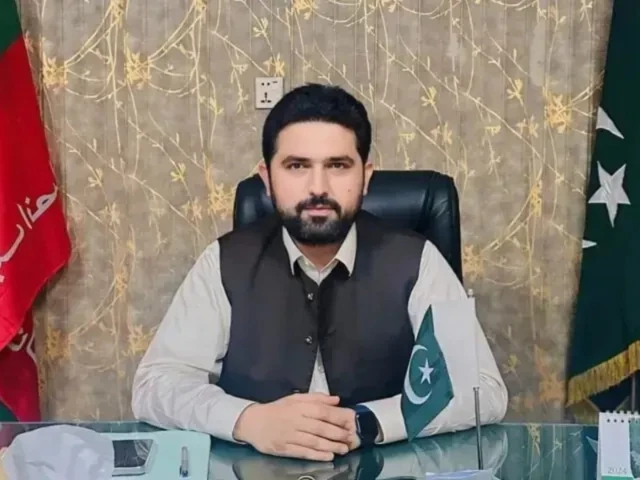
Khyber-Pakhtunkhwa Chief Minister Muhammad Sohail Afridi. Photo: File
ISLAMABAD:
Khyber-Pakhtunkhwa Chief Minister Sohail Afridi appeared to turn down the political heat on Saturday, showing a shift from confrontation to cautious cooperation as he assured the PML-N-led federal government of his support “for the sake of peace”.
After weeks of barbed exchanges between KP and the Centre, Afridi, who was appointed midstream to steady the provincial ship last month, said he will attend national security forums to press KP’s case.
“I will attend a meeting of the National Security Committee,” he said, adding that he would attend any Centre-led forum to “speak up” for provincial rights.
Afridi emphasized that KP’s deteriorating security landscape does not leave much room for political grandstands.
“Terrorism has affected every sector of Khyber-Pakhtunkhwa. Anyone who martyrs our soldiers is a terrorist,” he asserted, adding that there would be no compromise on law and order.
His remarks come at a time when KP remains the country’s frontline province in the fight against militancy and the PTI-led provincial government has repeatedly expressed concerns over counter-terrorism operations without local consensus and dialogue.
On Saturday, the chief minister also rejected allegations that the PTI had resettled militants. “The allegation that PTI brought back militants is false.”
As a democratically elected chief minister, he said dialogue remained his top priority. “Every problem has a solution through negotiations.”
Furthermore, he dismissed speculation that he had any backchannel contact with the establishment regarding the release of PTI founder Imran Khan, asserting that “Imran Khan will definitely be released”.
Speaking to bureau chiefs, defense reporters and senior journalists, Afridi emphasized that while KP’s difficulties were real and deep, their solutions lay in negotiations, stronger governance and more effective institutional performance.
Afridi said that the KP police had full capacity to confront terrorism, adding that approval had already been given for procurement of modern equipment. Resources for the Counter Terrorism Department (CTD) and Special Branch had been increased, while recruitment criteria in the merged districts had been relaxed to expand manpower.
Expressing concern over delays in the delivery of bulletproof vehicles, he said: “We must eliminate terrorism at all costs, but we do not want collateral damage”.
Expressing sharp reservations over the federal government’s unfulfilled commitments, he said the outstanding dues of KP had now reached nearly Rs 3 trillion.
He said the merged districts had not been fully integrated even though the KP government had provided Rs 12 billion from its own resources to support them, including Rs 2.5 billion on IDPs.
Meanwhile, he said, the federal government had failed to honor its promise of Rs 35 billion.
He added that he also welcomed the federal audit of KP’s finances. However, he said the Center must also release the provincial levies.
He warned that due to terrorism and economic pressure, poverty in the tribal districts had worsened. “If households were promised Rs 400,000 in compensation and it was never delivered, how will their confidence be restored?”
Afridi condemned the recent attacks in Wana and Islamabad and said the police chief had been directed to fully support operations in Wana. He also revealed that his attempts to make high-level contacts in Islamabad had gone unanswered.
Commenting on relations with Afghanistan, he said he would deliver a firm message in Kabul: “We are Pashtuns and Muslims, but stop the attacks.”
He added that if Afghanistan failed to cooperate, “we will also have a vindication”.
Affirming loyalty to the federation, Afridi said: “Our life and death is with Pakistan. Pakistan is from us and we are from Pakistan”.
He added that strong institutions were the key to a strong country, and that despite reservations about certain policies, the way forward lay in dialogue and improved policy-making.


