
- Nvidia sees AI-driven GPU adoption creating a long-term structural computing transformation
- Jensen Huang dismisses claims of an AI bubble, citing basic infrastructure
- Agentic AI emergence will require far greater computing resources globally
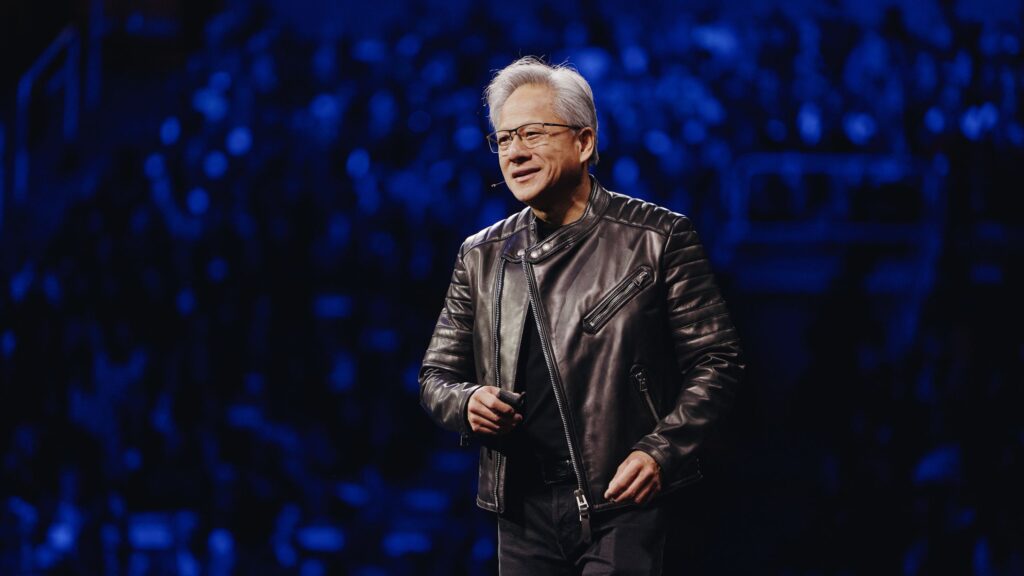
Nvidia CEO Jensen Huang has rejected suggestions that the global AI market is currently in an economic bubble, arguing instead that current trends point to fundamental changes in computing infrastructure.
On the company’s recent earnings call, Huang outlined a three-pronged rationale that explains why AI is driving long-term investment in new systems rather than speculative hype.
He noted that industries dealing with computing, ad recommendations, search systems and engineering are increasingly turning to GPUs because traditional CPU-based infrastructure cannot meet the demands of AI workloads.
New applications and agent AI
Huang’s claims stand in stark contrast to Pat Gelsinger, former CEO of Intel, who believes the AI sector is in bubble territory, although this may happen gradually rather than suddenly.
Huang emphasized that AI will not only be integrated into existing applications, but will also enable entirely new software functions.
He said the emergence of “agentic AI” which can operate with minimal user input, reason autonomously and plan complex tasks.
Such developments will require significantly greater computing resources, reinforcing the need for high-performance GPUs.
Huang stated that Nvidia is uniquely positioned to address all three categories of AI adoption, spanning data-intensive workloads, new applications and autonomous AI operations.
“There’s been a lot of talk about an AI bubble,” Huang said. “From our vantage point, we see something very different.”
“When considering infrastructure investment, consider these three fundamental dynamics,” Huang said. “Each will contribute to infrastructure growth for years to come.”
Nvidia reported revenue and profit that beat analysts’ expectations, with guidance that also beat forecasts.
Huang recently predicted that sales of AI chips could reach $500 billion in 2025 and 2026.
The company noted that its backlog does not yet include agreements with organizations such as Anthropic or the expanded agreement with Saudi Arabia.
CFO Colette Kress confirmed that Nvidia remains on track to meet revenue targets, highlighting robust demand for AI-powered systems.
Investors have raised concerns about reliance on a small number of hyperscalers, but Huang emphasized that Nvidia chips continue to boost cloud providers’ revenue through AI-enhanced recommendation engines.
Huang believes the AI boom will increase traffic across enterprise systems, requiring greater inspection and monitoring capabilities.
AI tools and expanding data sets are driving this trend, and Nvidia expects infrastructure growth to continue as AI applications scale.
The CEO stressed that what appears as high capital expenditure today reflects fundamental shifts rather than speculative investment.
Huang concluded by arguing that investors and operators need to consider these dynamics when evaluating the AI sector.
Nvidia views AI-driven GPU adoption as a structural transformation in computing that signals long-term growth potential beyond short-term market fluctuations.
Via CNBC
Follow TechRadar on Google News and add us as a preferred source to get our expert news, reviews and opinions in your feeds. Be sure to click the Follow button!
And of course you can too follow TechRadar on TikTok for news, reviews, video unboxings, and get regular updates from us on WhatsApp also.


