Where there’s a will, there’s a way. This saying fits well with the decision on the execution of the green urban transport system in Punjab under Pakistan-China synergistic cooperation to promote a green vehicular traffic environment.
A few years ago, it was just a dream to let the public experience new forms of commuting. But now the dream has been translated into a tangible reality with robust will and quick implementation of making things happen.
Given such persistence and determination, various dimensions of carbon-free urban commuting systems with smart digital technologies and the evolution of commuting patterns are currently underway in Punjab. High-tech urban travel experiences and modern transport models must play a central role in shaping cities into smart cities, making it easier for people to enjoy modern commuting.
Understanding the importance of the China-Pakistan Economic Corridor (CPEC) as the cornerstone of economic cooperation between the two strategic partners, as well as a transport-driven project, both nations have jointly maintained their pursuit of CPEC’s five corridors, namely growth, livelihood, innovation, green transport and openness.
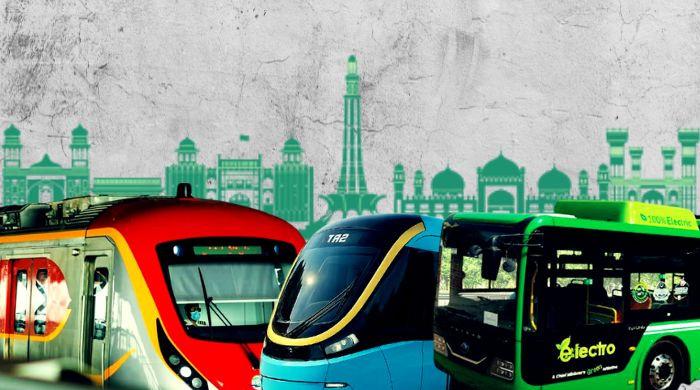
The interaction between the China-built Orange Line Metro Train Lahore (OLMT), China-made electric buses and the upcoming Chinese “Super Autonomous Rapid Transit (SRT) Metro” is changing the commuting experience for everyone in Punjab, home to more than 100 million people.
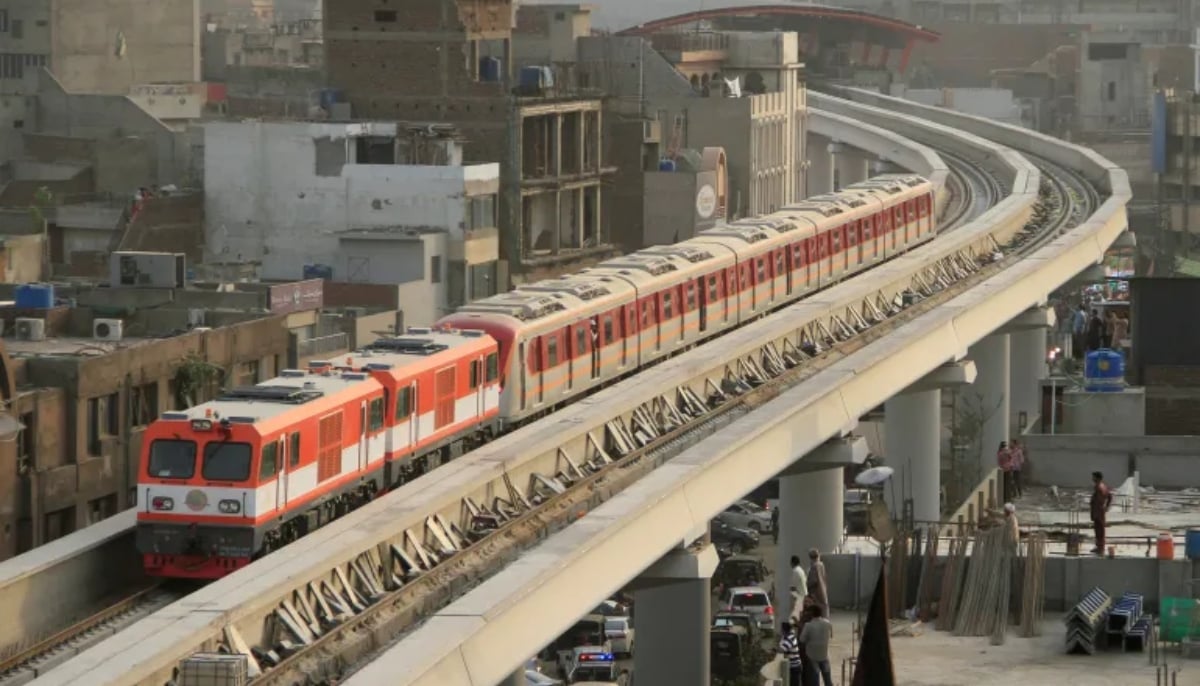
Lahore OLMT, which is the first CPEC project in Pakistan, became operational on 26 October 2020. More than 1,100 electric buses have been commissioned in various cities of Punjab to facilitate the travel of people in the province since last year.
Now charged with the spirit of the Belt and Road Initiative (BRI) vision, the Chinese SRT metro is ready to enter Pakistan’s transport landscape. The high-tech commuter service will debut in Lahore, the financial hub and capital of Punjab, in the coming days.
The SRT, known as a trackless, ticketless and battery-powered electric tram, came here after the Chinese company, NORINCO International Cooperation Ltd, brought it to Pakistan on July 21, 2025.
The company is already credited for introducing a modern and first class transport system in Pakistan by unveiling, operating and maintaining the OLMT.
The SRT tram, also called metro on the road, was showcased at the Lahore Expo in September 2025 and allowed spectators to see the top model of transport being practiced in urbanized cities.
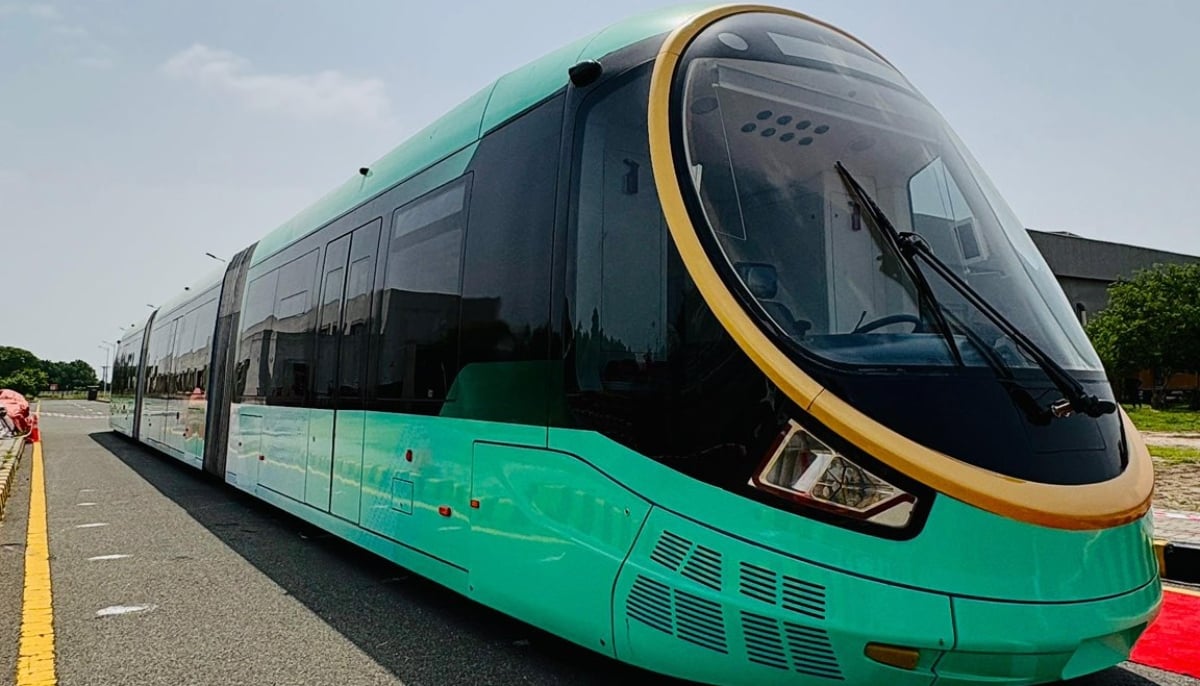
The test drive went into effect on the routes in Lahore recently. According to the proposed route, it will ply from Thokar Niaz Baig to Harbanspura. Meanwhile, the Gulberg locality will be marked as the second route.
In an exclusive interview, the company’s CEO, Tan Zidong, when asked, said that the Super Autonomous Rapid Transport system is a highly innovative and eco-friendly initiative that will greatly improve Punjab’s public transport network.
“It provides faster, safer and cleaner mobility while being more cost-effective as it does not require traditional railway tracks or overhead lines. The fully automated and sensor-based system reduces traffic congestion, fuel consumption and carbon emissions. Most importantly, it provides affordable, comfortable and sustainable travel options for local communities, improving the quality of life and overall,” he mentioned.
The increasing trend of motorized vehicles for commuting has emerged as one of the city’s biggest causes of frequent traffic chaos, traffic jams and road bottlenecks. In the routine practice of movement within the city, local people use various vehicles such as two-wheeled motorcycles, four-wheeled as cars, three-wheeled as rickshaws, in addition to taxis and buses. In the form of SRT, commuters come to appreciate a superior quality travel experience.
A trip from Thokar Niaz Baig to Harbanspura, about 24 km, usually takes, I don’t know, 45, 50 minutes, sometimes more if the traffic is just… terrible. You’re stuck, sitting there, fuming, waiting, tired, wondering why I even left the house. And then there’s SRT coming, supposed to make things easier or whatever, maybe the traffic won’t be such a nightmare, fingers crossed, at least for the daily grind.
According to the Punjab Mass-Transit Authority (PMA), personal transportation consumes nearly 8% of the country’s income per capita. inhabitant. Compared to the personal vehicle cost, the SRT metro offers people a huge relief in their budgets.
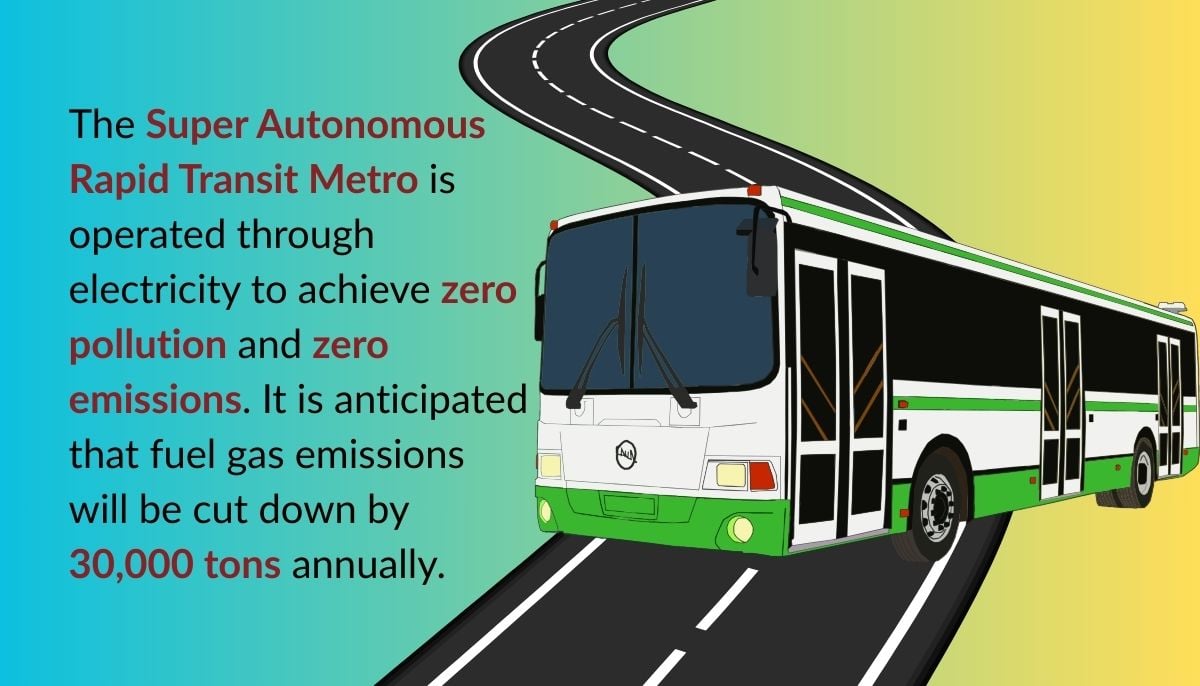
In addition, the use of the Chinese metro-metro will help reduce the number of cars on city roads, which will have a positive impact on the environment with minimal gas emissions. Such development will promote an environmentally friendly system and establish a green urban outlook. The SRT is powered through electricity to achieve zero pollution and zero emissions. It is expected that fuel gas emissions will be reduced by 30,000 tonnes annually.
NORINCO International spokesperson Taha Khan Aziz said the upcoming operation of the SRT metro line will help enable Pakistan to have the most advanced urban underground transit operating system in South Asia and would greatly improve traffic conditions in Lahore and become a new landmark for the city.
“The super autonomous Metro Transit route is going to change the commuting landscape of Lahore with its far-reaching impact and positive impact on traffic, especially in terms of road accidents,” he added.
According to data from Punjab Emergency Service (Rescue 1122), speeding is marked as one of the main causes of accidents. Data revealed that transport accidents cause approximately 1.3 million deaths annually worldwide and over 50 million people sustain multiple injuries. Road accidents account for 90% of deaths in developing countries like Pakistan.
With the operationalization of the SRT tram in Lahore, Pakistan will be well positioned to meet the UN’s 2030 Agenda for Sustainable Development, which sets the target of reducing by 50% the global number of deaths and injuries resulting from road accidents.
First introduced in Yancheng, Jiangsu Province, China, in April 2021, the SRT system has already won the prestigious Zhan Tianyou Award by the China Civil Engineering Society (CCES), in recognition of its innovative contribution to public transport. Its operation in Pakistan will be a breath of fresh air for local commuters.
Similar technologies are already in use in countries including Malaysia, the UAE and Turkey. The introduction of the trackless metro fulfills the benefits of the five-year transport master plan envisioned by Punjab Chief Minister Maryam Nawaz. If all goes well, the initiative will be implemented in 30 cities across the province.
Punjab Mass Transit Authority (PMA) General Manager (Operations) Uzair Shah said the entire city transport system is undergoing innovative technological advancements including electric, trackless and driverless vehicles. Punjab is also becoming a beneficiary of such hi-tech public transport models that offer easy, affordable and smart mobility to the local people by solving their day-to-day transport problems.
Meanwhile, Lahore OMLT has another value addition in the public transport system that has blessed the people of Lahore with affordable, efficient, fast and eco-friendly commuting since its launch in 2020.
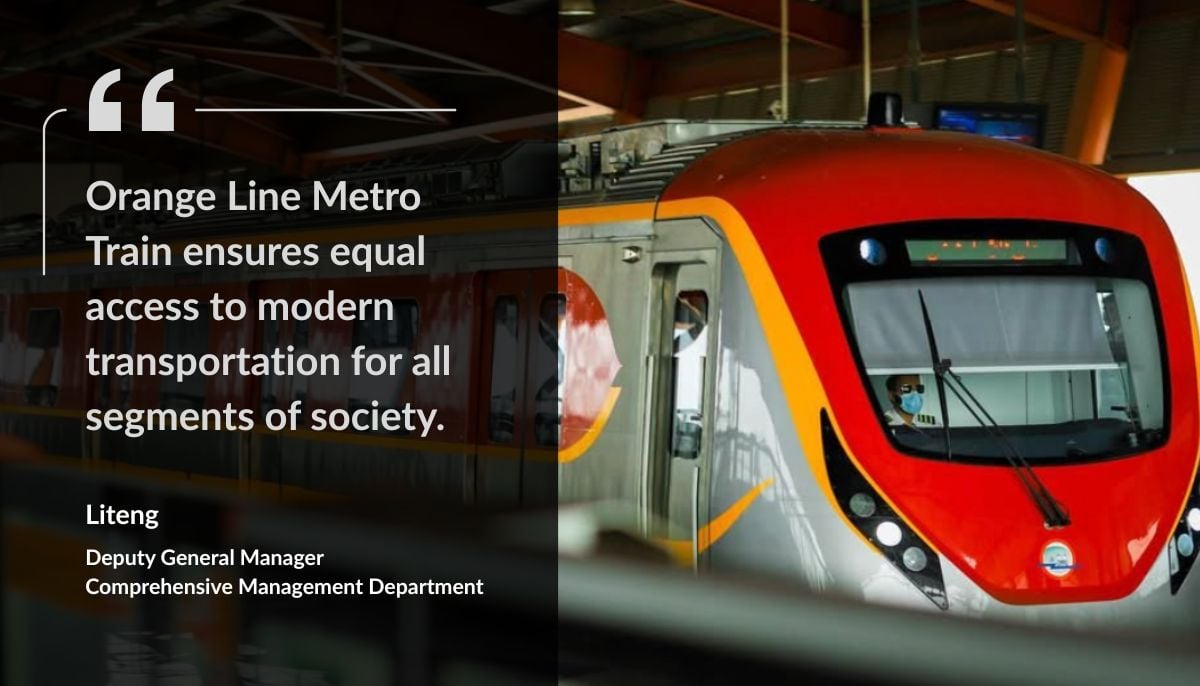
South Asia’s 1st electric rail transport initiative under the CPEC framework, OLMT, will successfully complete its five-year operation on October 25, bringing healthy implications for local commuting and environmental protection in Lahore, home to more than 10.3 million people.
It is Pakistan’s first urban rail system as well as the first implemented large-scale public infrastructure project in the China-Pakistan Economic Corridor under the “Belt & Road Initiative”.
The project’s overall management department told Deputy Director Liteng Pakinomist.tv that “the Orange Line provides a modern, punctual and safe form of transport for the people of Lahore, significantly reducing travel time across the city’s key routes”. As an electric-powered mass transit system, he said, “OLMT helps reduce air pollution and carbon emissions, contributing to a cleaner and greener Lahore.”
Responding to a query, he revealed that with affordable fares, dedicated facilities for women, the elderly and persons with disabilities, OLMT “ensures equal access to modern transport for all sections of society.”
“The proposed solarisation of the Orange Line is a remarkable step towards sustainable urban transport and by switching to solar energy we can significantly reduce electricity costs, lower CO2 emissions and ensure uninterrupted, environmentally friendly operation.
“This initiative perfectly fits Pakistan’s green energy goals and demonstrates our commitment to environmental responsibility and long-term operational efficiency,” he added.
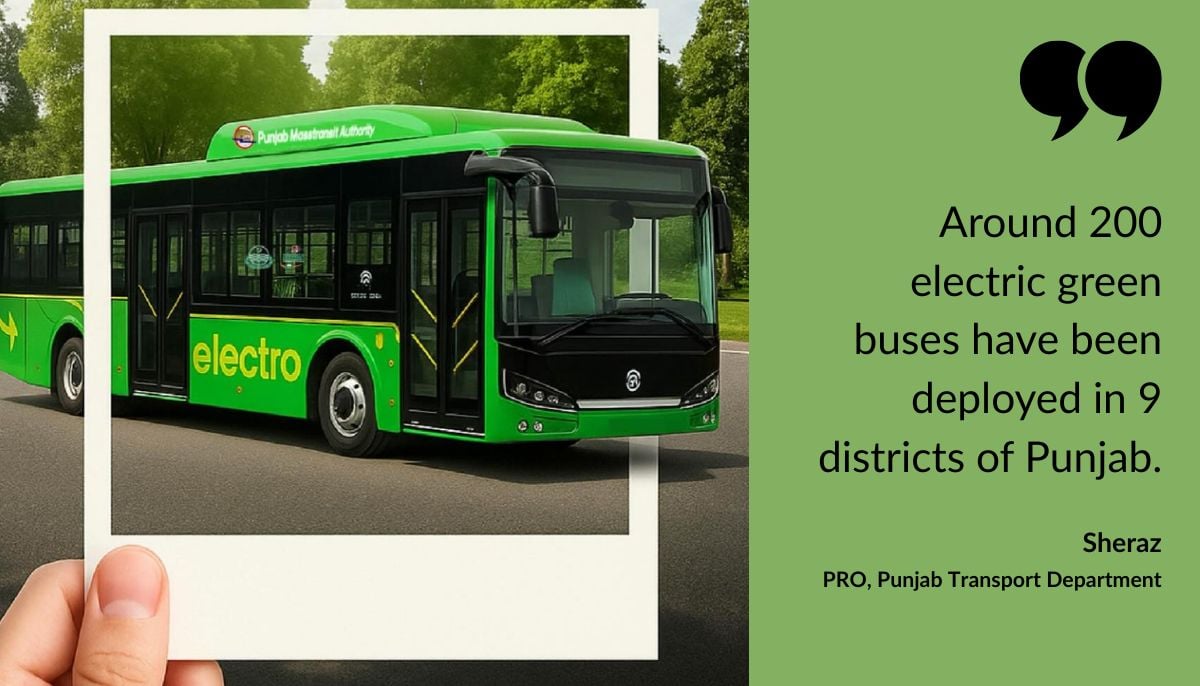
Urban mobility in Punjab has also been upgraded with induction of electric buses brought from China in phases.
Punjab Transport Department PRO Sheraz said around 200 electric green buses have been deployed in nine districts of Punjab including Mianwali (15 buses), Wazirabad (15 buses), Sargodha (33 buses), Sahiwal (16 buses), DG Khan (24 buses), Faisalabad (30 buses), (15 buses), (40 buses), Muzaffarabad (17 buses).
“The rest of the 1,000 buses and more will ply on the roads in the other remaining districts of Punjab,” he added. The cost of this service is proposed to be Rs 20 only as the provincial government plans to keep the service within the budget range of low income groups.
Each bus is equipped with air conditioning and free Wi-Fi. Other features are an automated ticketing system and a flexible design adapted to the needs of passengers with disabilities, along with safety and comfort measures. Similar projects are being put into play in Pakistan. In 2024, Islamabad became the recipient of the first batch of 160 electric buses from China.
In the end, it all comes down to the same old thing: if the work keeps moving, people will start to notice a difference down the road. Maybe not today, maybe not this month, but slowly the city is changing around you. A little less noise in one corner, maybe a faster ride somewhere else, a bus that turns up when it feels like it, it’s not a grand transformation.
Half the time it won’t even feel smooth and one thing or another will still break because that’s just how things go here. But still, you can feel the ground moving a little. Small changes, small even, but noticeable if you care to look. And for a place as packed and restless as Punjab, even that kind of half-step towards cleaner, quieter journeys is something worth taking, or at least hoping it lasts.
Yasir Habib Khan is a freelance journalist based in Pakistan.
Header and thumbnail image of Pakinomist.tv