
Automates monitoring of 19 traffic violations, challan notifications are sent directly to vehicle owners
Rawalpindi has formally introduced and enforced an e-callan system for traffic violations. Within just four days, 600 claims have been issued for a number of road traffic violations.
According to SSP Safe City Rawalpindi, Rana Abdul Wahab, more than 2,100 cameras placed across 360 locations are now not only used for security monitoring and traffic management, but have also been fully integrated with the e-calling system through the Safe City Command and Control Centre. This initiative, he stressed, aims to improve the safety of the city’s roads and their users.
The AI-enabled network, equipped with smart cameras, detects traffic violations on major thoroughfares without exception, with challan messages sent directly to vehicle owners.
Read: Islamabad expands cashless economy, QR code system to cover entire city
Offering further insight, SSP Safe City Rawalpindi Region, Rana Wahab – accompanied by SP Safe City Razaullah Shah and DSP Safe City Kashif Riaz – addressed a press conference at the Safe City Command and Control Headquarters in Rawalpindi regarding the launch of the e-callan system.
He explained that the command and control centre, which already oversees security monitoring, has now been formally linked with the traffic management framework and the smart-camera-based e-callan mechanism.
Across the Cantonment and adjoining areas, over 2,100 smart and high-sensitivity cameras have been installed in connection with more than 300 cases. These allow automatic monitoring of 19 categories of traffic violations. In the first four days alone, six hundred e-challans have been generated and delivered to the relevant vehicle owners.
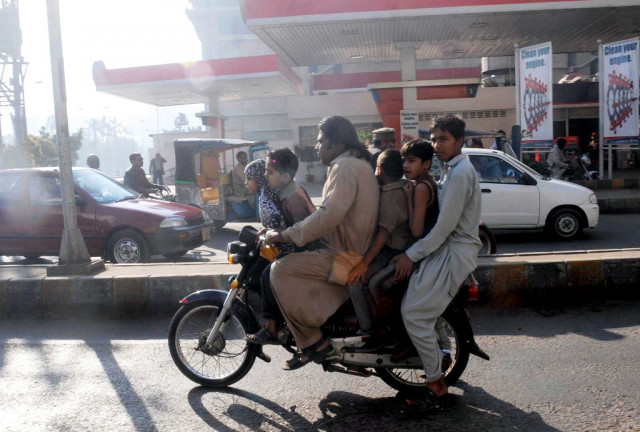
Initially, priority is given to violations that pose the greatest risk to human life – such as riding a motorcycle without a helmet, failing to wear a seat belt and using mobile phones while driving. However, the e-callan system will gradually be extended to cover all traffic offences. Wahab confirmed that the smart cameras now record violations with supporting evidence, on the basis of which demands are issued.
He added that monitoring related to smog is also underway. At 41 project sites, air quality meters have been installed, and the Safe City program provides assistance to relevant departments in assessing and managing air quality data. Rana Wahab further noted that Safe City projects across all areas of Rawalpindi will be fully operational by December 31.
Also read: Aleema briefly taken into judicial custody
Responding to a question, the police officer clarified that surveillance is active not only at the site of the Kachehri Chowk redevelopment project but also along alternate routes. The system is capable of monitoring nineteen different categories of violations.
Regarding VIP movement, he stated that the law applies to all, though operational parameters for VIPs may be different. He also clarified that challans are being issued dating back to August; however now no challan will be generated from 22nd November or older than twenty four hours. The system works continuously and is able to detect all types of violations.
Wahab added that recommendations for road infrastructure improvements will also be submitted. The traffic police, he emphasized, remain the primary guardians of traffic regulation. Should a citizen feel dissatisfied with a case, they retain the right to file a complaint with a judge.
The overall aim, he said, is to provide better facilities to the public. Panic buttons are also being installed throughout the city.
He further revealed that the Safe City system maintains a database of over 14,000 registered blood donors. On receiving a call, donors are connected with the patient’s family. Each district has been tasked with registering twenty-five new donors each day.


