
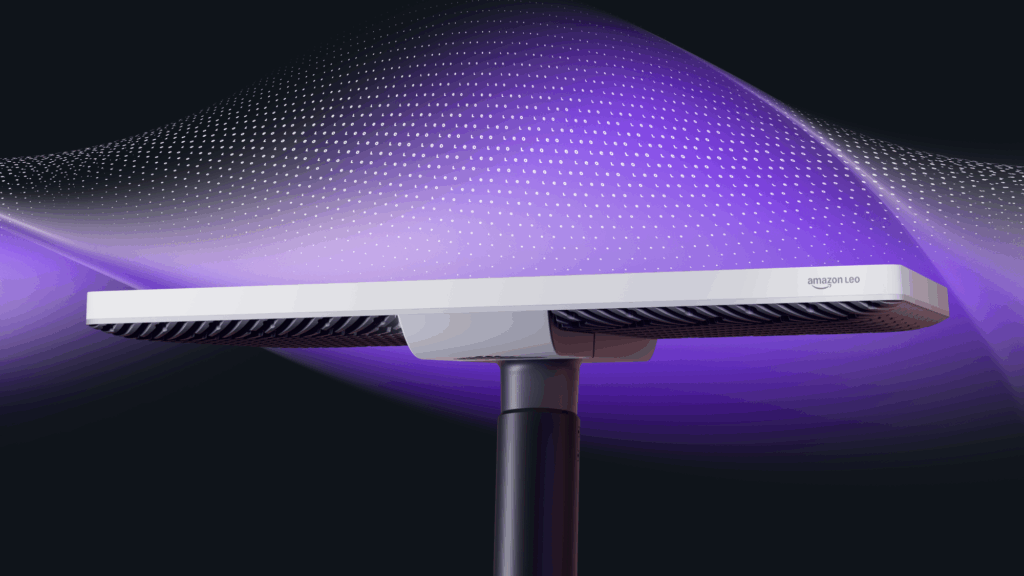
- Amazon Leo Ultra is aimed at remote operations that require consistent links over long distances
- Amazon claims a high upload capacity that supports constant data transfer demands
- The phased array design aims for durable connectivity in harsh weather conditions
Amazon has unveiled the next phase of Leo Ultra (formerly Project Kuiper), a satellite Internet terminal built for organizations that can operate in places where existing networks fall short.
The device delivers download speeds of up to 1 Gbps and upload speeds of up to 400 Mbps, which Amazon says is the highest available for a commercial phased array antenna.
Leo Ultra supports more than eighty planned launch missions that will build the low-Earth orbit satellite network required to run the service.
Hardware design and operational focus
Designed for use in conditions involving heat, cold, rain and high winds, this unit comes with a sealed structure that eliminates the need for moving parts while supporting rapid installation across different locations.
The antenna uses a custom silicon chip and Amazon-built radio frequency systems that aim to increase throughput while keeping latency low, which is important for video calls, real-time control systems and cloud computing tasks that require uninterrupted transmission.
The device supports simultaneous uploads and downloads and connects to existing business setups with no added steps.
“Amazon Leo represents a tremendous opportunity for companies operating in challenging environments,” said Chris Weber, vice president of consumer and enterprise business for Amazon Leo.
“From our satellite and network design to our portfolio of high-performance phased array antennas, we’ve designed Amazon Leo to meet the needs of some of the most complex business and government customers out there.”
Amazon intends the Leo Ultra to carry secure links for data transfer, remote monitoring and other field operations.
The platform includes management tools, round-the-clock support and encrypted communication across the network.
It also links directly to Amazon Web Services (AWS) and other cloud or on-premise systems without exposing traffic to the public Internet.
The company will offer two primary private network routes for business broadband needs.
Direct to AWS allows customers to link workloads to an AWS Transit Gateway or Direct Connect Gateway through the web console.
Private Network Interconnect allows organizations to create direct links inside larger colocation sites to connect remote locations to their core infrastructure.
It has shorter setup periods than traditional circuits and also supports cloud backup processes across dispersed assets.
Amazon Leo has begun an enterprise preview with companies from aerospace, logistics, agriculture and energy, with select partners receiving Leo Pro and Leo Ultra devices to test the service with production hardware and software.
Amazon plans to expand the preview group as more satellites enter service and network capacity grows.
The service is built to run in areas where stable internet is limited, and Amazon has more than a hundred and fifty satellites in orbit as testing continues.
The full results will become clearer when a wider set of users evaluates the service outside of controlled conditions.
Follow TechRadar on Google News and add us as a preferred source to get our expert news, reviews and opinions in your feeds. Be sure to click the Follow button!
And of course you can too follow TechRadar on TikTok for news, reviews, video unboxings, and get regular updates from us on WhatsApp also.


