
ISLAMABAD:
Pakistan warned on Friday that the ceasefire with Afghanistan is effectively “not lasting” as cross-border terrorist attacks continue to target Pakistani cities and civilians.
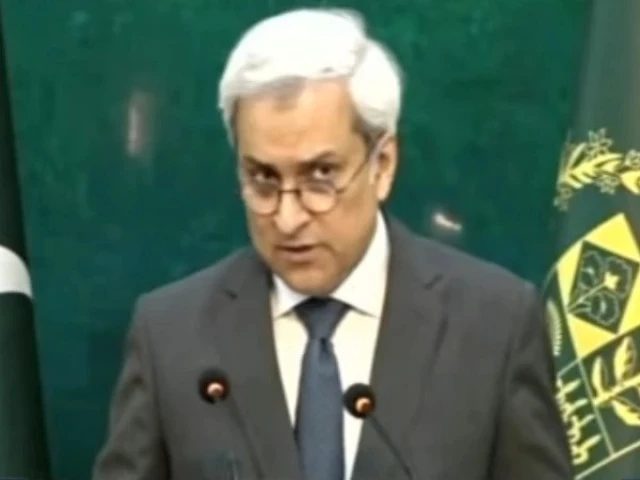
At his weekly news briefing, Foreign Ministry spokesman Tahir Andrabi clarified that the so-called ceasefire between the two neighbors did not involve a traditional ceasefire between warring states, but rather an understanding that Afghan soil would not be used for terrorism against Pakistan.
“Let me clarify that the Pakistan-Afghanistan ceasefire does not mean a traditional ceasefire implemented after two belligerent states in a war or conflict situation. It was about preventing terrorist attacks by Afghan-sponsored proxies on Pakistani territory,” the spokesman said.
“There have been major terrorist attacks following this ceasefire, including incidents in Islamabad and other cities, which indicate that the understanding is not being respected.”
The spokesman specifically referred to ongoing activities of the outlawed Tehreek-e-Taliban Pakistan (TTP) and Afghan nationals using Afghan soil to plan and launch attacks inside Pakistan. “If Afghan nationals keep attacking like they did recently, then we can’t be very optimistic about the ceasefire.”
He stressed that Pakistan’s security forces remain “on full alert” and that the country’s military preparedness is “robust” to counter any threat coming from across the border.
Responding to questions about the Afghan Taliban regime’s claims that ISIS elements were operating from Pakistan, the spokesman dismissed the claims as “outrageous” and a “fantasy”.
He said Pakistan deals with any extremist or terrorist element within its borders in accordance with its laws and that accusations from Kabul were an attempt to externalize the problem of terrorism, which largely originates from Afghan soil.
On the bilateral dialogue with Afghanistan, the spokesman emphasized that Pakistan never shied away from discussions at the political and labor level.
He noted that from 2021 to mid-2025, Pakistan engaged in a number of initiatives and projects aimed at improving relations and promoting prosperity. “Dialogue, yes, but not as a dialogue between deaf people,” he said. “It must be a dialogue based on understanding and recognition of the problems. We welcome dialogue, but we do not want a dialogue that ignores the reality of increasing armed attacks on our soil emanating from Afghanistan.”
Andrabi also addressed regional coordination against cross-border terrorism. Pakistan maintains active counter-terrorism mechanisms with Tajikistan, China and within multilateral frameworks such as the Shanghai Cooperation Organization’s Regional Anti-Terrorist Structure (SCO RATS), of which Pakistan currently holds the chairmanship. These platforms are used for dialogue, intelligence sharing and coordination of new threats, especially in light of incidents such as drone strikes that killed Chinese engineers in Tajikistan and other attacks allegedly linked to Afghan-based networks.
While Pakistan continues to pursue diplomacy, it has emphasized that responsibility rests with the Taliban regime to control elements operating on Afghan soil. The spokesman reiterated: “The Taliban regime claims to be in control of their territory, so they should control these elements. This is for Kabul to act on.”
The briefing also highlighted the humanitarian dimension of Afghan migration, with tens of thousands of Afghan refugees still awaiting repatriation or travel to third countries.
Pakistan has urged relevant authorities in host and transit nations to speed up visa processes for these individuals, stressing that the country accepted them in a wider humanitarian context after the Taliban took power.
The spokesman condemned any narrative that tries to blame Pakistan for terrorism originating in Afghanistan. “Afghan propaganda, including false claims about ISIS in Pakistan, aims to shift responsibility for attacks originating from Afghan soil. We categorically reject these claims,” he said.
Addressing cross-border tensions more broadly, the spokesman stressed that Pakistan’s response to terrorist activity is measured, lawful and focused on security requirements. He reaffirmed that any Pakistani air or military action will be publicly announced and fully accounted for, echoing earlier statements by the Inter-Services Public Relations (ISPR).
With regional players including Saudi Arabia reportedly considering mediation, the spokesman welcomed diplomatic initiatives in principle but stressed that no official offer of mediation had been received. Meanwhile, Pakistan continues to pursue security and counter-terrorism coordination with its neighbors and allies, stressing that cooperation and shared responsibility are essential to address the transnational threats emerging from Afghanistan.
“The threat of cross-border terrorism is growing and reaching transnational proportions. Pakistan remains committed to regional stability and peace, but will not compromise on the security of its citizens and territory,” the spokesman stressed.


