
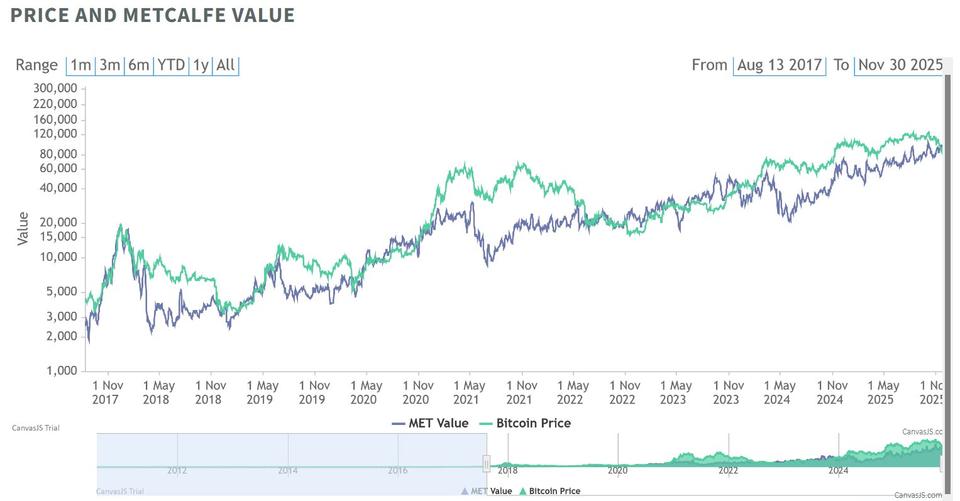
Bitcoin briefly slipped below its network value based on Metcalfe value modeling for the first time in nearly two years, according to network economist Timothy Peterson.
This is typically a signal that often marks the late stages of market resets, he said.
“While this does not necessarily signal a bottom, it does indicate that most of the leverage has been removed and the ‘bubble’ has deflated,” Peterson said.
The Metcalfe value estimates the fundamental value of a network using activity and user-based growth and has historically offered useful context during major cycle reversals.
The drop below the network value coincided with bitcoin’s steepest pullback of the cycle, a drop of about 36% that shot the price to around $80,000. That move drained leverage and liquidated speculative profits, setting the stage for a sharp rebound. Bitcoin has since recovered above $90,000 as buyers stepped in and network conditions stabilized.
During the 2022 bear market, bitcoin spent the entire period trading below its Metcalfe value while activity and sentiment weakened. Since the new cycle began in early 2023, the price had been consistently above this benchmark, supported by rising participation and renewed capital inflows. The recent correction was the first meaningful break in this trend.
Historically, periods when bitcoin trades below the Metcalfe value have produced strong forward returns. Twelve-month performance under these conditions has been positive 96% of the time, with an average gain of 132% compared to 75% and 68% for other periods, according to Peterson.
Tailwind for the growing network
In addition, the supply of long-term holders (LTH) has increased significantly over the past 10 days, increasing by approximately 50,000 BTC. LTHs are defined as investors who have held their bitcoin for at least 155 days. This cohort has been one of the primary sources of sales pressure over the past 12 months. As coins continue to mature from short-term speculative hands and migrate into LTH wallets, and with LTHs now accumulating rather than distributing on an overall net basis, this reduction in sell-side pressure should serve as a meaningful tailwind for bitcoin’s price.


