
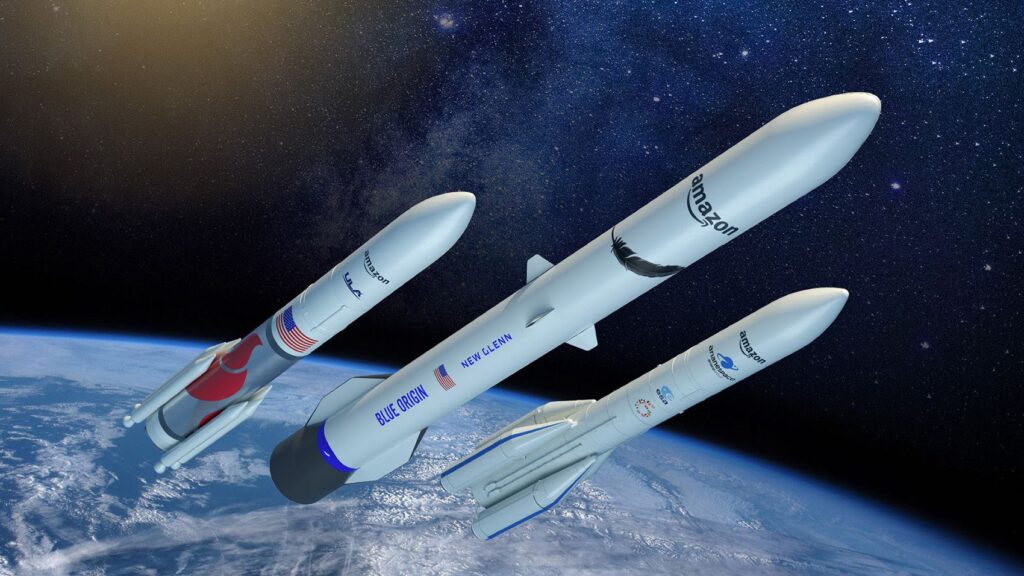
- Google, Amazon and xAI are racing to build space-based AI systems.
- The orbiting networks can reduce latency and power load on Earth.
- Having AI overhead can improve connectivity for everything from remote Internet access to disaster response.
In a matter of months, the push to put artificial intelligence in space has evolved from a long-term dream to an immediate, very real strategic priority. Google’s Project Suncatcher, Amazon’s Leo project to advance the satellite internet constellation, and Elon Musk’s xAI exploration in space-based computing environments all point to the same thing: The next big leap for AI may not happen on Earth, but in low Earth orbit.
As outrageous as it may seem, there is a lot of real engineering behind the glossy press releases and visionary quotes. The effort is spurred by the very real infrastructure crisis facing AI developers as models expand and demand soars. It is intense enough that the data centers, fiber networks and power grids that support the world’s digital backbone are starting to show pressure. New energy sources are struggling to keep up. And that is before factors such as latency, climate risks and political barriers are taken into account as motivation.
Google’s play, Project Suncatcher, aims to build orbital compute nodes powered by near-constant solar exposure and cooled by the vacuum of space. The idea is that these sunlit satellites full of Google’s Tensor Processing Units could eventually run machine learning models more efficiently than ground-based data centers, especially for tasks that don’t require real-time human interaction. Solar panels work better in cycles. Cooling is easier. And there’s no storm or blackout to knock them offline.
With Amazon Leo, the company is building a global broadband network of thousands of low-Earth-orbiting satellites that will eventually link to cloud and AI infrastructure. Some of these satellites may one day support edge computing for AI tasks in places with limited or no access to the cloud.
Meanwhile, Elon Musk is outlining concepts for orbital compute farms for xAI and SpaceX to tackle. They didn’t just want to drive models, but train them. It’s a much more difficult technical challenge, but one that can make sense for resource-intensive tasks that benefit from uninterrupted power and physical isolation. If you’re trying to train a multi-billion parameter model without bumping into terrestrial bandwidth caps or infrastructure bottlenecks, the field starts to look pretty good.
Heavenly AI
These projects can make a huge difference to many people. School systems in rural areas could access fast cloud tools, and weather monitoring systems could extrapolate using real-time orbital AI to predict flash floods and reroute aid.
And with solar-powered nodes running in space, companies can rely less on carbon-heavy ground-based grids. Space-based energy providers have been discussed since before there was a space program. It may be that demand for artificial intelligence is the tipping point for investing in such a project.
The pitch is obviously far from forgiving or cheap to operate from. Launching hardware is expensive and radiation shielding is difficult. Coordinating thousands of satellites can cause traffic jams in orbit. There is also the question of who owns the infrastructure, who will use it, and whether it will become another layer of centralized control in the technology ecosystem. Governments are of course watching closely.
From a user perspective, however, the switch may be mostly invisible at first. You won’t be logging into a ‘space version’ of your favorite app, but you might notice things loading faster and you might start seeing services in previously unconnected parts of the world.
Orbital AI won’t replace ground-based systems anytime soon, but it could become a floating scaffolding of intelligence designed to complement and stabilize the digital terrain, even if it’s hundreds of miles above any actual terrain.
Follow TechRadar on Google News and add us as a preferred source to get our expert news, reviews and opinions in your feeds. Be sure to click the Follow button!
And of course you can too follow TechRadar on TikTok for news, reviews, video unboxings, and get regular updates from us on WhatsApp also.
The best business laptops for all budgets


