
Faiz Hameed convicted on four charges; Involvement in political agitation is examined; The convicted person can appeal
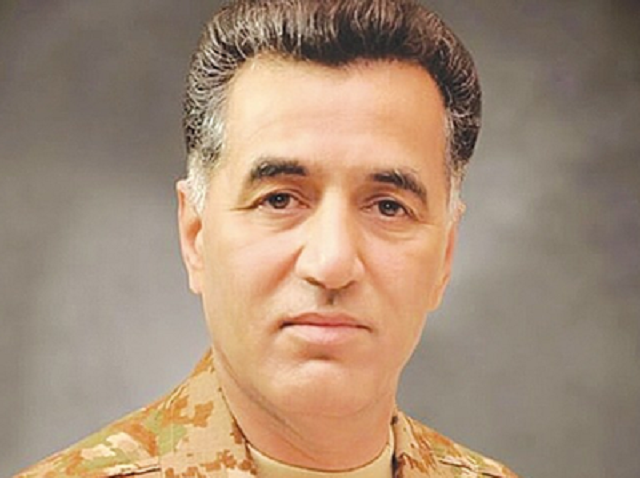
Former ISI chief Lt Gen (retd) Faiz Hameed. PHOTO: FILE
ISLAMABAD:
In an unprecedented development in Pakistan’s civil-military history, former Inter-Services Intelligence (ISI) chief Lt Gen (retd) Faiz Hameed was on Thursday convicted and sentenced to 14 years of rigorous imprisonment after a lengthy military trial.
This is the first time that a former spymaster and one of the most influential generals of his generation was convicted and punished under the Pakistan Army Act.
The decision was announced by the Inter-Services Public Relations (ISPR) in a statement, which said the Field General Court Martial (FGCM) trial began on 12 August 2024 and continued for 15 months before the verdict was formally handed down on 11 December.
According to the ISPR, the former three-star general was prosecuted on four charges that include engaging in political activities, violating the Official Secrets Act, abusing authority and government resources, and causing undue loss to persons.
The military’s media wing stated that Faiz was “found guilty of all charges after lengthy and arduous trials” and that the trial met all legal requirements. “The accused was afforded all legal rights, including the right to a defense team of his choice,” the statement added. The convict retains the right to appeal to the appropriate forum.
While senior officers have faced disciplinary sanctions in the past, no former ISI chief has ever been tried, let alone convicted, through a full court-martial.
The trial of Faiz Hameed marks a watershed moment in the accountability of military officials, especially those who once held key positions in Pakistan’s national security, political architecture and strategic planning.
Faiz’s tenure as DG ISI, which began in 2019, was among the most politically contentious in recent times. He was widely perceived as one of the most powerful military figures in the country, with an outsized influence on political developments under the PTI government.
His transfer from the ISI in 2021 sparked a rare public spat between the civilian leadership and the military establishment.
After his early retirement in 2022, Faiz largely kept a low public profile, but investigations showed that his engagements, political involvement and relationships were detrimental to the state’s security. These inquiries eventually resulted in the invocation of a formal FGCM, something rarely used for officers of his seniority.
The case, which spanned more than a year, involved the examination of sensitive records and testimony from military and civilian officials.
The most serious charge was the breach of the Official Secrets Act, which accused Faiz of handling classified information in a manner deemed “harmful to the security and interests of the State”.
The charge of engaging in political activities stemmed from what investigators describe as “interference in political processes,” including alleged coordination with political groups and individuals.
While the ISPR statement avoided naming any political figure, its reference to “fostering recognized political agitation and instability in league with political elements” signals that this activity is being probed in a separate probe.
The FGCM also found the former general guilty of abuse of authority, a sweeping charge that covered unauthorized deployment of resources, abuse of official privilege and instances where personal or political considerations were prioritized over institutional norms.
The final charge, causing wrongful loss to persons, relates to complaints that have surfaced publicly in recent years, particularly involving alleged acts of coercion against individuals during his tenure.
The conviction represents a strong message from the military leadership, which has repeatedly stressed the need for institutional discipline and non-interference in political affairs. Since 2023, the army’s central theme has been “apolitical stance” and internal accountability.
By allowing a full trial against a former ISI chief, someone who once sat at the top of the national security hierarchy, the institution appears eager to demonstrate that no officer is invulnerable.
Some observers see the ruling as part of the military’s broader effort to distance itself from past controversies and assert a new framework in which institutional boundaries are more clearly defined.
Others believe that while the verdict will be seen as a significant step towards accountability, it could also deepen political polarization, particularly among those who have previously supported or opposed the former general.
Faiz’s legal team has the right to challenge the verdict in the army’s appeals court, a move they are expected to take soon.
Legal analysts note that appeals in FGCM cases may involve additional layers of internal review and, in exceptional cases, subsequent petitions may reach civil courts.
Meanwhile, the ISPR statement makes it clear that the political dimension of Faiz’s conduct is still under investigation, marking the possibility of further revelations or cases.
Officials say the “separate cases” relate to activities that fall outside the charges dealt with in the FGCM.
For Pakistan, where debates over civil-military relations have long shaped the political landscape, the conviction of a former ISI chief is significant on several fronts. It signals that the military is prepared to confront internal misconduct, regardless of rank or influence. It also raises critical questions about past political engineering and future limits of military involvement in governance.
Whether the ruling marks a long-term structural shift or a one-off corrective action remains to be seen. But one thing is clear: Pakistan has entered uncharted territory by holding one of its most powerful former generals legally accountable, and the consequences of this decision will reverberate for years.


