
- Offline Devices offers automatically encrypted iPhone backups without iCloud
- Linux-based hardware synchronizes data locally using USB and open source tools
- Project favors control and transparency, but requires practical setup and technical know-how
If you’re an iPhone owner and want to back up your content locally without cloud storage services or recurring fees, a small open source project might be what you’re looking for, although it does require dedication and technical know-how.
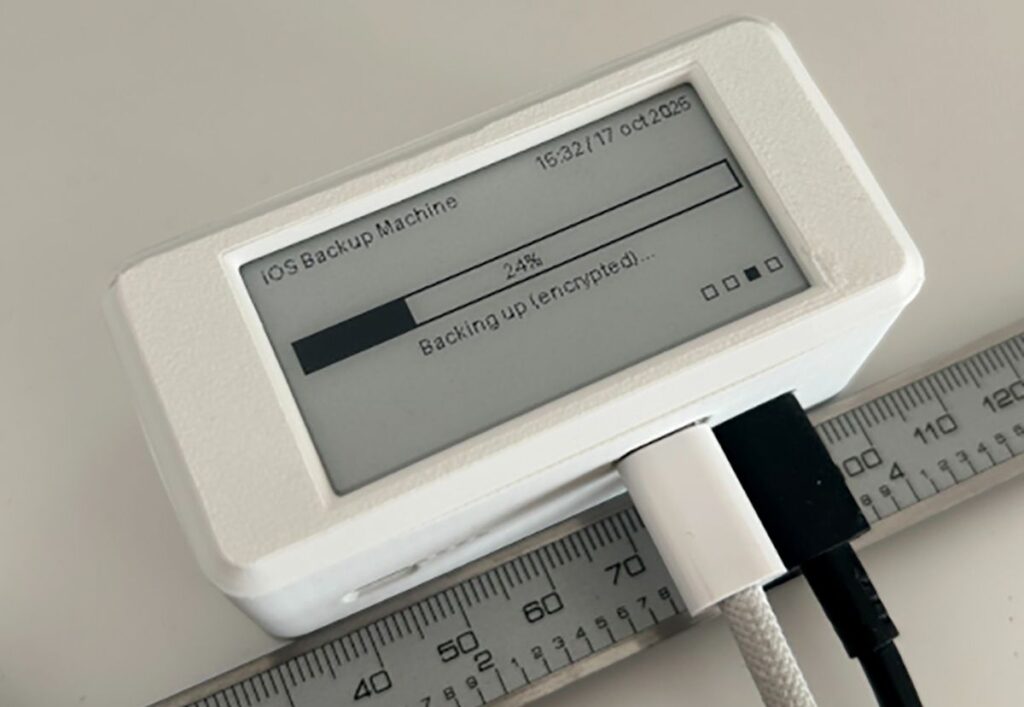
The iOS Backup Machine project on GitHub centers on a compact Linux device that creates automatic local backups when an iPhone is connected via USB. It avoids wireless synchronization and keeps data away from external servers.
The system uses libimobile device to trigger encrypted backups without user interaction after initial setup. Once an iPhone is connected, the process starts by itself and runs to completion unless the cable is removed.
Not for everyone
Backup and notifications are displayed on a small e-ink screen mounted on the device. At startup, the screen can also display owner information such as a phone number, which remains visible even after a power failure.
Encryption relies on the iPhone’s own built-in mechanisms. The resulting backup files are not easily readable by themselves, although they can be used to restore a device or set up a replacement phone.
The project is designed around a Radxa Zero 3W board running Armbian and Python scripts.
A separate microSD card is used for backup storage, keeping it isolated from the operating system.
To reduce the risk of corruption, the design pairs the system with a small uninterruptible power supply. If the battery level drops or the power is interrupted, the device performs a controlled shutdown and safely pauses the backup.
Logs are saved locally and any errors are shown directly on the display. When idle, the screen reviews the last backup result, timestamp, disk usage, and owner information.
Assembly requires several off-the-shelf components and a 3D printed case. Users must follow the setup instructions and be very comfortable working with Linux-based tools.
Future updates discussed by the developer include selective device filtering, optional network reporting, and limited Internet access via USB.
So far, the project is aimed at users who value control and are willing to trade convenience for local ownership.
Via Hack A Day
Follow TechRadar on Google News and add us as a preferred source to get our expert news, reviews and opinions in your feeds. Be sure to click the Follow button!
And of course you can too follow TechRadar on TikTok for news, reviews, video unboxings, and get regular updates from us on WhatsApp also.


