
Electoral Commission announces February 14 polls for unions, district councils; General assembly elections set for 24 January
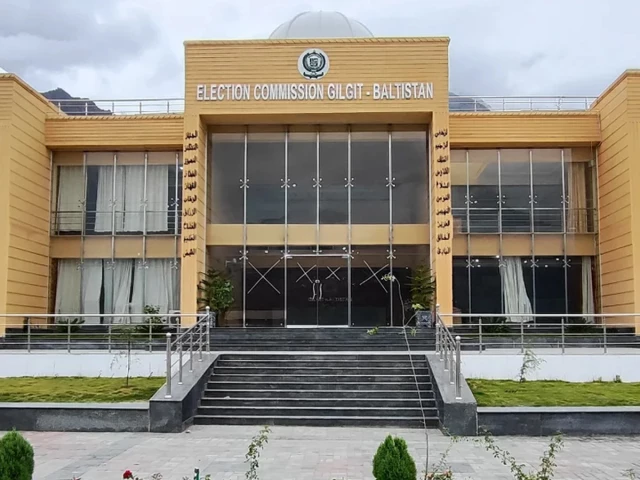
Gilgit-Baltistan Election Commission. Photo: ecgb.gov.pk/
Elected local bodies to return to Gilgit-Baltistan after 21 years. The region’s electoral commission has announced that local government polls will take place on 14 February 2026 from 8am to 4pm.
Chief Election Commissioner Raja Shahbaz Khan issued a notification on Monday confirming that the elections will cover various local levels, including union councils, district councils and municipal corporations.
The process will follow the Elections Act, 2017 and the Gilgit-Baltistan Local Government Act, 2014. The submissions of nomination papers will open from 22nd December and will last till 26th December. The final list of candidates will be issued on January 15, 2026 after the review and appeal process.
Read: The President sets January 24 as the election date for GB
Emphasizing the institutional commitment to justice, Khan stated, “the transparent electoral process is considered the key instrument of democracy.” He added that his vision is to make the Gilgit-Baltistan Election Commission more energetic and deliver its constitutional mandate by organizing and conducting the elections honestly.
Senior judicial officers have been appointed as district returning officers across all ten districts to ensure smooth conduct of the polls.
The election is seen as a crucial step towards rejuvenating grassroots democracy and local decision-making power, which critics consistently argued had weakened since the last local elections in 2004.
Read more: The GB voter rolls almost a million ahead in the polls
Separately, the Election Commission confirmed that the general elections to the Gilgit-Baltistan Assembly are scheduled for 24 January 2026. To prepare for this, the Election Commission has convened an All-Party Conference (APC) on 18 December at 11 a.m.
The Chief Electoral Commissioner emphasized that the aim of the APC is to understand the opinions, suggestions and inputs of all political parties. He expects the consultation to ensure that the electoral process is “clean, transparent, fair and in accordance with democratic principles.”


