The agreement marks the first time governments have committed to tackling chronic diseases – such as heart disease, cancer and diabetes – alongside mental health, recognizing their growing toll on lives and economies worldwide.
Clear goals for 2030
Non-communicable diseases are among the leading causes of death worldwide, while mental disorders affect more than a billion people.
The declaration sets measurable goals to be achieved by 2030, including reducing tobacco use, improving the control of high blood pressure and expanding access to mental health care for millions more.
WHO chief Tedros Adhanom Ghebreyesus said the commitments provide a “once-in-a-generation opportunity” to change the course of global health and improve quality of life.
The declaration also calls on countries to strengthen national health policies, expand access to essential services and ensure sustainable financing to turn promises into action.
Progress will be reviewed through regular UN reporting, with governments expected to show concrete results in the coming years.
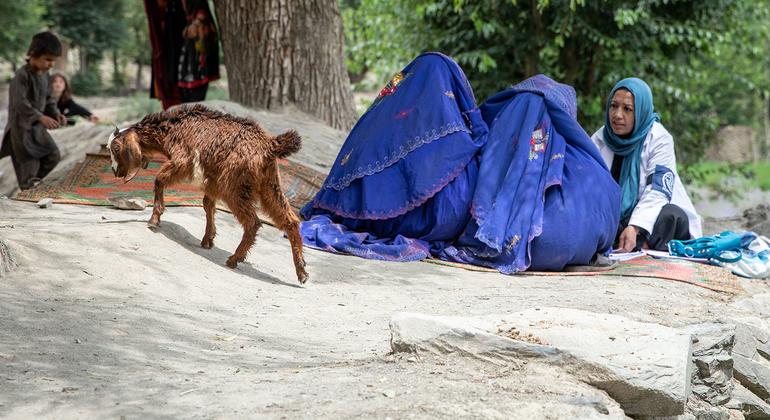
Afghanistan mothers turned away at health centers due to drastic cuts
The dire funding situation facing aid workers globally continues to have a devastating impact on vulnerable communities.
In Afghanistan today, this means that children are not getting the help they need – and used to get – to stave off worsening hunger.
In an update on Tuesday, the UN’s World Food Program (WFP) warned that more than 17 million Afghans are at risk as winter sets in.
That’s over two million more than last year, according to the global authority on hunger, the Integrated Food Security Phase Classification platform, or IPC.
Jean-Martin Bauer of the WFP explained the impact of unprecedented reductions in funding for essential services: “Mothers in particular show up at health centers with children hoping for support for them,” but in many cases they have been turned away “because resources are no longer available.”
The fear deepens
The agency says clear signs of a deepening humanitarian crisis are being confirmed on the ground, with families “skipping meals for days” as hunger worsens.
“Our teams see families taking extreme measures to survive,” said John Aylieff, WFP Country Director in Afghanistan. “Child deaths are increasing and they are likely to get worse in the coming months.”
Afghanistan is facing a harsh winter after drought destroyed crops, jobs were lost and recent earthquakes left thousands homeless.
Forced returns from Pakistan and Iran add to the needs, with 2.5 million people sent back this year, many malnourished.
Yet aid is shrinking. WFP needs $468 million to help six million survive the winter.
Violence in DR Congo pushes 500,000 from their homes
UN agencies in the Democratic Republic of Congo (DRC) say more than half a million people have fled their homes over the past few days in eastern areas overrun by Rwanda-backed M23 fighters.
“No one should have to choose between security and survival,” the WFP said in an online post on Tuesday, as South Kivu province witnessed the most significant escalation of hostilities since the beginning of the year.
To help, the agency urgently needs $350 million to deliver life-saving food to communities affected by decades of insecurity in the vast, resource-rich region.
Meanwhile, in neighboring Burundi, the United Nations refugee agency, UNHCR, reported that some 64,000 refugees have arrived and more are on the way.
Needs include medical care and shelter, the agency said. It also issued a warning about unaccompanied or separated children and the “high percentage” of women at risk among the recently displaced.
Operations suspended
Fighting in parts of South Kivu has forced the suspension of all humanitarian operations in the towns of Fizi and Baraka, the UN Office for the Coordination of Humanitarian Affairs (OCHA) said on Tuesday, amid reports of panic and looting by armed groups.
Local authorities estimate that around 110,000 people have been displaced since December 8, many of whom are sheltering in public spaces without access to aid. Some have crossed into Burundi, while others are moving on towards Tanzania.
Aid deliveries are gradually resuming in Uvira and Bukavu, but OCHA warned that access remains fragile as needs continue to rise.