
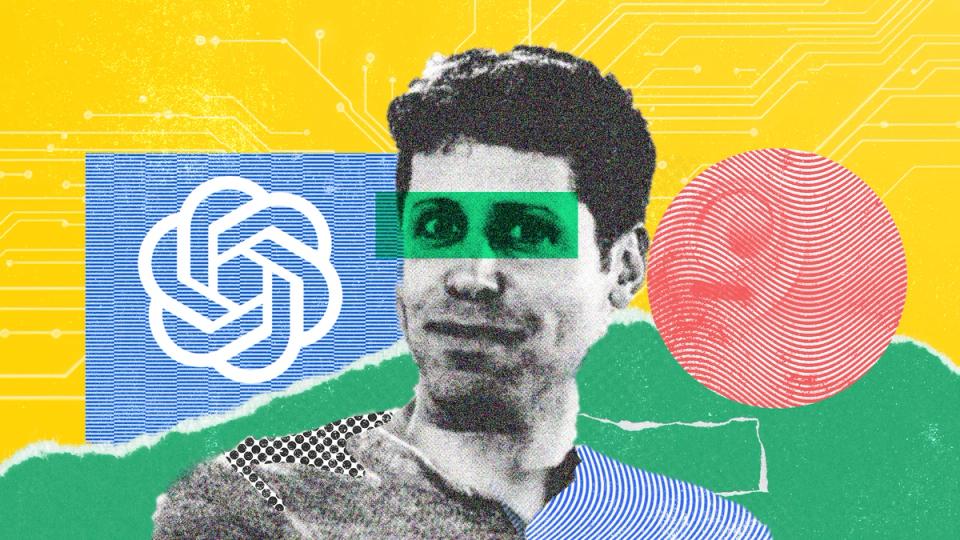
OpenAI founder Sam Altman is the most recognizable name in artificial intelligence (AI). Since the launch of ChatGPT in late 2022, AI has steadily crept into every corner of daily life, and Altman has emerged as the leading figure driving that shift.
As AI has expanded and improved, it has become increasingly intertwined with crypto. A wave of decentralized applications and protocols are now using AI to improve or automate DeFi activity. At the same time, a growing group of developers believe the relationship goes both ways: AI can reshape crypto, but blockchains can also help address some of AI’s emerging weaknesses, including data processing, privacy and identity.
Decentralization of computing power
The growing need for computing, largely driven by the increasing use of generative AI, is one of the core issues that some in the crypto ecosystem have predicted as a problem in the near future. As our reliance on artificial intelligence increases, more energy and more computing is needed to keep the systems running. To avoid a single point of failure, AI compute needs a massive, globally distributed network that crypto could help coordinate.
“Where blockchain shines [in addressing compute] is effectively marketplaces and coordination, and so crypto definitely has a really strong role here to leverage underutilized compute: how to get the best price, how to secure that computing and provide privacy,” said Illia Polosukhin, creator of the NEAR Protocol. NEAR is a blockchain designed for fast, cheap, developer-friendly, and friendly team applications behind it, and has recently expanded its team tools behind it, blockchain developers run AI products on the chain Polosukhin was one of the authors of a white paper that many see as the framework for modern LLMs, also known as Transformer.
Today, most AI development depends on a few large companies like Amazon, Google, and Microsoft/OpenAi controlling expensive, limited GPU resources, and there is no easy way to coordinate or trust thousands of individual machines scattered around the world. Blockchains can step in and act as a neutral coordination and verification layer, recording which tasks were assigned, verifying whether they were completed correctly, and automatically paying the person who provided the computation. Because the records on blockchains are tamper-proof, users do not need to trust a random machine owner; the blockchain proofs and transparent logs do.
In short, blockchain adds the layers of trust, coordination, and incentives needed to transform millions of independent machines into a global network capable of powering AI.
There are a number of projects, known as decentralized AI networks, that have evolved from this market. One of the earliest is Bittensor, which provides a marketplace for computation.
The rise of decentralized AI networks is rooted in a growing frustration among developers, researchers, and crypto-native builders over how centralized and permissive the AI ecosystem has become. Their concerns range from the concentration of computers and data in a handful of companies, to the lack of transparency in how models are trained, to fears that such centralized control could enable censorship, gatekeeping or unilateral decision-making about which AI systems the world is allowed to use.
While Bittensor began as an AI project that used blockchain as a coordination tool, its founders say it has since expanded beyond just AI.
At its core, the Bittensor Network creates an open marketplace for intelligence and computation: Participants run models or provide hardware, and the network continually evaluates the quality of their contributions. When a model produces something of value, it earns the protocol’s native token, TAO. Over time, Bittensor organized itself into specialized “subnets,” each focusing on a different category of AI work. The result is an ecosystem that behaves less like a single system and more like a living environment where many forms of intelligence evolve simultaneously. Good contributions rise, weak ones fall away, and anyone with skill or calculation can participate without asking permission.
The push for decentralization of AI, according to Bittsensor co-founder Ala Shaabana, comes from what he describes as a structural imbalance in how modern AI is built and controlled. Today, virtually all meaningful AI power resides in a small handful of companies.
“It’s as if three people in the world owned all the libraries, teachers and computers, and everyone else needed permission to use them,” he told CoinDesk in an interview. The concentration is so widespread, Shaabana pointed out, that OpenAI only had two board members empowered to make decisions about a technology that the company itself equated to “the next best thing to a nuclear bomb” (although this was at the founding of the organization). For Shaabana, the notion that a small group of powerful individuals could unilaterally control the development of something as consequential as AI is dangerous.
This is where crypto comes into the picture. Incentives are what make it possible to coordinate a global network of contributors who train models, provide data, and provide calculations.
Privacy, trust and identity
Although the average crypto investor has long considered privacy to be important, the issue of privacy has emerged as a growing concern among AI users this year. User data is often stored by and used to train the LLMs that power large AI platforms, leading to a host of concerns about how private, personal data might be used.
Polosukhin believes this is where “private AI,” or what he calls “user-owned AI,” becomes crucial. The idea is for AI systems to act on behalf of users or organizations within their own infrastructure, rather than sending sensitive data to centralized providers. This allows teams to train models for their specific needs, while keeping information under their control and maintaining compliance with international privacy regulations such as HIPAA and the EU’s GDPR. Blockchains can provide tamper-proof logs and trust guarantees to support this framework.
Polosukhin argues that achieving user-owned AI requires rebuilding the AI stack itself—from computing to privacy to model training—in a way that puts control back in the hands of users and organizations.
“For that, you need a decentralized computer network, you need private AI, and you need model training,” Polosukhin said.
In addition to privacy, trust and identity are also becoming more complex in the age of AI, which is another area where blockchain can once again play a role.
Sam Altman’s controversial blockchain project, the World network, aims to address identity through proof-of-personhood (sometimes known as proof-of-humanity). The system gives users a world ID, a digital ID that proves they are a unique human being. Using its Orb device, the system scans a user’s iris to create a unique cryptographic code. According to World, the iris image is deleted, but the code remains, so the system can ask if it’s the same user as before: without revealing a name or any personal details, users can verify their identity online.
Tiago Sada, Head of Product at Tools for Humanity (TFH), the organization that helps manage the world network, told CoinDesk that Altman identified identity and trust as core problems created by AI, and saw blockchain as a natural solution to solve them.
“One of the things you lose in the age of AI is the ability to trust things online,” Sada said. “You don’t know who or what to trust. This is where proof-of-humanity comes in. Whether you’re talking about tweets, a picture, someone sending money – blockchains can be a source of truth in a world where it’s really hard to know what truth is.”
Sada described World as a necessary safety layer, comparing it to inventing seat belts alongside the invention of cars. He believes that identity and privacy-protecting financial tools will become critical use cases at the intersection of AI and blockchain.
Beyond just verifying identity, Sada believes that all of this will be crucial for financial identity and use cases, to protect this data without revealing anything about financial transactions will be key to the intersection of AI and blockchain.
The future
As speculation grows about whether we’re in an AI bubble, none of the experts interviewed wanted to predict where things will land.
Of today’s AI projects, TFH’s Sada assessed: “70% of it will disappear – it was a fad. 30% of it is incredibly profound and will change the world. And that 30% is more than worth the hype of the others.”
Polosukhin, meanwhile, is concerned about the economic model that could emerge when AI becomes fully integrated into society. “As things become more efficient, the return on capital gets better, but labor loses access to capital,” he said. “We’re going into something that doesn’t have an economic theory to work with. There’s no clear model of how society works when only a small percentage of people oversee machines.” Crypto, he noted, offers a sandbox for experimenting with new economic systems in ways that traditional economies cannot. That idea is already being tested in the industry: Coinbase recently launched a universal basic income pilot that uses blockchain rails to distribute recurring payments and explore how crypto-based economic mechanisms could support people.
Reflecting on the widespread use of modern LLMs that Polosukhin helped design, he finds it “exciting” to see the subject he worked on come to life. He added: “It’s great to see this now fully working. Of course there’s still a lot to improve, but there’s been a massive shift away from what was considered machine learning 15 years ago to what we have now.”


