
Major infrastructure boost promises much-needed relief for millions of daily commuters
RAWALPINDI:
For decades, traffic jams have defined everyday life in Rawalpindi. Now, an ambitious wave of infrastructure development promises to redraw the city’s road map and ease the burden on millions of commuters.
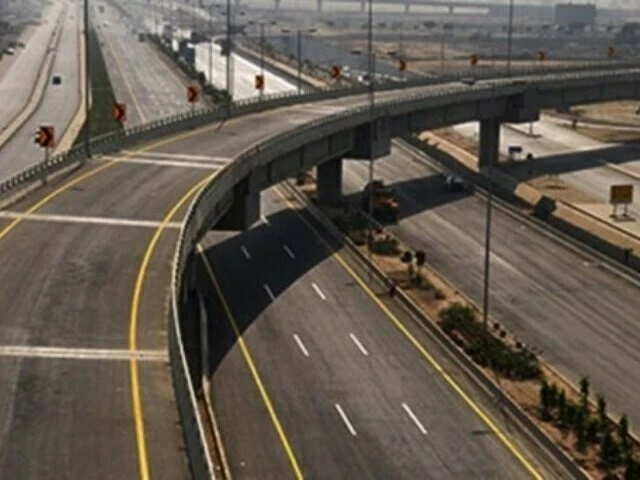
Under a Rs33 billion package, the garrison town is being transformed into a signal-free city through construction of flyovers, underpasses and redesigned intersections at long-standing choke points.
Commissioner Engineer Aamir Khattak recently confirmed that work on the mega schemes is progressing smoothly and remains on schedule. The projects target some of the city’s most congested intersections, including Kachehri Chowk, Jinnah Park, Iftikhar Janjua Road, Annexe Road and Ammar Chowk, along with three major underpasses on Peshawar Road at Race Course Ground, Army Graveyard Road and Charing Cross.
Peshawar Road – Rawalpindi’s busiest artery – is at the heart of this transformation. The three multi-billion rupee underpasses, part of the annual development program for 2025-26, will create a continuous signal-free route from Ammar Chowk to the expressway entrance at Chungi No. 26, benefiting nearly two million residents and around 250,000 daily commuters.
The Race Course Ground (Qasim Market) underpass, costing Rs.3.091 billion, alone handles more than 250,000 vehicles daily. It features a single-barrel, two-lane structure that stretches 1,886 feet, along with 1.8 miles (2.9 km) of road rehabilitation. The Army Graveyard Chowk underpass (Rs2.679 billion) and the Charing Cross underpass (Rs2.9 billion) follow similar designs, each incorporating U-turn facilities to improve access to GT Road.
According to Rana Qamar Ali, Executive Engineer (EXEN), Punjab Highways, all three underpasses are scheduled for completion by June next year. “Together, they will convert Peshawar Road into a seamless, signal-free corridor and significantly improve connectivity,” he said.
In addition to road construction, the plan also tackles parking chaos. A Rs 1.6 billion parking lot is under construction on unused land in Jinnah Park, while five additional parking lots have been identified in the Saddar and Cantonment areas. Allocations include Rs5.9 billion for Kachehri Chowk, Rs3.9 billion for Annexe Chowk and Rs2.6 billion for Iftikhar Janjua Chowk. The redevelopment of Kachehri Chowk is targeted for completion by May 31 next year.
Earlier projects, including the GPO Underpass and the TM Chowk redevelopment, are already easing traffic, while the Nawaz Sharif Flyover on Adiala Road has transformed a once disconnected route into a smooth link towards the ring road, which is under construction.
The broader vision is anchored in the 38-kilometer Rawalpindi Ring Road, which the prime minister has asked officials to speed up despite earlier delays. Once completed, the project – with five interchanges, multiple bridges, underpasses and overpasses – is expected to unlock economic growth and dramatically improve mobility throughout the region.
But while residents and merchants welcome these historic investments, concerns persist. Murree Road, the city’s main socio-economic backbone, continues to choke — especially at Liaqat Bagh Chowk, where traffic from Marir Chowk and Tipu Road often comes to a standstill for hours. Traders argue that lane widening alone will not solve the problem and are calling for targeted interventions at this critical junction.
Still, the scale and coordination of the Punjab government’s projects mark a turning point for Rawalpindi. If the timelines hold, the city may soon shed its reputation for gridlock and emerge with roads built for flow, not frustration.


