
LAHORE:
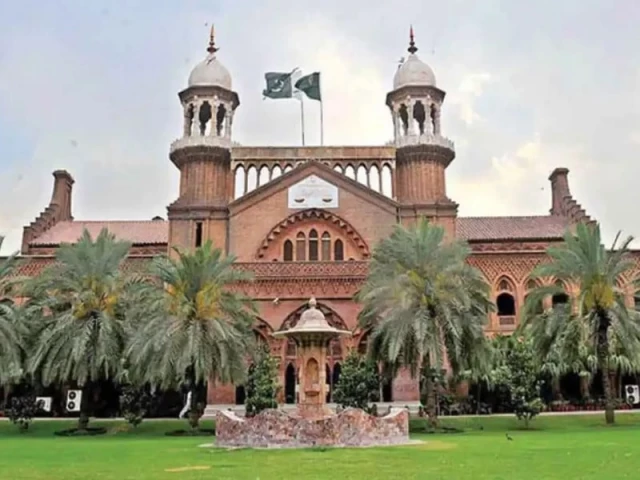
The Lahore High Court (LHC) has overturned the decisions of Deputy Commissioner-led committees that gave possession of properties to people in 10 districts of Punjab under the Punjab Protection of Ownership of Immovable Property Act, 2025.
An LHC bench comprising Chief Justice Aalia Neelum on Friday reversed the decisions after hearing petitions against the provincial law, which empowered deputy commissioner-led committees to settle property disputes.
While hearing the plea, Justice Neelum on December 23 issued an interim order suspending the operation of the newly enacted property law.
On 24 December, Punjab Chief Minister Maryam Nawaz expressed reservations about the LHC’s decision, arguing that the move would “benefit encroachment and land-grabbing mafias”.
However, the Bar Council has agreed with the LHC’s decision.
During the hearing on Friday, the chief justice observed that had the “patwaris” performed their duties promptly, such problems would not have arisen. Dismissing any notion of prolonged pendency of civil litigation, the chief justice noted that she was well aware of the number of old cases pending in the courts.
She said commissioners and deputy commissioners had no authority to remove or restore possession of properties on their own, and questioned how many laws the government would throw aside.
The chief justice lamented that the deputy commissioners ordered the removal of possessions despite the cases pending in the civil courts.
A citizen of Depalpur, who had been given possession under the new law, also appeared before the court. However, the Chief Justice ordered him to give up the possession.
When confronted, a lawyer for the citizen admitted to the court that the deputy commissioner-led committee had acted outside its authority.
Justice Neelum observed that since the counsel himself had admitted that the DC had exceeded its authority, proceedings could be filed against the committee members.
The lawyer asked where people would go if they did not get justice from the legal system. He said the Dispute Resolution Committee (DRC) had handed over possession of the property within 27 days.
However, the Chief Justice dismissed the lawyer and instructed him not to make sensational statements for consumption of newspaper headlines.
She noted that a DC could not pass such a decision as the power to decide was vested in the tribunals formed under the new law.
She said the issue before the court was not whether the petitioners were the owners of the property but whether deputy commissioners had the authority to make such decisions.
After suspending the enforcement of the DRC’s orders on possessions, the chief justice referred the petitions to a yet-to-be-constituted full bench for further hearing.
The Punjab Protection of Ownership of Immovable Property Ordinance, 2025 was notified on October 30 with the stated objective of providing citizens with a robust shield against property fraud and illegal transfers.
The statute introduced a two-part system for the speedy resolution of property disputes. A Dispute Resolution Committee (DRC), headed by a Deputy Commissioner and comprising senior administrative and police officials, was constituted in each district.
The committee had powers similar to a civil court, allowing it to summon individuals, examine records, and take administrative steps to protect legal ownership.
It was required to dispose of complaints within 90 days, which could be extended once by another 90 days with the approval of the Divisional Commissioner. If the DRC failed to reach an amicable solution, the matter was to be referred to a newly created property court established in each district.
Each tribunal – to be presided over by an ex-judge LHC or district judge – had exclusive jurisdiction to hear all offenses and title disputes, and functioned both as a civil court and a court of sessions.
It was required to conduct cases on a daily basis and conclude the trial within 90 days of receipt, ensuring speedier justice for rightful property owners.


