
Home screen heroes
This is part of a regular series of articles exploring the apps we couldn’t live without. Read them all here.
If you’re a writer of any kind—a blogger, a copywriter, an aspiring novelist, or any other kind of wrangler—you’ll know how important your writing tools can be. In the analog world, I only want to write seriously with a really nice pen and creamy paper. And in the digital world I write exclusively in Ulysses.
What is Ulysses and how much does it cost?
Ulysses lets you get words out of your brain and onto the page exceptionally quickly and easily, and has a distraction-free interface that hides all the stuff you don’t need so you can concentrate on your words.
It’s lightning fast. And it gives you the opportunity to manage even very large projects. I’m currently writing another book with it, and I use it daily for commercial copywriting, news reporting, and small snippets like writing author bios, questions for events I host, and logging things I want to remember later.
It’s brilliant on Mac and on an iPad with an external keyboard, and there’s also an iPhone version so you can access, edit and write ideas on the go.
Ulysses isn’t free, but it’s pretty cheap: $39.99 / £39.99 (about AU$60) for an annual plan, or £5.99 / $5.99 per month. month (approx. AU$9 p/month). Students can also pick it up for $10.99 / £9.99 (or around AU$17) for six months at the moment.
Why this is my Homescreen Hero
Ulysses is a write once, publish anywhere app. It uses Markdown, a form of plain text with simple shortcuts to quickly format, link and structure documents. Markdown was also designed with speed in mind.
Because the most common shortcuts are all keyboard-based—a hash symbol to make text an H1 heading, two for H2, Command-B for bold, and so on—it means I’m not constantly moving to the mouse, which my RSI-addled hands are very happy about.
Because Markdown is plain text, there’s very little drain on your system, so Ulysses is lightning fast on even old Macs. Searching even large folders is instant, and these plain text files can be opened in virtually any text app as well as from within Ulysses.
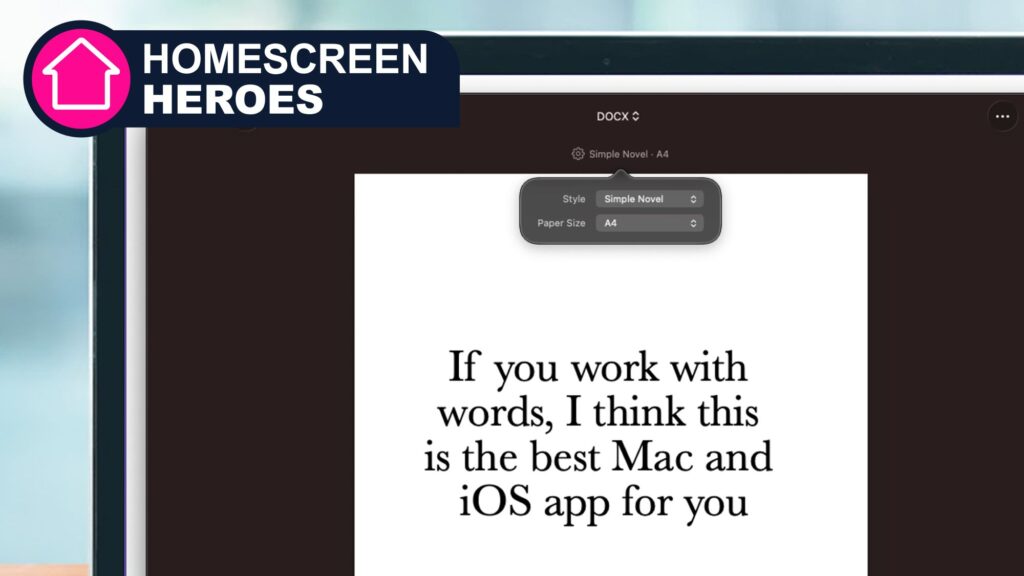
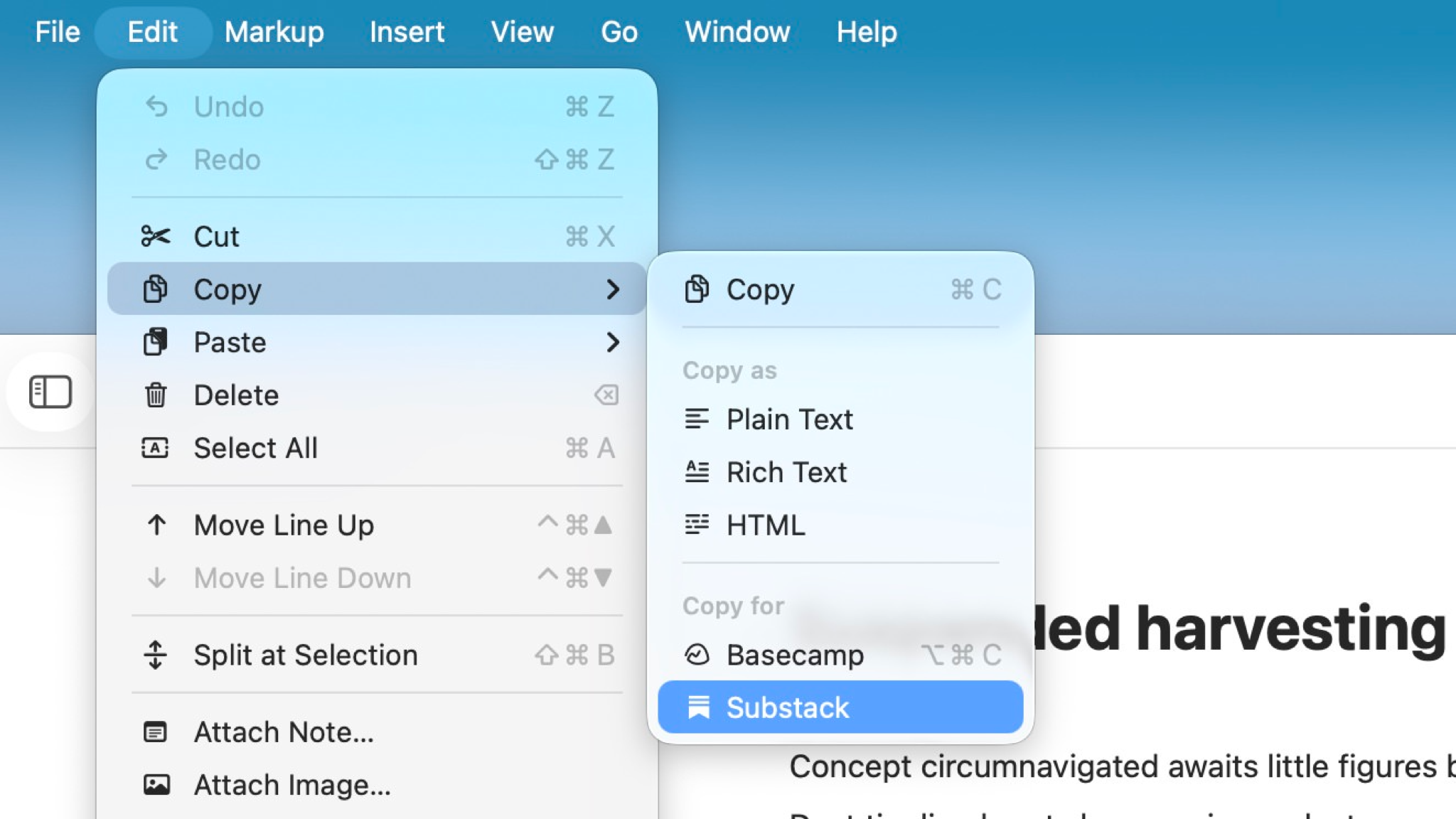
Once you’ve written your words, you can export them to pretty much anything with a few clicks: to blog and newsletter platforms like WordPress, Ghost, Substack and Medium; to the clipboard as plain or rich text; to Microsoft’s DOCX format; in plain, rich text or Markdown format; in HTML format; as PDF; or as ePub.
There are lots of templates you can use to format these file types, so if I say exporting to DOCX, I can go for a simple, plain template; a film script; a newspaper-style column layout and more. And there are tons of themes you can use to customize the way Ulysses looks. You can also adjust the interface to light mode, dark mode, or a mix of both: I like my sidebars dark and my editor window light.
How I use Ulysses
Three alternative writing apps for serious stuff
Scrivener (Mac/PC/iOS)
I’ve used Scrivener for some really heavy projects, including self-publishing a novel. It’s overkill for everyday writing, I think, but it’s a powerful app for book production.
Highland 2 (Mac)
This is a wonderful and very nice screenwriting and screenwriting Mac app created by Big fish and Frankenweenie author John August.
IA Writer (Mac/PC/iOS)
Like Ulysses, IA Writer is a distraction-free, Markdown-based writing environment. It’s even more minimalistic than Ulysses and provides visual typing and style feedback.
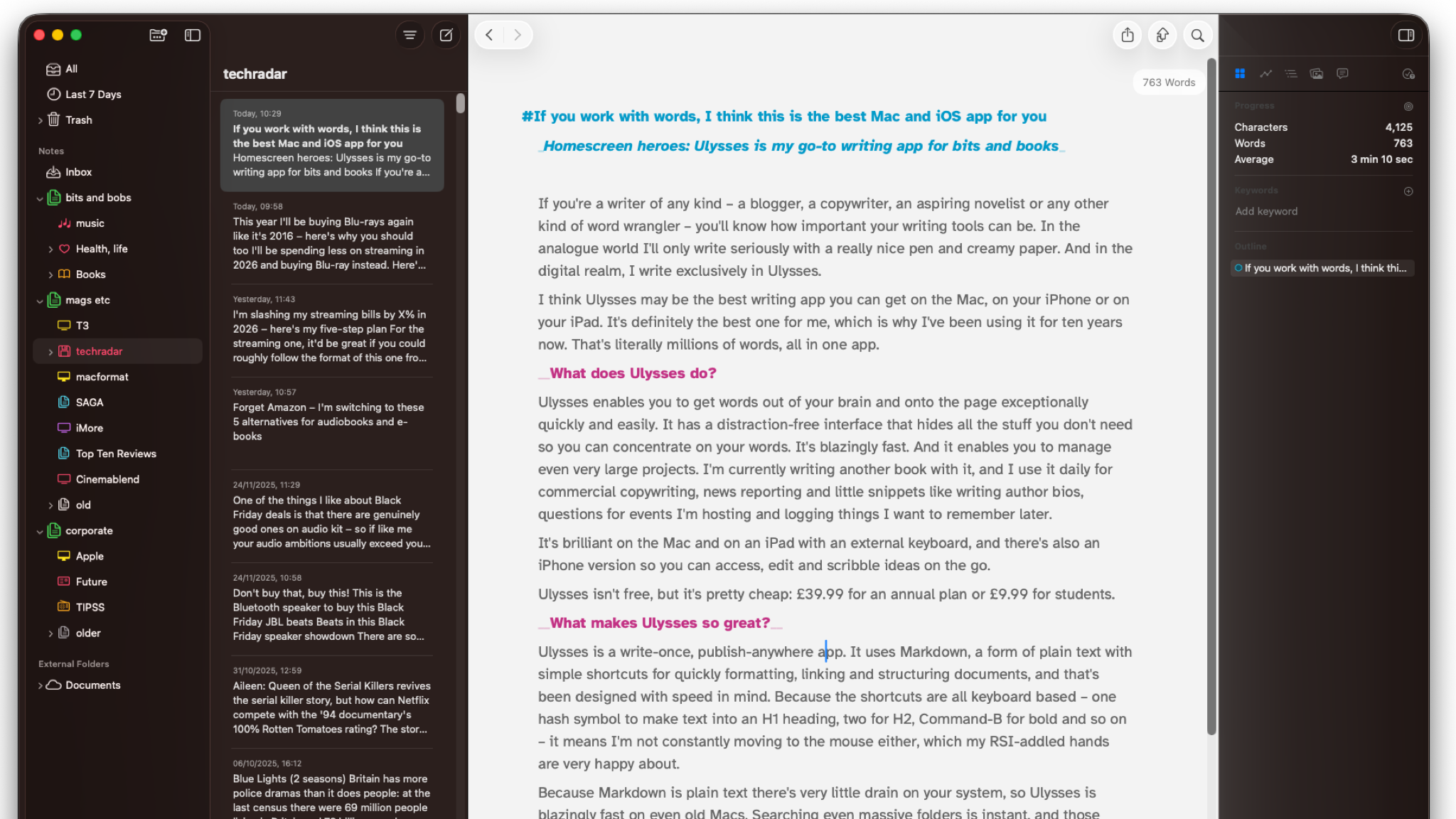
The main interface consists of a main editor window and three sidebars that you can hide or show. The very left sidebar is where I organize my projects and folders – so for example I write this in my ‘Mags Etc > TechRadar’ folder. It’s a small thing I know, but I love that I can also customize the sidebar icons and colors.
You can also use folders to divide projects. For example, if you’re working on a book, you might have separate folders to store your research, your characters’ backstories and inspirations, or pictures of possible locations, plus the actual chapters you’re writing. You can also link to external folders on your device or in the cloud.
To the right of the first sidebar are previews of all the other documents in the current folder, so I can see (and sort or filter) all my other recent TechRadar pieces. The main window shows my words and the current word count, because that’s all I need for most writing jobs.
And the sidebar on the right shows me more statistics and can be switched to show progress towards a word count or deadline, the outline of my current document, the images I’m using in the document or the links I’ve added.
Why I recommend Ulysses
To borrow Apple’s slogan: it ‘just works’ (albeit a little bit slow when it comes to syncing on my iPad and iPhone).
I’ve tried a lot of writing apps—going all the way back to the days of WordStar and WordPerfect—and Ulysses is the one that feels like it was made for me. Not too simple, not too complex, not too demanding and probably not to trash tens of thousands of words and render them unrecoverable, unlike a certain app that rhymes with ‘Nicrosoft Bird’ once did.
The only real downside to using Ulysses for working documents is that some of my work involves handling tracked comments and changes, and Ulysses isn’t designed to do that with third parties: you can comment on your documents and projects easily enough, but I haven’t found a way to bring in, say, a client’s heavily modified Word document.
So I still keep a copy of Word running – but Ulysses is the app I use 99% of the time for fiction, non-fiction, commercial and corporate work.
Follow TechRadar on Google News and add us as a preferred source to get our expert news, reviews and opinions in your feeds. Be sure to click the Follow button!
And of course you can too follow TechRadar on TikTok for news, reviews, video unboxings, and get regular updates from us on WhatsApp also.


