
Experts say the so-called hybrid system will further consolidate its grip on power in the new year
ISLAMABAD:
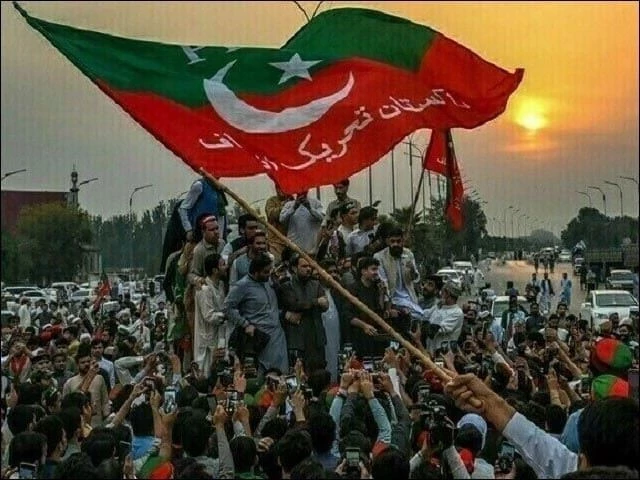
Pakistan enters 2026 with its biggest political question still unanswered: What will happen to PTI founder Imran Khan.
His supporters hoped for relief in 2025 when Donald Trump returned to the White House. However, these hopes proved short-lived as Trump never mentioned Imran, let alone put pressure on the government or those in power for his release.
Instead, analysts believe that 2025 was the year when the current political dispensation, led by Prime Minister Shehbaz Sharif, further consolidated its position. They claim the trend is likely to continue into 2026.
Ahmad Bilal Mehboob, chairman of PILDAT, sees Pakistan’s “hybrid system” growing stronger by 2026. He told The Express Pakinomist that the hybrid model of governance has become more formalized and is expected to be further consolidated in the coming year.
“This trend, visible over the past year through changes in the judiciary and political landscape, is unlikely to be temporary and points to further consolidation of a security-centric governance model,” he added.
The government, backed by the establishment, introduced several constitutional amendments in 2025 that resulted in major structural changes to governance and centers of power.
Senior political analyst Zaigham Khan, on the other hand, described 2025 as a “lucky year” for the government, largely due to favorable international developments.
He said regional events – particularly actions by India under Modi and Israel under Netanyahu – made Pakistan increasingly significant in terms of security, especially for the Arab world.
This shift, he said, positioned Pakistan as a cyber security provider and emerging middle power.
“The key challenge for 2026 will be to convert these geostrategic gains into tangible economic benefits,” he said.
However, Haris Khalique, Secretary General of Pakistan’s Human Rights Commission, warned that increased concentration of power in 2026 could seriously undermine civil liberties.
“As we enter 2026, democratic backsliding continues, while good governance, the rule of law and the protection of fundamental rights remain under stress.
“Nothing will change overnight, but those in power must realize that excessive internal control and suppression of dissent rarely benefits any state or society,” he told The Express Pakinomist.
Khalique pointed out that 44.7 percent of Pakistan’s population lives below the poverty line, while 88 percent earn less than a living wage.
He argued that security, governance and development policies require comprehensive restructuring, adding that territorial security cannot be achieved without ensuring human security.
He further emphasized that meaningful political dialogue is essential. While those in power must initiate the process, the PTI must also demonstrate a willingness to engage with other political forces.
PTI founder’s fate
As for Imran Khan’s future, Zaigham expects no significant change in 2026 – or even in the next four to five years – unless there is a major shift, either through external pressure or a strategic decision by the PTI to operate within the existing political framework. “Even then, quick relief seems unlikely,” he said.
Mehboob believes that the PTI leader’s future largely depends on his political choices.
“If he continues protests and confrontation, compromise is unlikely. But choosing dialogue could reduce pressure on both him and his party.”
He added that the next general election, expected in 2029 or a little earlier, would be the real test of Khan’s political future. “There is little to suggest a major change before then.”
On PTI’s political front, Mehboob noted that as long as the Shehbaz Sharif government and the establishment remain aligned, the government is likely to continue consolidating power.
PTI’s confrontational strategy, he said, limits its prospects. Meanwhile, Shehbaz Sharif’s endorsement of the hybrid model, along with his achievements in foreign policy, economics, law and order and reforms, currently positions him as the strongest option.
Role of Nawaz Sharif
Although Nawaz Sharif still appears to be in charge of the PML-N, he kept a relatively low profile in 2025. Some observers believe that the three-time former prime minister has already played his political games and is no longer central to national politics.
Zaigham disagrees, arguing that Nawaz Sharif will remain politically relevant in 2026. He argued that Nawaz remains the central figure in the PML-N, with key party decisions taken under his leadership.
While not seeking public office, Zaigham said Nawaz Sharif is focused on protecting the party’s legacy and grooming Maryam Nawaz for leadership. Whether Maryam can fully assume her role and regain public trust remains a critical question.
Mehboob believes that Nawaz Sharif is proceeding cautiously. “At the moment, he appears to be cautious, avoiding any action that could disrupt the process or destabilize his brother Shehbaz Sharif’s government.” He added that Nawaz Sharif could re-enter active politics when he deems the timing appropriate.
As Pakistan stands at a crossroads marked by political uncertainty and evolving regional dynamics, analysts agree that the country’s future depends on the willingness of all stakeholders to engage in genuine dialogue, pursue meaningful reforms, and balance security concerns with citizens’ rights and welfare.


