
Lahore Election Court declared Yasmin Rashid’s election petition against Nawaz Sharif in NA-130 as non-maintainable
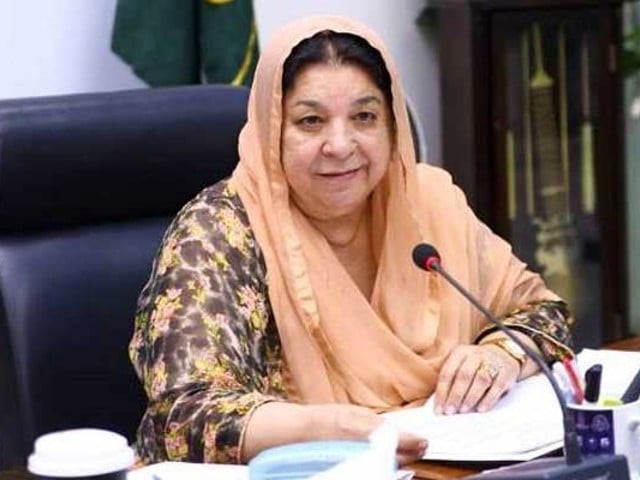
Dr. Yasmin Rashid. PHOTO: APP/FILE
Pakistan Tehreek-e-Insaf (PTI) leader Dr. Yasmin Rashid has decided to approach the court against the Election Tribunal’s decision in NA-130 after consultations with her legal team in jail.
According to her lawyer Rana Mudassar Umar, Dr. Rashid instructed him to immediately challenge the court’s verdict. He said an application has already been made to get a certified copy of the decision and an application will be made to the court as soon as the copy is received.
Rana Mudassar Umar further maintained that the election tribunal failed to assess the facts of the case correctly and dismissed Dr. Rashid’s election petition citing “technical reasons”.
A day earlier, an election tribunal upheld the Election Commission of Pakistan’s announcement declaring Nawaz Sharif the winner in Lahore’s NA-130, dismissing a challenge filed by the PTI leader. The decision ends her bid to overturn Sharif’s victory in the February 2024 general election from the constituency, also known as NA-130 (Lahore-XIV).
The court, headed by Justice Rana Zahid Mahmood, dismissed Dr. Rashid’s petition on technical grounds. The ruling means that the official result announced by the Election Commission of Pakistan (ECP) remains in effect. According to the announced results of the February 8, 2024 election, the three-time prime minister secured 179,310 votes in NA-130, while Dr. Rashid scored 104,485.
Dr. Rashid had approached the court in the weeks after the vote, arguing through his lawyers that the ECP did not follow the correct procedure when it announced Sharif’s victory. She claimed that the result had been manipulated in Sharif’s favor and sought to have the notice set aside.
election in 2024
The 8 February 2024 general election was followed by weeks of disputes and competing claims for results in several constituencies, with PTI-backed candidates claiming the results were altered during consolidation and notification.
PTI leaders publicly described the post-poll process as a “mandate” issue and argued that the results should reflect polling station-level documentation (Form-45) rather than the consolidated figures issued later, a controversy that dominated much of the immediate political and legal fallout after the election.
These challenges were largely pushed into the election tribunal system, although petitioners continued to seek relief through various forums. Months after the vote, a large majority of election petitions were still awaiting decisions, citing free and fair election network tracking that showed only a small proportion of disputes had been resolved and that several tribunals had not resolved any cases in that period.
NA-130 was among the constituencies repeatedly cited in the wider debate. Before the vote, Dr. Rashid’s candidacy a trial in which an appeals court allowed her to fight against Sharif.
After the results, she filed an appeal challenging Sharif’s victory announcement at the Lahore High Court Election Tribunal, while PTI figures also claimed in public briefings that she had been leading in NA-130 before Sharif was declared the winner.


