
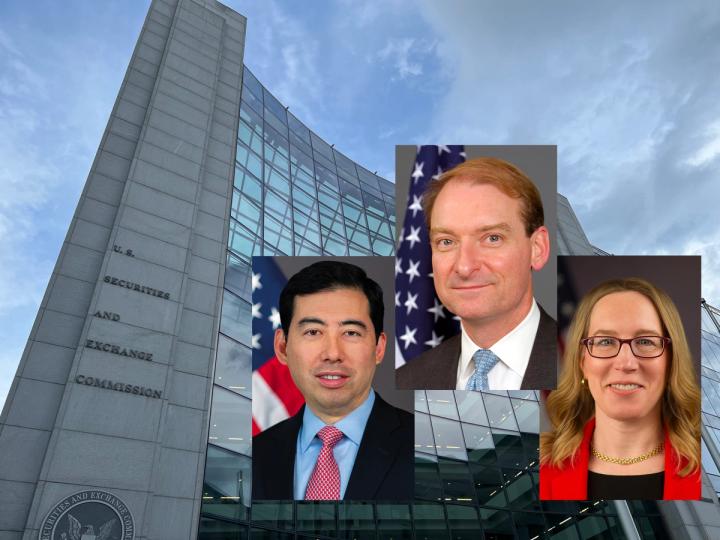
President Donald Trump’s campaign to cut Democrats out of US lawmaking has created an unusual situation at the two agencies that will have the most influence over how the federal government handles crypto: A handful of Republican crypto advocates are entirely in charge of both.
The US Securities and Exchange Commission just said goodbye to its only Democratic commissioner, Caroline Crenshaw, last week, removing routine opposition to its current policy moves. Crenshaw had frequently warned the agency about its shift toward a digital asset embrace, including opposing bitcoin exchange-traded funds (ETF) as a danger to investors. She took a consumer protection stance that regularly extended to those investing in crypto.
“I think it is safe to say that they are speculating, reacting to the hysteria of promoters, nurturing a desire to gamble, washing trades to push prices up, or as a Nobel laureate has stated – betting on the popularity of the politicians who support, or will personally benefit from, the success of crypto,” Crenshaw said in a speech last month. Whether or not such vocal opposition within the agency has an effect on the SEC’s regulatory direction is over now, and the regulator is led by Trump-nominated Chairman Paul Atkins and two commissioners who had promoted crypto interests, Hester Peirce and Mark Uyeda.
At its sister agency, the Commodity Futures Trading Commission, the new year begins with a new leader, as Trump nominee Mike Selig won confirmation late last month to be sworn in as chairman on Dec. 22. Acting Chair Caroline Pham took the opportunity to leave an industry job at MoonPay, leaving Selig alone on the five-person commission.
While that may be a good situation for crypto-friendly policy as Selig moves forward with his yet-to-be-outlined agenda without needing input or debate from other commissioners, the absence of a bipartisan slate of commissioners at the CFTC and SEC has become a sticking point for crypto legislation in the US Senate.
One of the remaining points of debate on the bill, which could establish a US crypto regulatory regime, is the demand by Democrats that their party’s vacancies be filled at the two agencies. It’s unclear how much Republicans are willing to give on that. For his part, Trump has been less than enlightening.
When asked recently if he would be willing to make Democratic nominations, he responded with a question: “Do you think they would nominate Republicans if it were up to them?”
The historical answer is that presidents of both parties have routinely made nominations from both, often in package deals negotiated in Congress that result in multiple confirmations at once.
“There are certain areas that we look at and certain areas that we share power, and I’m open to that,” Trump concluded, leaving the matter in uncertain waters.
Both agency heads have been careful not to rhetorically clash with Trump’s preference for not allowing new Democrats in regulatory roles, and new CFTC chief Selig said in his confirmation testimony that he would welcome bipartisan input from the agency but that it is out of his hands.
Atkins noted on Crenshaw’s departure that she had “listened carefully, engaged significantly and addressed every day the goal of protecting investors and strengthening our markets.”
For now, both the SEC and CFTC have moved forward with crypto policy. In the final weeks of Pham’s interim chairmanship, she pushed several policies, kicked off leveraged spot crypto trading on CFTC-registered platform Bitnomial and established a panel of CEO advisors. And Atkins has called digital assets the top policy priority of his agency, which has abandoned crypto enforcement actions and issued a series of policy statements to clarify its pro-industry stance on digital assets in areas as diverse as mining, memecoins, staking and escrow.
Both Republican-led agencies have made it clear they intend to pursue crypto regulations with or without input from the legislation Congress is working on.
If Congress succeeds in passing the crypto market structure bill, and the new law directs the agencies toward a list of new rules and duties, it will currently only be in the hands of Republican commissioners to write these permanent rules.
Read more: Most Influential: Paul Atkins


