
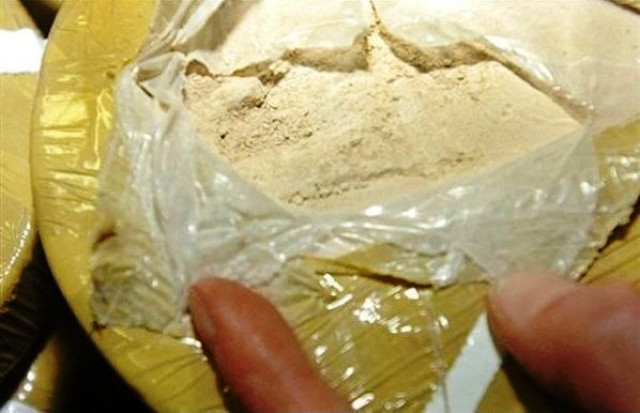
The police uncover an eight-year-long drug network supplying ice cream, heroin and hashish
PESHAWAR:
In a shocking revelation, Peshawar police have dismantled a woman-led gang involved in the distribution of hashish cigarettes, ice cream, heroin and hashish to students, social media and other groups.
The gang, comprising five women, had been operating covertly in the city for the past eight years, targeting students, college-goers, street vendors and social media.
According to police sources, the gang sold hash-filled cigarettes for Rs 300. and small amounts of other substances in urban markets, near railroad crossings, and along busy lanes.
Each member reportedly earned up to Rs 10,000 daily by supplying token sizes, making these drugs easily accessible to young people in Peshawar.
“The women disguised themselves as ordinary citizens, allowing them to operate undetected for years,” said CCPO Dr. Mian Saeed, who headed the special police team responsible for the crackdown. “They targeted the youth to destroy their future by luring them into addiction.”
Records show that members of the gang had previously registered criminal cases against them in six different police stations in Peshawar. But after brief stints in prison, they resumed their illegal operations, exploiting loopholes in the enforcement system.
Police confirmed that the women often stationed themselves near educational institutions, railway crossings and main roads during school and university hours, selling drugs to students who brought money for daily expenses. Small doses of ice and hash were sold for Rs 200-300, providing easy access for vulnerable youth.
Saeed added that investigations were underway to trace the masterminds behind the supply chain. “After tackling the city’s land-grabbing mafias, Peshawar will not be a safe haven for drug peddlers. We are committed to bringing all those involved to justice,” he said.
The case has raised alarm over the growing trend of drug use among students and highlights the innovative methods criminal networks use to exploit urban youth. Authorities have urged parents and educators to remain vigilant and report suspicious activity in their neighborhoods.


