
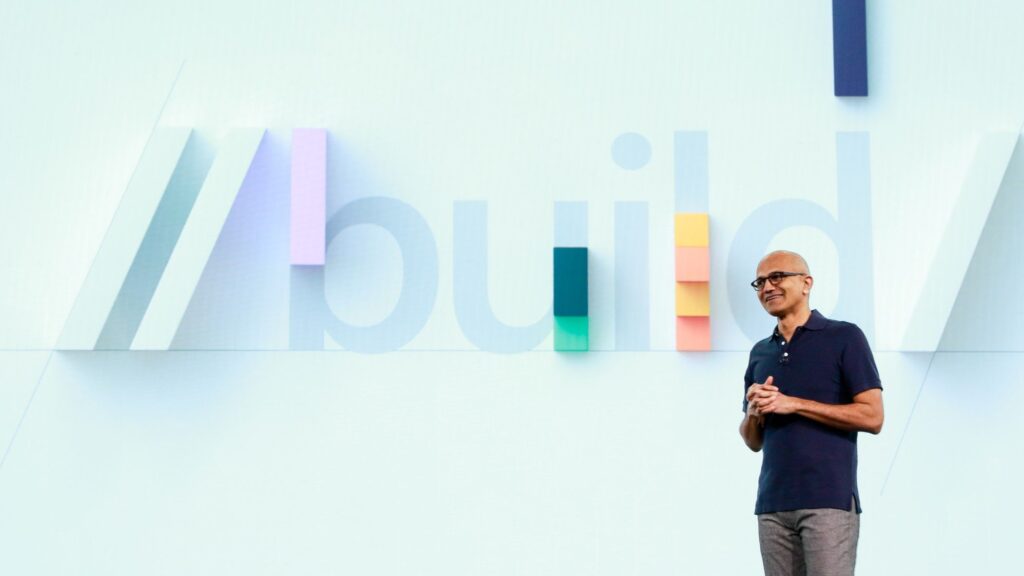
- Microsoft CEO Satya Nadella warned that AI must deliver clear societal benefits or risk losing public support
- Nadella encouraged AI developers to focus on improving health, education and productivity
- Otherwise, people will reject AI energy consumption
Microsoft CEO Satya Nadella worries that if AI doesn’t start delivering real, measurable benefits to society, people will get tired of it and its price, ending its current form of existence. The Davos stage is a strange place and a strange audience to preach public goods over other goods, but that certainly helped his comments stand out.
AI developers “have to get to a point where we use this to do something useful that changes outcomes for people and societies and countries and industries. Otherwise, I don’t think this makes a lot of sense,” Nadella explained during a conversation with BlackRock CEO Larry Fink.
“We will quickly lose even the social license to take something like energy, which is a scarce resource, and use it to generate these tokens if these tokens don’t improve health outcomes, education outcomes, public sector efficiency, private sector competitiveness, across all sectors, small and large.”
The Davos audience, used to a more digital transformation cheerleading role, sounded a little confused. But the discussion also shows how the AI hype train is both an illusion and real. Nadella should know what he’s talking about. Microsoft is one of the biggest drivers behind the current AI boom, with tens of billions of dollars invested in OpenAI, its own Copilot suite of built-in productivity tools, and a seat at nearly every major AI policy table.
But his message at Davos was that leadership now requires a stocktaking – not just of how smart or useful AI tools are in theory, but whether they help people in schools, clinics, small businesses and city governments.
It is not an abstract moral argument. It is an infrastructure. AI’s growth has been fueled by massive computational muscle, which means it’s also fueled by massive energy consumption. Training today’s biggest models uses as much power as some small countries use in a year.
Look at
And inferences when you run the model on your phone or desktop to answer a question or generate an answer add to the cost every second it runs. AI doesn’t just use servers; it fuels an ever-growing footprint of data centers, water-cooled systems, and network-intensive workloads.
Nadella’s social license phrase gets to the heart of what might be next. Until now, the public has widely accepted that cloud-based technology companies can use resources in exchange for productivity, entertainment or convenience. But that goodwill is not guaranteed. If artificial intelligence begins to look like a wasteful luxury that provides novelty rather than necessity, citizens and governments may begin to back away.
Value for AI energy
During the session, Larry Fink asked if all this productivity talk would mean fewer jobs, and Nadella didn’t dismiss the concern. But he argued that AI’s potential lies in augmenting what people can do.
But this moment differs from previous engineering turning points. The scale of AI’s appetite. Cloud computing scales gradually. Smartphones had physical limits. But AI can grow as fast as the models and capital behind it allow. That’s why Nadella’s call to focus on results comes across as both cautious and pragmatic.
Nadella’s message was simple but stark: We are approaching the edge of public tolerance for black-box systems powered by opaque amounts of energy, with unclear societal benefits.
And perhaps we should all be asking harder questions when the next shiny AI tool drops: Does it help me? Does it help anyone? Or is it just burning energy to generate another token?
Follow TechRadar on Google News and add us as a preferred source to get our expert news, reviews and opinions in your feeds. Be sure to click the Follow button!
And of course you can too follow TechRadar on TikTok for news, reviews, video unboxings, and get regular updates from us on WhatsApp also.

The best business laptops for all budgets


