
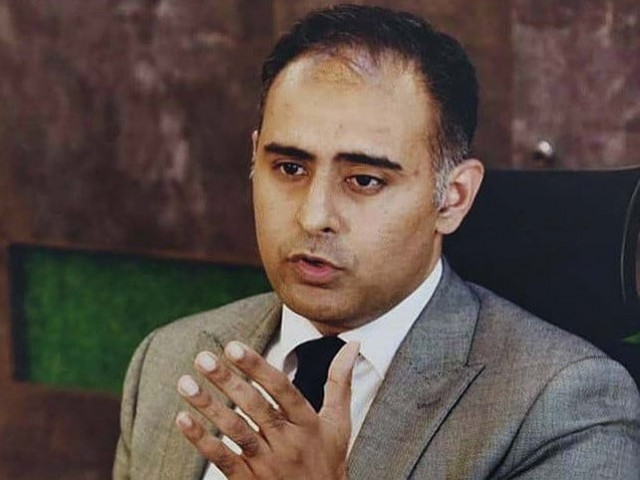
Bilal Azhar Kayani, Coordinator of the Prime Minister for Economy and Energy, addresses a press conference. APP
ISLAMABAD:
The National Assembly on Thursday passed the Income Tax Ordinance (Third Amendment) Bill 2025, which aims to strengthen the Alternative Dispute Resolution (ADR) mechanism for tax disputes.
Moved by Finance and Taxation Minister Bilal Azhar Kayani, the legislation seeks to close gaps in the existing framework, particularly in the appointment of the chairman of the ADR committee.
The measure is designed to ensure impartiality, increase efficiency and reduce the burden on the courts, making ADR a credible and cost-effective option for taxpayers.
According to the new law, both the taxpayers and the Federal Agency (FBR) will propose three names each for the post of chairman. If consensus fails, a candidate from each side will be sent to the Minister of Law for final decision.
The chairman must be a retired judge of the Supreme Court, the Federal Constitutional Court or the Supreme Court with the relevant tax or commercial experience.
Kayani noted that the FBR previously had sole authority to appoint the chairman, raising concerns about impartiality. The revised process, he said, strengthens taxpayer protection, improves the ADR framework and ensures fair dispute resolution.
BISHOP
Minister for Poverty Alleviation and Social Security Syed Imran Ahmad Shah informed the National Assembly that the total allocation for the Benazir Income Support Program (BISP) was Rs 716 billion, describing it as one of the world’s leading finance-based social security initiatives.
Responding to a question from Sharmila Faruqui during question hour, the minister said BISP operated through three core components – the Kafalat cash assistance programme, the Nashonuma nutrition initiative and educational grants under Taleemi Wazaif – and was widely recognized internationally for its transparency and scope.
He clarified that BISP was purely an income support program and not a disaster preparedness mechanism.
The minister said the organization did not independently conduct relief operations during floods, earthquakes or other disasters, adding that it only acted on formal policy guidelines issued by the government or the relevant authorities, including coordination with institutions such as the National Disaster Management Authority and the Provincial Disaster Management Authority when required.
The minister told Parliament that BISP operated as an independent body with its own chairman and board and any proposal to expand its mandate or introduce new initiatives had to come from the board.
After receiving a formal request, he said, the ministry would send a summary to the federal government for consideration.
In response to a supplementary question by Naima Kishwar Khan, Imran Ahmad Shah said that BISP had established a comprehensive nationwide network consisting of regional offices, facilitation centres, hospital desks and dynamic registration centers operating across all provinces down to the tehsil level.
He explained that the beneficiaries were selected through the Proxy Means Test (PMT) system, with the poverty line currently set at a score of 32.
Households falling below this score were eligible for assistance, and eligible families currently received Rs 7,500 per household. quarter under the Kafalat programme.
The minister informed the House that more than 10 million beneficiaries were currently enrolled in BISP across the country, making it one of the largest social protection programs in the region.
He urged members to attend parliamentary committee meetings to remain fully informed of verified data and program outcomes.
In response to another question by Ahmed Saleem Siddiqui, the minister reiterated that BISP operated under clearly defined rules, standard operating procedures and governance mechanisms as an autonomous institution, with oversight exercised through its board of directors.
He added that the program’s structure and operations were also in line with commitments made with international partners, including the International Monetary Fund.
In conclusion, the minister said the government remained committed to strengthening BISP as a sustainable, rules-based social safety net to ensure transparency, accountability and continued support to vulnerable households across the country.


