
ISLAMABAD:
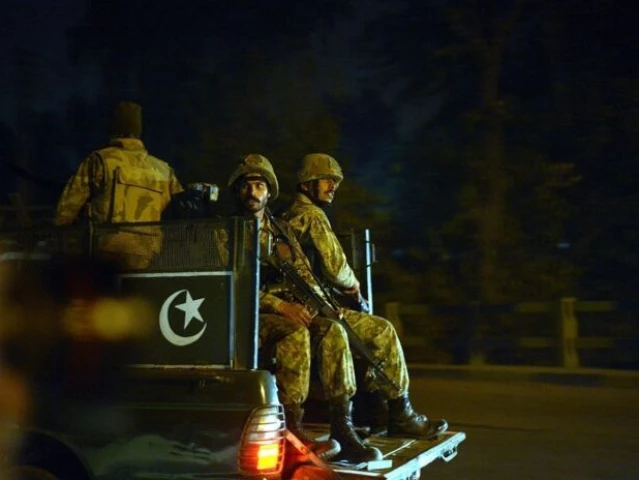
Officials moved on Thursday to counter what they described as a “misleading narrative” surrounding Islamabad’s decision to associate with the Board of Peace, stressing that the move does not involve, and cannot lead to, the deployment of Pakistani troops to Gaza under any arrangement aimed at disarming Hamas.
Pakistan formally joined the Board of Peace along with around 20 other countries at a signing ceremony held in Davos on the sidelines of the World Economic Forum in the presence of US President Donald Trump.
But the move drew criticism and objections from opposition parties, who warned of potential implications for joining the US-led body.
However, officials insisted in background discussions that the confusion had been deliberately created by conflating the Board of Peace, a political and diplomatic forum, with a hypothetical International Stabilization Force (ISF), which, they noted, does not exist and would require an entirely separate mandate if ever proposed.
They stressed that Pakistan’s position on troop deployment is categorical and non-negotiable. No Pakistani forces will be sent to Gaza under any ISF or similar framework, especially for military coercive duties. Officials said this position had been clearly communicated during consultations and remains unchanged.
According to officials, the Peace Council is designed as a diplomatic platform to facilitate coordination of humanitarian access, reconstruction and civilian protection in Gaza, and should not be mischaracterized as a military mechanism.
Any future discussion of security arrangements, they added, would fall outside the scope of the BoP and would be subject to separate political, legal and constitutional processes.
Officials also rejected claims that participation in the Peace Council undermines or circumvents the United Nations, arguing that such claims ignore how multilateral diplomacy works. They maintained that the UN remains the central legal and institutional framework for conflict resolution, while complementary forums work to build political consensus and coordinate implementation.
In this regard, officials pointed out that the Gaza peace plan, which supports the Peace Council, has formal international legal backing after being approved by the UN Security Council in a 13-0 vote, countering suggestions that the initiative lacks legitimacy.
Pakistan’s commitment, officials said, is anchored in three non-negotiable principles: unfettered humanitarian aid to Palestinians without political strings attached; the ability to rebuild without risk of renewed Israeli military action; and the security and protection of Palestinian civilians as a core priority rather than a secondary consideration.
They emphasized that Pakistan’s policy towards Palestine reflects long-standing continuity rather than tactical positioning. Islamabad continues to support the establishment of a contiguous, independent Palestinian state on the pre-1967 borders, with Al-Quds Al-Sharif as its capital, and officials said no multilateral engagement would dilute that position.
Responding to criticism that Pakistan should avoid platforms where Israel is present, officials described the argument as strategically flawed. They noted that Israel’s participation in international forums, including within the UN system, has never prevented Pakistan from promoting its principled positions through diplomacy.
Officials argued that absence from such forums would only allow others to shape narratives and outcomes without challenge, often presenting contested proposals as international consensus while marginalizing Palestinian concerns. Participation, they said, should not be confused with approval, but seen as a means of maintaining influence and influence.
They also highlighted that Pakistan’s affiliation with the Board of Peace places it in a diverse, cross-regional group of countries from Asia, the Middle East, Africa and Latin America, disputing claims that the forum represents a narrow or exclusively Western initiative.
Regarding reports of a proposed contribution of 1 billion USD related to the Gaza framework, officials clarified that any financial commitment is voluntary and does not involve military, operational or political alignment beyond humanitarian and reconstruction goals.
Officials further emphasized that the decision was made through established constitutional channels and formally approved at the highest political level, rejecting suggestions of institutional freelancing.


