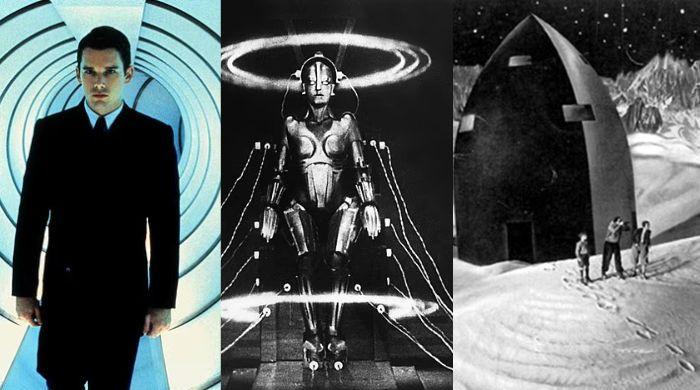
The National Aeronautics and Space Administration (NASA) has shared its top picks for the most scientifically accurate movies after analyzing over a century of cinema.
The US space agency said its selection was based on the accurate representation of science and technology with careful experimentation, skepticism and problem solving, rather than accuracy in predicting the future.
The following are NASA’s top picks for the most scientifically accurate movies:
Metropolis (1927)
Metropolis was a German sci-fi film that shows the class divisions in a society. It features a futuristic city with society divided into two classes: opulent elites and oppressed working class.
NASA said Metropolis accurately anticipated the ethical concerns surrounding machines replacing human labor.
Woman in the Moon (1929)
Another German sci-fi film that featured a love triangle. Prominent scientific themes in the film include zero gravity, countdowns, and rocketry. For context, the film was released nearly 50 years before humanity was able to land a man on the moon in 1969.
The Thing From Another World (1951)
It was a classic black-and-white sci-fi film that featured plant-like aliens, scientists and air force personnel at a remote arctic outpost.
The accurate scientific reasoning and experiments to counter the threat of alien-like plants made it a top choice for NASA’s most accurate science film.
The Day the Earth Stood Still (1951)
It featured an alien landing on Earth (in Washington USA) with a robot named Gort. Aliens threaten humanity to abandon violence and catastrophic weapons or face the wrath of extraterrestrial life.
NASA praised it for portraying aliens as advanced but logical beings.
Gattaca (1997)
This film portrays a futuristic theme where humans are divided into natural born and genetically engineered groups. It shows a society where people are judged by their DNA, where genetically engineered people feel privileged.
Although the technology is speculative, NASA praised the film for realistic portrayal of DNA-based discrimination.