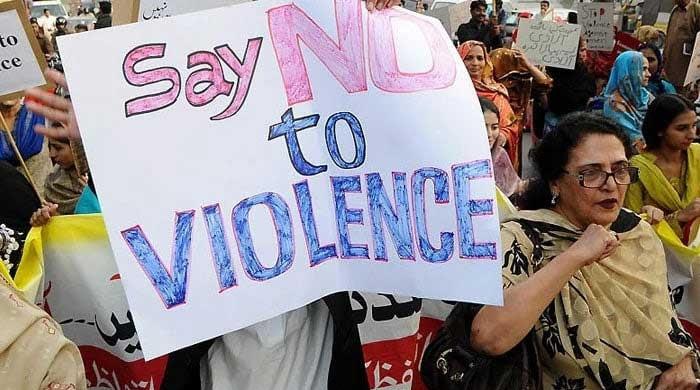
- Criminals for domestic violence must be sentenced to the same sentence.
- Courts with power to issue security orders and grant custody.
- Domestic violence defined as physical, sexual, psychological abuse.
Parliament passed a bill on Saturday that makes threats of second marriage or divorce to a wife punishable by up to three years in prison.
Pakistan Peoples Party (PPP) MNA Sharmila Faruqui introduced the bill titled ‘Domestic Violence (Protection and Prevention) Bill, 2026’ which aims to provide legal protection against abuse in family relationships in Islamabad.
The legislation defines domestic violence as any physical, sexual or psychological abuse committed against a woman, man, transgender person, child or other vulnerable person.
According to the bill, psychological and verbal abuse includes, but is not limited to, repeated display of obsessive jealousy that causes repeated invasion of the victim’s privacy, liberty, integrity and safety; insults or ridicule directed at the aggrieved person; threats to cause physical pain to spouse or other members of joint household; and threats of divorce or remarriage on baseless charges of insanity or infertility.
False claims about the character of a female member or any member of the joint household; intentional or negligent abandonment of the aggrieved person; persecution; harassment; and forcing the wife to live with someone other than the husband also falls under domestic violence, read the contents of the bill.
The legislation stipulates that any offense that occurs within domestic conditions can be prosecuted under the Pakistan Penal Code (PPC).
“If the offense does not fall under [PPC]the act of domestic violence shall be punishable with simple imprisonment not exceeding three years and not less than six months depending on the gravity of the act of domestic violence and shall also be liable to a fine of Rs.100,000 and a minimum of Rs.20,000.
In the event of non-payment of the fine, the court can impose simple imprisonment for three months, while the perpetrator of the violence is also punished with the same punishment as for the offence.
Furthermore, the bill defines physical abuse as any act committed physically against a vulnerable person, while sexual abuse is defined in the bill as any act of a sexual nature that offends or humiliates the affected person.
The bill allows an affected person to approach the court, which must hold the first hearing within seven days and decide on the application within 90 days. The affected person will have the right to stay in the shared household or may choose to live in a crisis centre.
Courts will have the power to issue protective orders ordering the accused not to repeat acts of violence and to refrain from any personal, oral, written, electronic or telephone contact with the affected person.
The court can also require the accused to keep a specified distance from the victim.
In cases where there is a serious risk to the life, reputation or dignity of the person concerned, the court can order the accused to leave the house. The court can also bar relatives of the accused from entering the residence and order the relevant police station officer to provide protection.
Under the new law, the court can also order the accused to pay rent and other expenses, meet the financial needs of the affected person, return property or valuables, and provide compensation for economic abuse, loss of employment and medical expenses.
Maintenance can also be ordered for the affected person and their children.
Parental authority over the person concerned may be given to an appropriate person or authority. If it is a child, custody will be decided according to the Guardianship and Wards Act. Adult custody will require the consent of the person concerned.
Violation of protection, stay or custody orders will be punishable with imprisonment up to one year and a fine of Rs.100,000 payable to the affected party.
The offense will be bailable, cognizable and compoundable. Appeals against court decisions can be lodged within 10 days.