
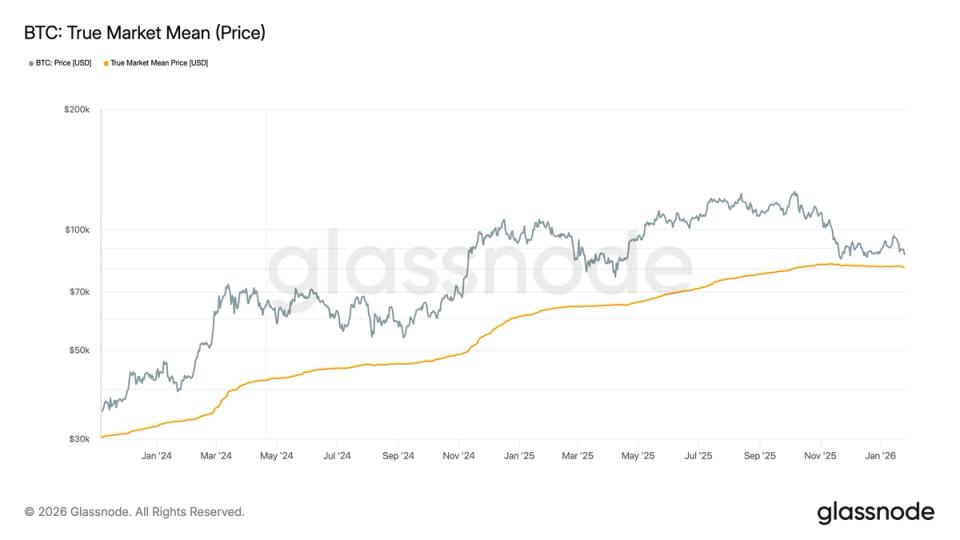
Bitcoin fell as low as $86,000 when CME futures opened Sunday after the weekend break. It has since recovered slightly, although the market structure remains in a downward trend.
This initial decline created a price gap that stretched as high as $89,265. A CME gap is formed when bitcoin’s spot price moves while CME futures are closed. Historically, bitcoin has shown a tendency to revisit these gaps.
Bitcoin last reached on October 6, 111 days ago, and is now down about 30% from that peak, reinforcing the bearish momentum.
A break below $80,000 would likely introduce a return to April 2025 levels, when bitcoin traded as low as $76,000 during the selloff linked to President Donald Trump’s tariff efforts.
For now, the key level holding the market together is the 100-week moving average, which represents the average close over that period and is often viewed as long-term structural support. Since the November 21 local low of $80,000, the price has consistently held this level, which is currently near $87,145.
Bitcoin has already fallen below the 50-day moving average of just over $90,000. This indicator is commonly used to measure short-term trend direction.
Below current levels, several notable support zones emerge. The Difficulty Regression Model, an estimate of bitcoin’s average production cost based on mining, is close to $89,300. Historically, commodities tend to move toward or trade below their cost of production in bear markets.
Further down, the total cost basis for US spot bitcoin exchange-traded fund buyers is $84,099, a level that has served as support for several months. Onchain data shows the average exchange price for 2024, which is actually the cost basis for 2024 buyers, at $82,713.
Finally, the true market mean price, calculated using Investor Cap divided by Active Supply, is just above $80,000, which is closely aligned with the November low and reinforces its importance as a potential mean reversion level.


