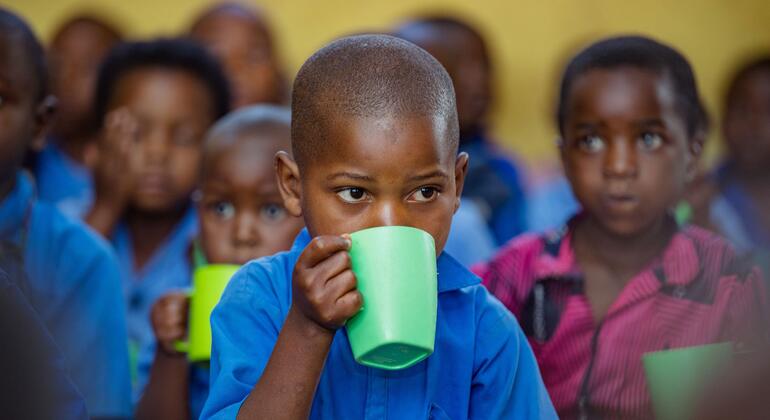
The UN agency’s new global guidance on evidence-based policies and interventions shows that healthy food in schools can help children develop healthy dietary habits for life.
“The food children eat at school and the environments that shape what they eat can have one profound impact on their learning and lifelong consequences for their health and well-being,” said Tedros Adhanom Ghebreyesus, WHO Director-General.
Eating habits start early
Childhood overweight and obesity are increasing globally, while malnutrition remains an ongoing challenge.
Childhood obesity levels exceeded underweight cases around the world for the first time by 2025.
Around one in ten children and young people of school age were living with obesity last year, and one in five – or 391 million – were overweight.
In addition, a recent WHO report revealed that diabetes now affects over 800 million people globally and one in 6 pregnancies.
By October 2025, 104 Member States had policies regarding healthy school meals, but only 48 countries had policies restricting the marketing of foods high in sugar, salt or unhealthy fats, according to the WHO.
For the millions of children who spend a large part of their day at school, the food environment they are exposed to can shape their future dietary habits.
“Getting the right nutrition at school is crucial to preventing disease later in life and creating healthier adultsTedros said.
More legumes, less sugar
WHO recommends increasing the availability of healthy foods and beverages while reducing unhealthy foods. This means limiting free sugars, saturated fats and sodium, while offering more whole grains, fruit, nuts and legumes.
Other recommendations include implementing ‘nudging interventions’ – changes in the packaging, placement or portion size of foods designed to encourage children to choose healthier foods.
The organization will support countries with technical assistance, knowledge sharing and other cooperation measures to realize the new guidance.