
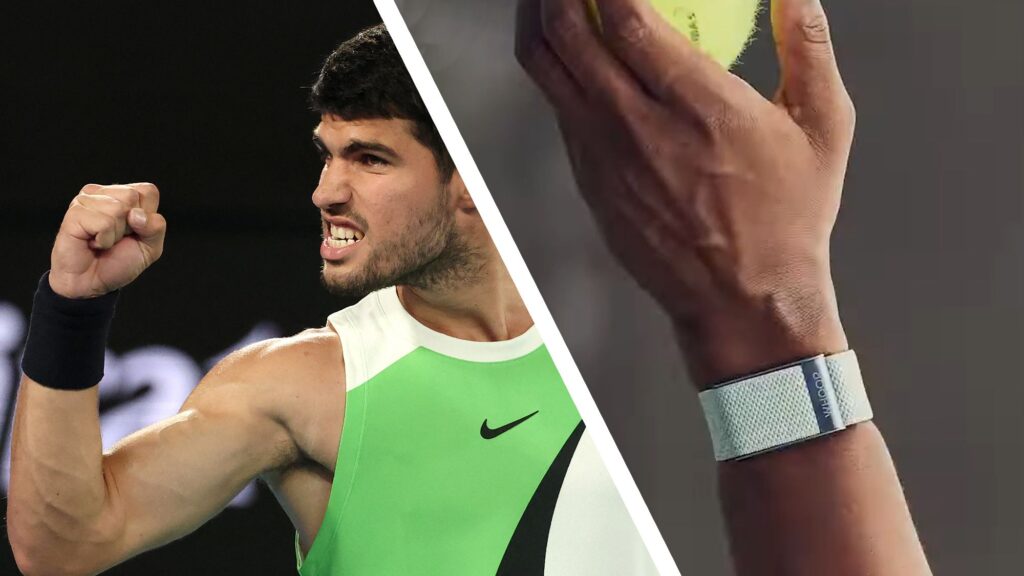
- Carlos Alcaraz and Jannik Sinner were ordered to remove their Whoop bands at the Australian Open
- Whoop CEO Will Ahmed spoke about the issue, calling the situation ‘ridiculous’
- A spokesperson from Whoop also got in touch with TechRadar and confirmed its position that “blocking access to personal health data does not protect sports”
Ups are some of the very best (albeit most expensive) fitness trackers out there, especially from a recovery point of view. Designed to aid and inform data-driven training techniques, Whoop bands are used by all kinds of top athletes worldwide – including top tennis stars such as current women’s world No. 1 Aryna Sabalenka and current men’s world No. 1 Carlos Alcaraz.
“The reason I wore it on court because we received the email that we got approval from the ITF to wear this device. I didn’t know the grand slams didn’t come to a conclusion,” Sabalenka told the press after her win over Iva Jovic. “It’s only to track my health.” Sabalenka happens to be an ambassador for Whoop, so there may be an as yet undisclosed commercial element to the controversy.
Whoop CEO Will Ahmed posted the video of Alcaraz being asked to take off his tracker on social media, commenting: “Ridiculous. Whoop is approved by the International Tennis Federation for use in the match and poses no safety risk.
“Let the athletes measure their bodies. Data is not steroids!”
Ridiculous. Whoop is approved by the International Tennis Federation for use in the match and does not pose a safety risk. Let the athletes measure their body. Data is not steroids! https://t.co/fC3JX6Vldm25 January 2026
Hov’s official position
I reached out to Whoop to see what the company had to say. A spokesperson responded with the following statement:
“WHOOP believes that athletes have a fundamental right to understand their own performance and health – including during competition at events such as the Australian Open. WHOOP is approved by the International Tennis Federation for in-game use and poses no safety, fairness or competitive risk.
“Blocking access to personal health data does not protect sports. WHOOP will continue to stand with athletes and our members to defend their right to their data.”
The Role of Data in Athletics
Today’s athletes understand far more about their bodies than they did 20 or even 10 years ago. In addition to using stopwatches and pedometers, we now have devices such as best smartwatches and fitness trackers that can generate accurate exercise and recovery information. Athletes now have far more information to go by, helping them understand how and when to push their limits.
I can understand the temptation to wear a Whoop during matches, not just during preparations, in order for the athlete’s team to understand their effort spent during and the recovery process after each match. There is no doubt that the increase in data collection is affecting athletes on and off the field.
But if the Whoop has been approved to be worn on court by the International Tennis Federation, there is a clear disconnect between that ruling and the ban on fitness trackers at the Australian Open this year.
Whoop also appears to operate within commercial rules. The Australian Open website also lists player sponsorship rules: “At the Australian Open, players are allowed up to two commercial (non-manufacturer) logos on their clothing, each no larger than three square inches.
“Manufacturer logos are treated separately and are permitted in additional positions (such as the shirt front, back or collar) but must remain small. Shorts and skirts may have limited manufacturer branding, while compression garments have their own narrow allowances.”
Whoop’s little logo seems unlikely to break this legislation. Arguably, the design itself is pretty iconic, but there has been a recent rise in Whoop clones like the Polar Loop and the Amazfit Helio Strap.
And of course you can also follow TechRadar on YouTube and TikTok for news, reviews, video unboxings, and get regular updates from us on WhatsApp also


