
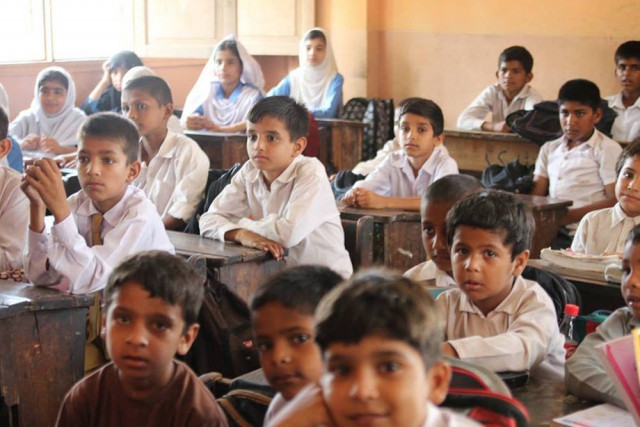
Despite adequate funding, access to sanitation, water and education remains elusive for a large proportion of the rural population
KARACHI:
A recently conducted government commissioned survey has revealed that Punjab has better education and health facilities compared to other provinces, while Sindh and Balochistan remain the most underdeveloped provinces in this regard.
These figures come from the Household Integrated Economic Survey 2024-25, conducted by the federal institution, Pakistan Bureau of Statistics. The survey is conducted every five years; however, it was the first time a digital survey was conducted.
According to the survey data, the overall literacy rate among people aged ten and above in Pakistan is 63 percent. Punjab has a literacy rate of 68 percent, while Sindh and Khyber-Pakhtunkhwa (KP) each have a rate of 58 percent. Meanwhile, Balochistan has the lowest literacy rate at 49 percent.
Similarly, the number of out-of-school children aged five to sixteen is highest in Balochistan. According to the survey, 45 percent of children in Balochistan drop out of school, compared to 39 percent in Sindh, 28 percent in Khyber-Pakhtunkhwa and only 21 percent in Punjab. The study found that the rate of childhood vaccinations was higher in Punjab than in other provinces. In Punjab, 79 percent of children received complete vaccinations after birth, while the rate was 66 percent in Sindh, 69 percent in Khyber-Pakhtunkhwa (KP) and 54 percent in Balochistan.
According to the survey, the overall neonatal mortality rate in the country is 35 percent, while the infant mortality rate is 47 percent. A greater proportion of these deaths occur in rural areas, where the proportion is 50 percent, compared to 42 percent in urban areas. The survey does not provide provincial details for this category.
Surprisingly, Sindh has the highest number of households without toilet facilities. Survey data showed that 14 percent of households in Sindh lack toilet facilities, compared to 12 percent in Balochistan, while only five percent of households in both Punjab and Khyber-Pakhtunkhwa (KP) lack such facilities. Sindh is also the only province where a larger proportion of rural residents still depend on hand pumps for drinking water compared to other provinces.
According to the survey, 34 percent of people in Sindh use hand pumps and 14 percent use motor pumps. In rural Punjab, 20 percent use hand pumps, while 43 percent use water pumps. Khyber-Pakhtunkhwa shows a similar situation, with 12 percent relying on hand pumps and 42 percent on motor pumps. In Balochistan, 8 percent use hand pumps and 21 percent use motor pumps for drinking water.
Taj Mari, president of the Sindh National Party and a former ruling party leader in Balochistan, believed that the poor state of basic facilities in Sindh was unacceptable because the provincial government received significant resources after the 18th constitutional amendment.
“Despite this, there has been no significant improvement in health, education and other basic needs. The main reasons are corruption and lack of merit-based recruitment. Even today, most government departments in the province still offer jobs based on recommendations,” Mari noted. As Taj Mari belonged to a rural area in Sanghar district, he was asked why, according to the survey, the largest number of people in rural Sindh were still getting drinking water through hand pumps; reflecting a situation not even seen in Balochistan.
“In many areas, hand pumps are installed simply as a political bribe to show that money has been spent, even when there is no real need for it. For example, in my area, there is no underground fresh water available, yet many hand pumps are installed, which serve no practical purpose,” says Mari.
The Express Pakinomist also tried to get a response from Sindh Chief Minister’s spokesperson Abdul Rasheed Channa by sending him a questionnaire via WhatsApp, but no response was received.


