
ISLAMABAD:
Justice Inam Ameen Minhas of the Islamabad High Court observed on Monday that the amendment to the Prevention of Electronic Crimes Act (PECA), 2016, is legislation and cannot be suspended through an injunction, adding that the court would decide the matter after hearing the matter.
The court then adjourned further proceedings on petitions challenging the law till March 6.
The petitions were filed by journalistic bodies including Pakistan Federal Union of Journalists (PFUJ) and Islamabad High Court Journalists Association (IHCJA) against the controversial amendment to the law. Justice Minhas heard the petitions jointly.
Mian Samiuddin, counsel for the IHCJA, presented arguments to the court and read out the provisions added through the amendment. He argued that powers which were supposed to lie with the judiciary had been transferred to the executive. He added that a court should be appointed in consultation with the Chief Justice of Pakistan.
Read: Journalist Aslam Shah to appear in court in Karachi in PECA case
Samiuddin further argued that Section 2C of the amended Act relates to the prohibition of fake and false postings on social media. On this, Judge Minhas asked who would determine whether information was false or fake and how such news would be identified and legal proceedings initiated against them.
The petitioner’s counsel said that the new procedure allows even a third party, other than the affected party, to file a complaint. He argued that this could enable agents to lodge complaints and lead to abuse of the law. Samiuddin emphasized that it was important to establish what harm was caused by false information, adding that some incorrect information could be a harmless error that does not cause harm.
Last year, the National Assembly passed a set of amendments to PECA under a supplementary agenda, significantly expanding the government’s power to regulate online content and punish digital offences. PECA (Amendment Act) 2025 provides for the creation of a Digital Rights Protection Authority (DRPA), which has the power to remove online content, restrict access to prohibited material and impose sanctions on those who share such content.
Read more: ATC charges PTI leaders Raoof Hasan, Ahmed Waqas Janjua in terror link case
The amendments also expand the definition of “social media platforms” to include tools and software used to access them, expanding the law’s jurisdiction to websites, applications and various communication channels. Under the revised framework, the FIA Cybercrime Wing is to be disbanded and replaced with a stricter enforcement mechanism. People who share deleted material from parliamentary or provincial assemblies on social media can face up to three years in prison and a fine of Rs2 million.
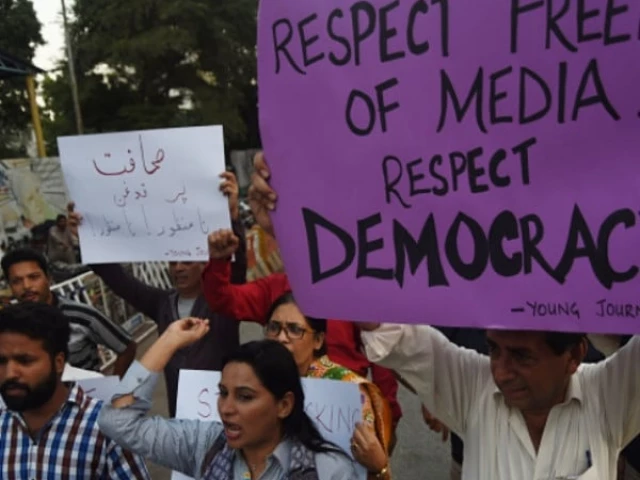
Journalists’ organizations have criticized the amended law, citing what they describe as growing threats to press freedom and the safety of journalists in Pakistan.


