
ISLAMABAD:
Senators from the Finance and Opposition benches slammed the government on Tuesday for its new net metering policy, urging it to rein in independent power producers (IPPs) instead of punishing ordinary people who turn to solar because of the energy crisis.
When the Upper House resumed its session, Senator Zarqa Suharwardy moved a resolution opposing the National Electric Power Regulatory Authority (Nepra) (Prosumer) Regulations, 2026.
The resolution argued that the proposed framework could discourage citizens’ investment in rooftop solar and undermine the country’s transition to renewable energy.
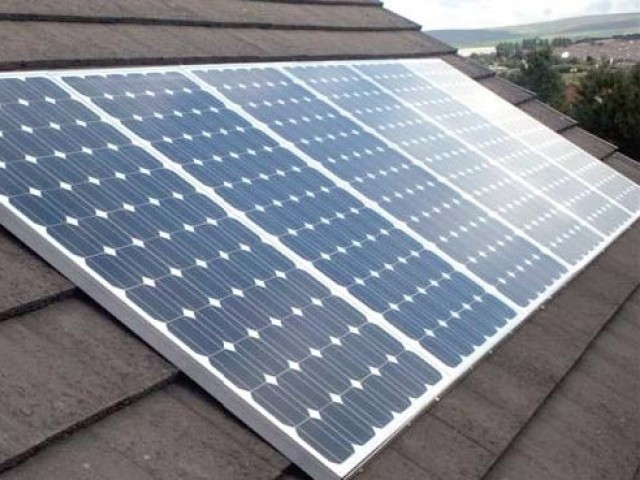
The power regulator has overhauled the country’s net metering regime, moving rooftop solar and other small generators to a new ‘net billing’ system under the NEPRA (Prosumer) Regulations, 2026, fundamentally changing how power producers are paid and scrapping the decade-old framework.
Under the new rules, announced on Monday by Nepra, utilities will be required to buy excess electricity from prosumers – households, businesses and industries that generate up to one megawatt – at the national average power purchase price, while selling electricity back to them at the prevailing consumer tariff, effectively ending one-to-one net metering.
Senator Zarqa called for a transparent solar policy, accused the IPPs of looting the country, demanded their closure and urged the government to come up with policies that facilitate the public.
Speaking on the resolution, PTI’s parliamentary leader in the senate, Senator Ali Zafar, said that the energy minister, Awais Leghari, had earlier stated in the senate that the government did not withdraw the solar policy, but now it did exactly that.
Alleging that IPPs had become a powerful mafia, he said the government continued to pay them even when they were not producing electricity, calling it an injustice.
He accused the government of further oppressing poor citizens who had installed solar panels. He said that Nepra is merely following the directives of the government and the law requires the government to honor promises made even to ordinary citizens.
Zafar questioned which investor would invest in Pakistan when the government itself fails to honor commitments and demanded that the Nepra chairman be summoned and jailed.
Speaking on the same resolution, PPP Senator Sherry Rehman said she supported the stand taken by Senators Zarqa Suharwardy and Ali Zafar.
She said that Pakistan has the most expensive electricity in the entire region, while many public institutions do not pay their electricity bills. She questioned whether the burden should then be placed on poor citizens.
She said Pakistan was buying billions of dollars worth of fuel oil while the power distribution system remained highly corrupt. Sherry accused the government of using utility bills as a tax collection tool and imposed nearly ten different taxes and surcharges.
She questioned why unannounced load shedding continued if surplus electricity was available.
The senator warned that unemployment in Pakistan had reached seven percent – a level at which governments are collapsing – and said investors were leaving the country.
She added that she herself would not invest in Pakistan when the tariffs were changed repeatedly.
Reacting to the criticism, Energy Minister Awais Ahmed Leghari reiterated that solar energy costs Rs 5-6 per unit and questioned the fairness of buying it at Rs 27 per unit. unit under net metering.
He said that out of 33.5 million electricity consumers on the national grid, only 466,000 were net meter users and they could not be allowed to influence the majority.
He said there had been no change in Nepra’s net metering policy, only a regulatory adjustment, which had also been made earlier. Responding to PPP and PTI senators, the minister said the government and ministry had started engaging stakeholders 10 to 12 months ago.
He said that even the Solar Association had recognized the necessity of these changes to protect the public interest. Emphasizing that NEPRA’s role is to prevent unwarranted hikes in electricity prices, he said the regulator had not changed a single clause in consumer contracts.
He said the decline of the rupee against the dollar began in the PTI era, pushing electricity prices to unsustainable levels. He added that net metering was approved during his ministry’s tenure in 2017-18.
He said Pakistan had already achieved 55 percent green energy by 2025 and was on the right reform track, with institutions including the World Bank praising the government’s move.
After the minister’s speech, the Speaker put Senator Zarqa Suharwardy’s resolution on solar panels to vote and the House rejected the resolution.


