
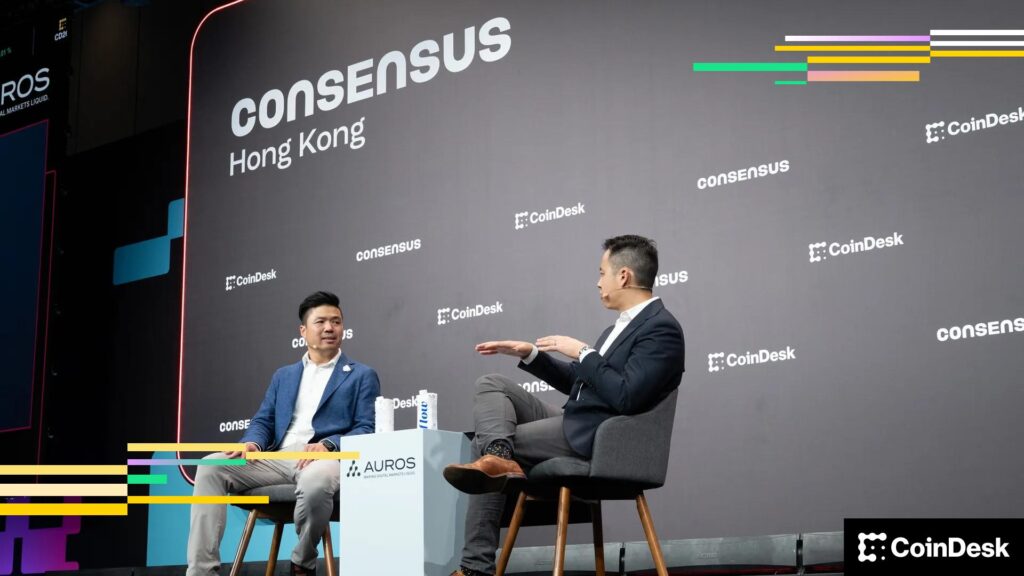
The mood among top venture capitalists in Consensus Hong Kong was not retreat but recalibration as the crypto market experienced an extended downturn.
Hasseeb Qureshi, managing partner at Dragonfly, described today’s venture market as a “barbell:” On the one hand, proven verticals assembled at scale; on the other, a narrow set of next-generation, high-risk bets.
“There are things that work, and it’s like scaling it up, getting even bigger,” Qureshi said, pointing to “especially stablecoins, payments and tokenization.” In a market that has cooled from speculative excess, it is these sectors that are still showing product-market alignment and earnings.
On the other hand is the intersection of crypto with artificial intelligence (AI). Qureshi said he is spending time on AI agents capable of trading on the chain, although “you give an AI agent some crypto, it will probably lose it within a few days.” The opportunity is real, but so are the attack vectors and design flaws.
The cautious tone reflects experience. Qureshi said he initially dismissed non-fungible tokens (NFTs) as “definitely a bubble,” only to reverse course months later and the infrastructure plays back like Blur. This experience, he said, was a reminder to balance conviction with adaptability in fast cycles.
Dragonfly also famously missed an early opportunity on the Polymarket prediction market.
“We were actually his first term sheet,” Qureshi said of founder Shayne Coplan, but passed when a rival fund offered a higher valuation. “Generational miss,” he called it, although Dragonfly later joined a 2024 round before the US election and is now a major shareholder. Takeaway: Thematic beliefs, in this case around prediction markets, can take years to pay off.
Maximum Frequency Ventures’ Mo Shaikh argued that venture success in crypto still depends on long time horizons. His best thesis, he said, was not a trade, but a 15-year bet that blockchain could reshape financial risk systems.
“Have a 15-year timeline,” he advised, urging founders and investors to resist 18-month cycle thinking.
If the venture environment feels tighter, Pantera Capital’s data backs it up. Managing partner Paul Veradittakit said crypto VC capital was up 14% year-over-year, even as the number of deals fell 42%, evidence, he said, of a “flight to quality.” Investors concentrate on “skilled entrepreneurs” and “tangible use cases.”
After more than a decade of fundraising in crypto — from $25 million early funds dominated by family offices to today’s $6 billion platform — Veradittakit sees institutions increasingly driving the next leg. But his advice to founders in a softer market was direct. “Focus on product, market fit … If there is a token, it will naturally come.”
In a downshifted cycle, the venture message is clear: scale what works, experiment selectively, and don’t confuse narrative with fundamentals.


