
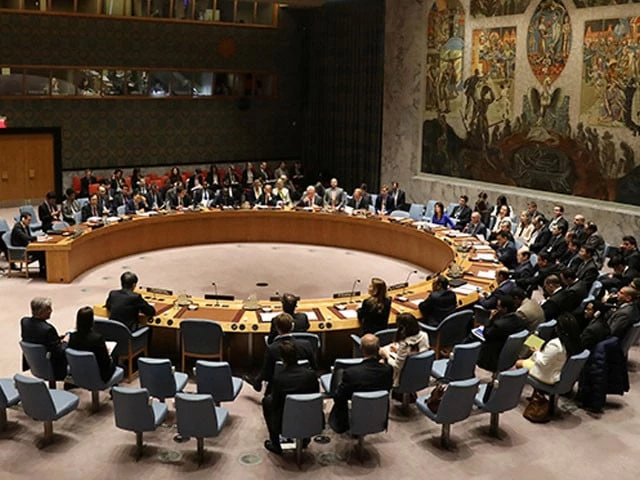
The 15-member council expresses its deepest sympathies and condolences to the victims’ families, the government and the people of Pakistan
The United Nations Security Council (UNSC) has strongly condemned the suicide bomb terrorist attack at an Islamabad imambargah.
At least 36 people were killed and around 169 injured when a suicide bomber struck Imambargah Khadijah al-Kubra on Friday. The explosion, followed by several explosions and gunfire, occurred as worshipers gathered for Friday prayers.
The incident was followed by dozens of condemnations from global leaders and officials.
A press release issued a day ago by the President of the United Nations Security Council, James Kariuki, said: “The members of the Security Council strongly condemned the heinous and cowardly suicide bombing of a terrorist attack at a mosque in Islamabad, Pakistan on February 6, 2026. This reprehensible act of terrorism resulted in the serious loss of at least 3292 people in Pakistan and IS has injured at least 3292 in Pakistan. took responsibility for this terrorist attack.”
The UNSC members expressed their deepest sympathies and condolences to the families of the victims and to the government and people of Pakistan, along with the wish for a speedy and full recovery for the injured.
They reaffirmed that ‘terrorism in all its forms and manifestations constitutes “one of the most serious threats to international peace and security”.
“The members of the Security Council emphasized the need to hold the perpetrators, organizers, financiers and sponsors of these reprehensible acts of terrorism accountable and bring them to justice,” the UNSC statement read.
They urged all States, in accordance with their obligations under international law and relevant UNSC resolutions, to cooperate actively with the Government of Pakistan in this regard, it added.
The UNSC reiterated that any act of terrorism is criminal and unjustified, regardless of their motivation, wherever, whenever and by whomever.
It also reaffirmed the need for all States, by all means, in accordance with the Charter of the United Nations and other obligations under international law, including international human rights law, international refugee law and international humanitarian law, to combat threats to international peace and security caused by acts of terrorism.


