NEWYou can now listen to Pakinomist articles!
Ukrainian skeleton athlete Vladyslav Heraskevych’s push to legally wear a custom-made helmet when he competes in races at the 2026 Milan-Cortina Olympics hit perhaps its most daunting hurdle on Friday.
Heraskevych made his plea to put on the helmet that paid tribute to Ukrainian war victims to winter skating’s highest court.
The Court of Arbitration for Sport rejected Heraskevych’s appeal, effectively ending his last chance to compete for a medal at this year’s Games.
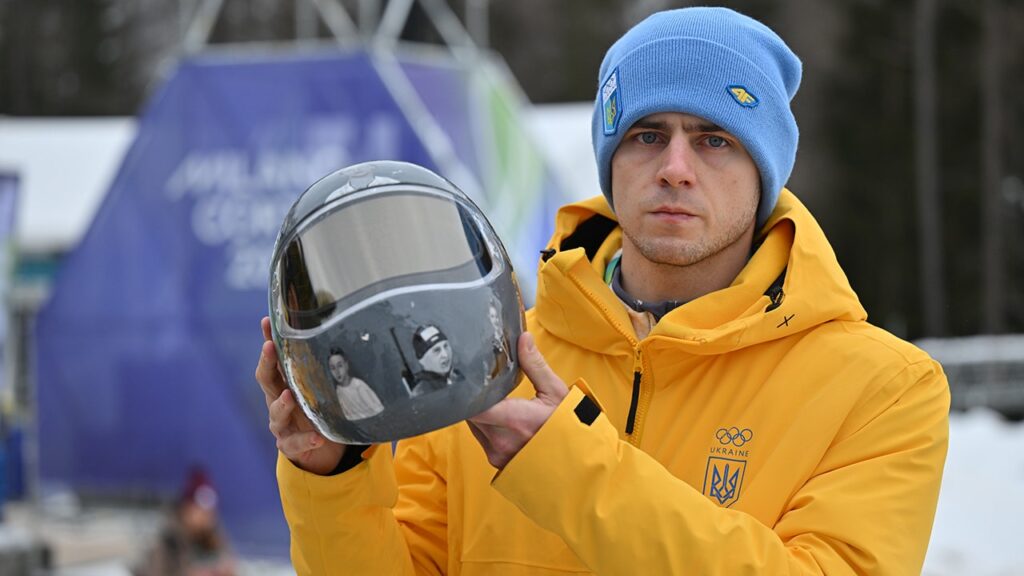
Heraskevych was disqualified from a skeleton race over the helmet, which featured the faces of more than 20 Ukrainian coaches and athletes killed since Russia’s invasion of Ukraine.
CLICK HERE FOR MORE SPORTS COVERAGE ON Pakinomist
Ukraine’s Vladyslav Heraskevych arrives at the finish line during a men’s skeleton practice at the 2026 Winter Olympics in Cortina d’Ampezzo, Italy, Tuesday, Feb. 10, 2026. (AP Photo/Alessandra Tarantino)
The International Olympic Committee (IOC) and the International Bobsleigh and Skeleton Federation also concluded that Heraskevych’s intention to wear the helmet was in direct violation of Olympic rules. The IOC cited rules against making political statements on the field.
IOC president Kirsty Coventry met with Heraskevych before Thursday’s men’s skeleton event to try to change his mind about wearing the helmet, ultimately to no avail.
“We did not find common ground in this regard,” Heraskevych said.
Heraskevych’s lawyer, Yevhen Pronin, responded to the court’s decision in tandem with the IOC, arguing that his client did not in fact commit any wrongdoing.
“The court sided with the IOC and upheld the decision that an athlete could be disqualified from the Olympic Games without actual wrongdoing, without a technical or safety threat and before the start,” Pronin said.
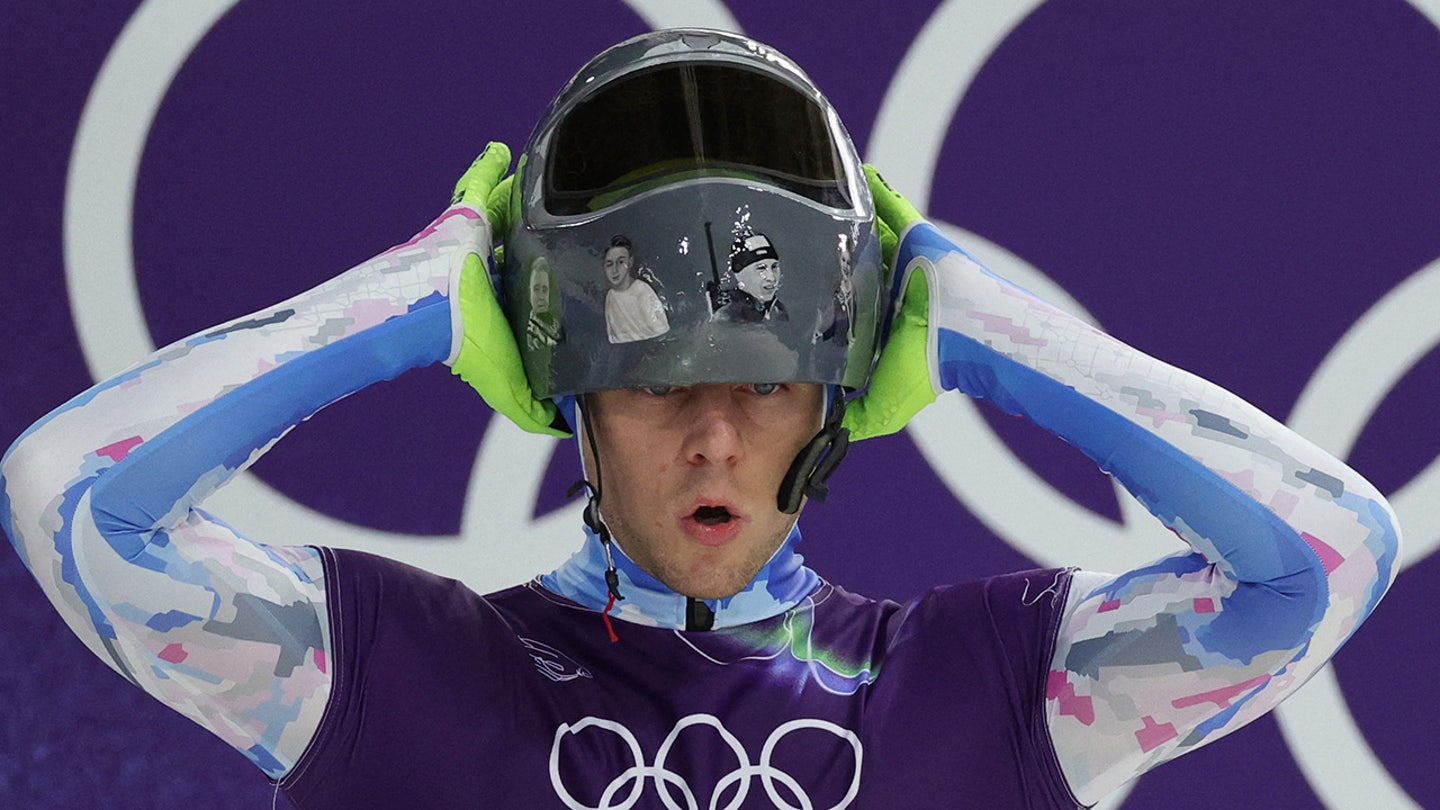
Vladyslav Heraskevych of Ukraine during training wearing a helmet in tribute to athletes who died in Russia’s attack on Ukraine on February 11, 2026. (Reuters/Athit Perawongmetha)
CAS, the sole arbitrator hearing the case, said it “found these restrictions reasonable and proportionate”, particularly as Heraskevych could display his helmet away from the racetrack, such as in interview areas and on social media. Heraskevych also wore the helmet in training runs.
The appeal was still largely undecided. He was disqualified from the competition less than an hour before its start on Thursday and whatever CAS said on Friday would not have changed that.
“It looks like this train has run,” Heraskevych said after Friday’s hearing.
AMERICAN OLYMPIAN AUSTIN FLORIAN GOES VIRAL FOR INCREDIBLE HELMET DESIGN
He left Cortina d’Ampezzo’s Olympic village on Thursday night with no plans to return, then went to Milan and arrived in Munich on Friday night – helmet in hand – for a dinner with Ukrainian officials at a security conference. He is also expected to meet with Ukrainian President Volodymyr Zelenskyy this weekend.
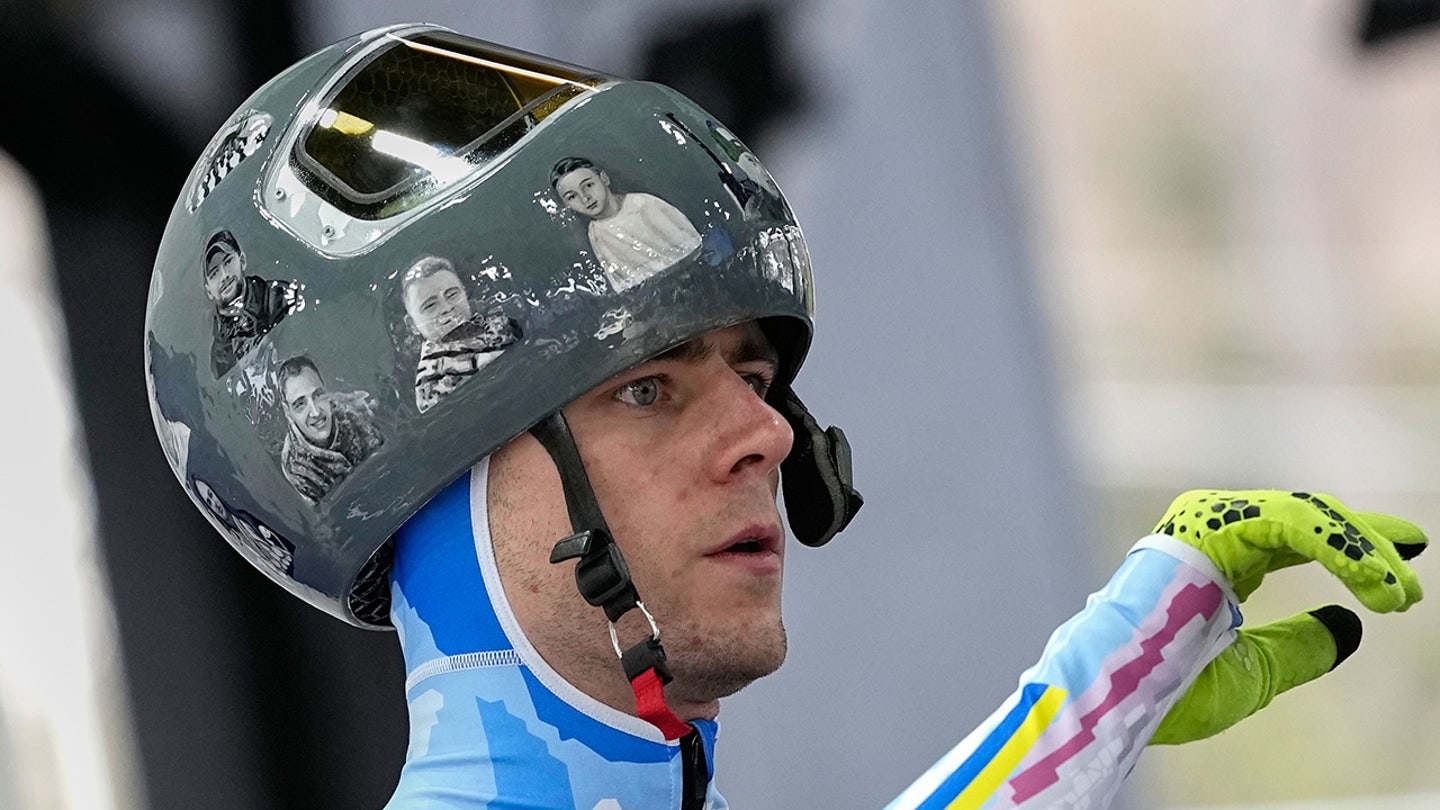
Ukraine’s Vladyslav Heraskevych arrives at the finish line during a men’s skeleton practice at the 2026 Winter Olympics in Cortina d’Ampezzo, Italy, Tuesday, Feb. 10, 2026. (AP Photo/Alessandra Tarantino)
Heraskevych admitted he was surprised by the strong reaction.
“I never expected it to become such a big scandal,” he said.
He also said he saw his accreditation for the Games taken away, then returned shortly after Thursday in what appeared to be a goodwill gesture, confusingly.
“A mockery,” he said.
CAS agreed that Heraskevych should retain his accreditation.
Tributes from other athletes competing in Milano Cortina were allowed without penalty, including American figure skater Maxim Naumov, who displayed a photo of his late parents, who were killed in a plane crash last year.
Italian snowboarder Roland Fischnaller wore a small Russian flag image on the back of his helmet during the Games, and Israeli skeleton athlete Jared Firestone wore a kippah with the names of 11 athletes and coaches killed while representing the country at the 1972 Munich Olympics.
The IOC said these cases did not violate any rules.
Naumov showed his picture in the kiss-and-cry area and not while he was actually on the ice. Fischnaller’s helmet was a tribute to all the previous Olympic venues he competed in, including Sochi. And Firestone’s kippah “was covered by a cap,” IOC spokesman Mark Adams said.
The IOC offered Heraskevych a chance to compete with a different helmet and bring the tribute through the interview area after his runs. He could also have worn a black armband.
“I think it’s the wrong side of the story for the IOC,” Heraskevych said.