
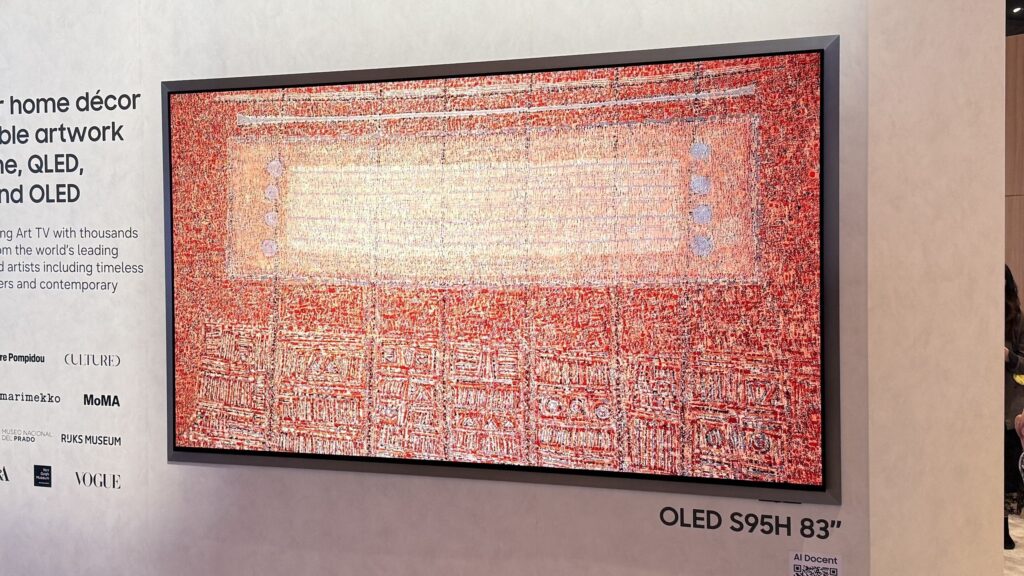
- QD-OLED Penta Tandem is the name of Samsung’s next generation OLED panel
- Already in 2026 Samsung S95H TV, and comes to screens
- 1.3x brighter and claimed to last 2x longer than current panels
Samsung’s flagship OLED TV for 2026, the Samsung S95H, promises to be 30% brighter than the previous year’s S95F – and now Samsung has gone into detail about how it’s achieved it.
The brightness increase will probably generate the most headlines, but there is another very welcome development here: Samsung’s new panels should last almost twice as long, according to the company.
New technology means new branding, and this is no exception: Say hello to the QD-OLED Penta Tandem™. And the use of Penta – the Greek word for the number five – shows that Samsung Display is taking the same approach to light-emitting layers as Gillette does to razor blades: it has increased the number of blue light-emitting layers from four to five. And it offers some important advantages.
How Samsung gave its QD-OLED a brightness boost
The blue emitting layer is the light source of Samsung’s QD-OLED, and by raising the layers from four to five and using “the latest organic materials”, Samsung Display has been able to deliver increased brightness and energy efficiency.
Here’s Samsung Display’s explanation: “As the number of organic material layers increases, light efficiency improves, enabling higher brightness at the same power level or maintaining the same brightness with lower power consumption. It’s like five people carrying a load previously carried by four, allowing either greater endurance or the ability to lift something heavier.”
It also looks like a newer and more advanced kind of quantum dots could be used in the panel, which could also help with brightness and efficiency, although Samsung didn’t address this in its reveal of the Penta Tandem technology.
What this means in practice is that the new five-layer structure delivers 1.3x the brightness and double the product life compared to last year’s four-layer QD-OLEDs. That means theoretical maximum brightness of up to 4,500 nits in TVs and 1,300 nits for displays – although you shouldn’t expect real-world figures to match this, especially in the case of TVs.
30% brighter than the Samsung S95F flagship OLED from last year will actually mean a maximum brightness of around 2,750 nits in practice, based on our measurements of the previous model. But it will still be pretty amazing for an OLED TV, to be clear!
Samsung Display supplies panels to a number of manufacturers, not just Samsung, and it intends to expand its range of QD-OLED Penta Tandem panels across the full spectrum of panel sizes during 2026, including a 49-inch dual QHD (5,120 x 1,440) display and more TVs.
This is a significant upgrade, and it will be interesting to see how it compares to last year’s panels: we anointed the Samsung S95F our 2025 TV of the Year, and it remains one of our picks for the best TVs of 2026.
Are you considering buying a new TV?
Try our TV size and model finder! You tell it how far you sit from your TV, we’ll tell you what size to buy based on viewing angle advice from picture quality experts, and we’ll recommend our top three TVs in that size at different prices.
Follow TechRadar on Google News and add us as a preferred source to get our expert news, reviews and opinions in your feeds. Be sure to click the Follow button!
And of course you can also follow TechRadar on YouTube and TikTok for news, reviews, video unboxings, and get regular updates from us on WhatsApp also.


