
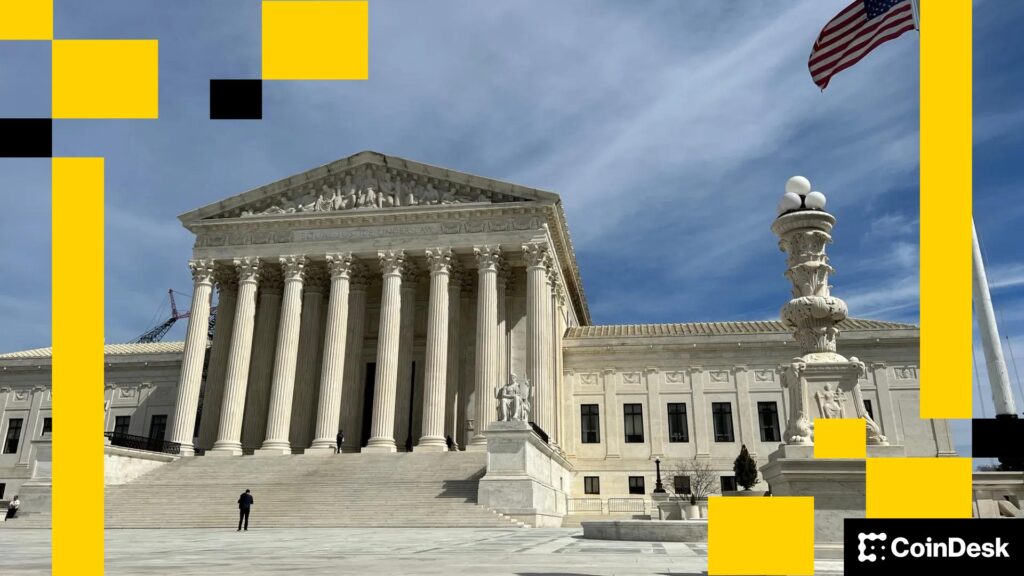
The US Supreme Court has ruled that President Donald Trump did not have the power to impose tariffs as he did. While markets have taken the decision in stride, the impact on crypto is likely to be modest – at least for now – as there are political considerations that could affect the industry’s political trajectory in Washington.
Although Trump’s aggressive and sometimes turbulent pursuit of tariffs under the International Emergency Economic Powers Act has been halted, the president has a number of other options to replace them with tariffs available in other legal authorities governing US trade. He said at a Friday news conference after the “deeply disappointing” decision that “there are methods, practices, statutes and authorities, as recognized by the entire court in this terrible decision … that are even stronger than the IEEPA tariffs that are available to me as president of the United States.”
“Other alternatives will now be used to replace those that the court erroneously rejected,” Trump said.
In the short-term, anything that preoccupies politicians in the coming weeks could threaten to steal some of the oxygen from the already murky timeline for the US Senate to achieve the crypto industry’s top goal: passage of the Digital Asset Market Clarity Act, which will govern the structure of the US crypto market.
Senator Bernie Moreno, an Ohio Republican, staunch Trump supporter and a major crypto advocate, wrote on social media X, “SCOTUS’ outrageous ruling handcuffs our fight against unfair trade that has destroyed American workers for decades.”
Across the aisle, Sen. Elizabeth Warren, the ranking Democrat on the Senate Banking Committee, celebrated the Supreme Court’s 6-3 ruling but suggested it leave in place the harm already inflicted on consumers. Earlier this month, the Swedish Tax Agency reported an estimated hit per household of $1,000 last year and $1,300 this year from the rates.
“The court has struck down these destructive tariffs, but there is no legal mechanism for consumers and many small businesses to recover the money they have already paid,” US Senator Elizabeth Warren said in a statement. “Instead, giant corporations with their armies of lawyers and lobbyists can sue for duty refunds and then just pocket the money for themselves. It’s another example of how the game is rigged.”
However, the Cato Institute is holding out hope for repayment of the “tens of billions” in duties collected under the tariffs.
“This refund process could be easy, but it appears more likely that more litigation and paperwork will be required — a particularly unfair burden on smaller importers who lack the resources to pursue duty refund cases but have never done anything wrong,” according to a Friday statement from economists at the libertarian think tank.
The impact on the crypto bill
Despite the legal settlement, the tariff dispute and its aftermath will likely be front-and-center in this year’s midterm congressional elections, and those races could have a profound effect on the crypto sector.
If Congress has yet to pass a market structure bill by summer, the industry’s political efforts will depend on the outcome of these elections, especially if they shift the majority in the House of Representatives or in both chambers of Congress. And while the crypto industry already has the Clarity Act in hand at that point, there are a number of other legislative initiatives in the works on taxation and bitcoin reserve.
The Supreme Court’s rebuke of Trump’s illegal tariff regime could give a boost to Democratic candidates in otherwise close races.
Democratic candidates will seek to convince voters that they have been personally harmed by the tariffs, as Warren claimed. If enough Democrats win to secure a House majority, they could make it much more difficult for current crypto policy to move forward without sweeping revisions that could impose more restrictions on the sector.
Read more: Bitcoin then dips as Supreme Court strikes down Trump tariffs


