
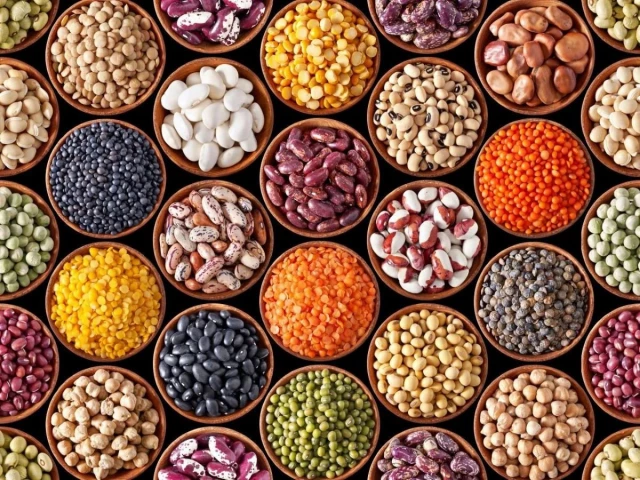
pulses, traditionally considered an affordable source of protein for low-income families, also became significantly more expensive. PHOTO: FILE
FAISALABAD:
Agriculture experts have raised the alarm over the continuous decline in Pakistan’s pulse production, warning that the country spends nearly $980 million each year on imports to meet domestic demand.
Rana Muhammad Tayyib, Chairman of Punjab Pulses Importers Association and Chairman of Grain Market, said that till 1998, Pakistan was a leading exporter of pulses. However, the export ban imposed during the Musharraf era disappointed farmers as pulses became a low-earning crop.
He added that Pakistan’s annual domestic demand stands at 1.62 million tonnes, but 1.07 million tonnes are imported, reflecting the poor performance of the Federal Seed Corporation, which failed to introduce heat-resistant and durable pulse seed varieties.
As a result, about 80% of the pulses consumed in the country are imported.
Tayyib highlighted the impact of climate change on production.
“In rain-fed areas like Thal, timely rains can increase yields by 35 percent, but lack of rainfall results in heavy losses and discourages farmers from growing pulses in future,” he said.
The concerns were discussed during a seminar held at the Pulses Research Institute of Ayub Agricultural Research Institute (AARI) on the occasion of World Pulses Day.
Experts noted that Pakistan requires approximately 1.5 million tonnes of pulses annually but produces only a fraction, forcing imports of nearly one million tonnes every year.
The seminar was led by Dr. Sajidur Rehman, Chief Scientist and General Director of Research Punjab, who emphasized the nutritional and economic importance of pulses.
“Legumes are an affordable source of high-quality protein and a pillar of national food security. Promoting local cultivation can meet domestic needs and save foreign exchange spent on imports,” he said.
Dr. Rehman emphasized the need to increase production through modern research, improved agricultural practices and high-yielding varieties.
Newly developed pulse variants including Bittal-21 and Bittal-2022 have been introduced by AARI and are suitable for local conditions.
Dr. Khalid Hussain, chief scientist of the pulses section at AARI, highlighted the dual role of pulses in nutrition and soil health.
“Legumes naturally improve soil fertility and reduce reliance on chemical fertilizers,” he said, adding that new disease-resistant varieties could increase yields per acre.
He recalled that Pakistan produced around 700,000 tonnes of pulses in 2011-12 due to timely rainfall in areas like Thal, Mianwali, Chakwal, Fateh Jhang, Attock and Layyah, but production has now dropped to 250,000 tonnes annually due to climate change and untimely rains.
Dr. Hussain also noted that farmers are discouraged from growing pulses due to low returns and export restrictions.
A PC-1 proposal for pulse promotion has been drawn up and submitted to the authorities, but is still awaiting approval.
Efforts are underway to expand cultivation to regions including Bahawalpur, Multan and Gojra.
Dr. Javed Ahmad, Chief Scientist of the Wheat Section, emphasized the importance of crop rotation.
“Growing pulses before wheat improves soil fertility and improves the yield and quality of the subsequent crop,” he said, calling for greater farmers’ awareness of modern techniques.
The seminar was attended by senior researchers, agricultural experts, representatives from the University of Agriculture Faisalabad, private sector stakeholders and farmers.
Certified pulse seeds were distributed to encourage adoption of improved varieties, and participants visited research trial fields to learn about modern pulse production and pest management.
Experts concluded that cooperation between research institutes, universities and the private sector is essential to strengthen agricultural development, increase farmers’ incomes and reduce dependence on imports.


