
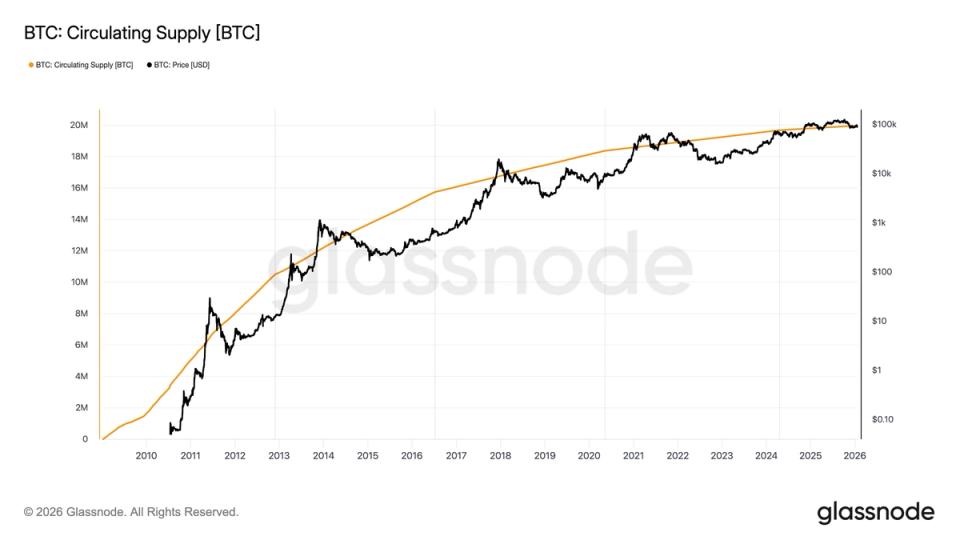
Bitcoin is on the verge of reaching a major symbolic milestone with the issuance of its 20 millionth coin.
According to the Clark Moody Dashboard, 19,996,979 BTC have been mined, leaving only about 3,000 BTC to go before the 20 millionth bitcoin is reached, about seven days away at current issuance rates. Once this threshold is crossed, more than 95% of the fixed supply of 21 million will be in circulation, with only 1 million coins remaining to be mined over the next century.
Satoshi Nakamoto hard-coded the 21 million limit into bitcoin’s protocol to create a form of money with absolute scarcity, in stark contrast to fiat currencies expandable by central banks. Although Satoshi never fully explained the specific number, the fixed limit established credibility around predictable supply. For bitcoin maximalists, the cap is fundamental. Any proposal to change it is considered to undermine Bitcoin’s core value proposition as “hard money”.
Bitcoin’s scarcity is often compared to gold or oil. But while commodity supply can respond to higher prices through increased production or new discoveries, bitcoin’s issuance cannot accelerate. Its supply curve is transparent and immutable.
Issuance is slowed through halvings, which reduce miners’ rewards roughly every four years, pushing inflation below 1%, with around 450 BTC mined daily. At this rate, 99% of the supply will be mined by January 2035. The final full bitcoin is expected around 2105, with fractional issuance continuing until around 2140.
After that, miners will rely entirely on transaction fees. For supporters, the 20 million bitcoin milestone reinforces the scarcity narrative as new supply dwindles. While for miners, it underscores the long-term shift towards a fee-driven revenue model that will ultimately determine the security and economics of the network.


