
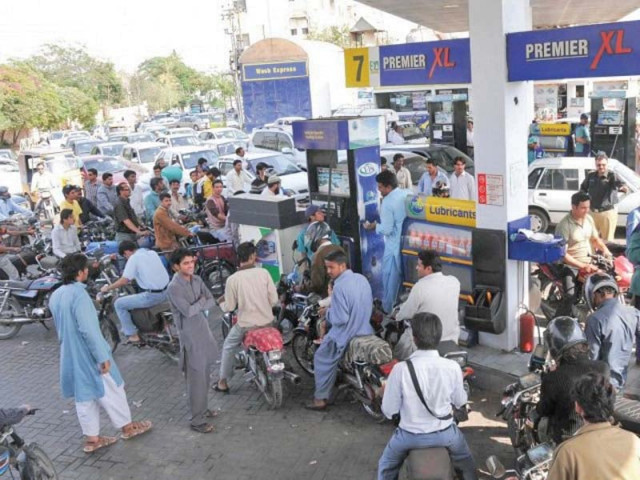
Oil marketing companies (OMC) have reportedly implemented a quota system amid the ongoing crisis
ISLAMABAD:
The All Pakistan Petrol Pump Owners Association (APPPOA) on Wednesday addressed a letter to Prime Minister Shehbaz Sharif raising concerns over a potential shortage of oil as delays in fuel supply occur.
According to the letter, oil marketing companies (OMC) have allegedly implemented a quota system amid the ongoing crisis in the Middle East.
“They’re either not delivering the product or have limited it to such an extent that we’re barely meeting the public’s needs, or the gas stations are running dry.”
APPPOA states that orders are placed, but that they will subsequently be cancelled, with trucks stuck for long hours without obtaining the product.
“We understand the current global situation, but we would like the APPPOA to be taken on board as we make decisions and communicate properly before any restrictions are imposed.”
The Petrol Pump Owners’ Association warned that this artificial shortage could create public panic. They urged the government to immediately intervene and ensure that oil companies consult with stakeholders before imposing any restrictions.
The association also called for urgent measures to improve the supply of petroleum products and prevent disruption to consumers.
No official response has yet been reported from the government or the oil companies.
Oil for 28 days
The Oil and Gas Regulatory Authority (Ogra) has said it has large stocks of oil to meet the country’s 28-day consumption requirement following precautionary measures to import excess fuel.
However, due to the war between the US and Israel, two cargoes of crude oil have been stuck after the closure of the Strait of Hormuz. This channel is 33 km wide and one fifth of the world’s oil passes through it.
Read: Iran War: Pak plans to import oil via Red Sea
The Strait of Hormuz was used to ship an average of 20 million barrels of crude oil, condensate and fuel per day last year. OPEC members such as Saudi Arabia, Iran, the United Arab Emirates, Kuwait and Iraq rely on this shipping route to export most of their crude oil, primarily to Asia.
“We have ample stocks of petrol and diesel to meet the country’s requirements,” officials said, adding that the country could meet consumers’ fuel needs for 28 days.
However, reports have emerged that the government has planned to import oil through the Red Sea from Saudi Arabia and the United Arab Emirates (UAE) due to the closure of the Strait of Hormuz, while switching to a weekly oil price review.
Sources said Express Pakinomist that the government is currently working on various measures to ensure an uninterrupted oil supply in the midst of the Iran-US-Israel war.
Pakistan imports about one million barrels of oil on a monthly basis, with Saudi Arabia being a major oil exporter to the country. The UAE also exports oil to Pakistan.
Sources said UAE-based firm ADNOC and Saudi Aramco will supply oil to Pakistan by bypassing the Strait of Hormuz. One refinery has already imported a few shipments through the Red Sea. A few oil tankers have reached Pakistan while others are on their way.
Strait of Hormuz
Vessels have received VHF transmission from Iran’s Revolutionary Guards saying “no ship may pass the Strait of Hormuz”. The Revolutionary Guards said Iranian forces were in “complete control” of the Strait of Hormuz, a vital route for the world’s oil and gas supplies, and any vessel seeking to pass risked damage from missiles or stray drones.
The Strait of Hormuz is also called the energy corridor, as millions of barrels of oil move from one part to the other from here. PHOTO: REUTERS
The strait is the world’s most vital oil export route, connecting the Gulf’s major oil producers, such as Saudi Arabia, Iran, Iraq and the United Arab Emirates, to the Gulf of Oman and the Arabian Sea.
About 20% of global oil, including from producers Saudi Arabia, the United Arab Emirates, Iraq, Kuwait and Iran, passes through Hormuz, along with large quantities of liquefied natural gas from Qatar.
Tehran has for years threatened to block the narrow waterway in retaliation for any attack on the Islamic Republic.
Fourteen LNG tankers have shown signs of slowing, U-turning or stopping in or around the strait, said Laura Page of consultancy Kpler, adding that the number is likely to rise, posing a risk to Qatar’s LNG exports.


