
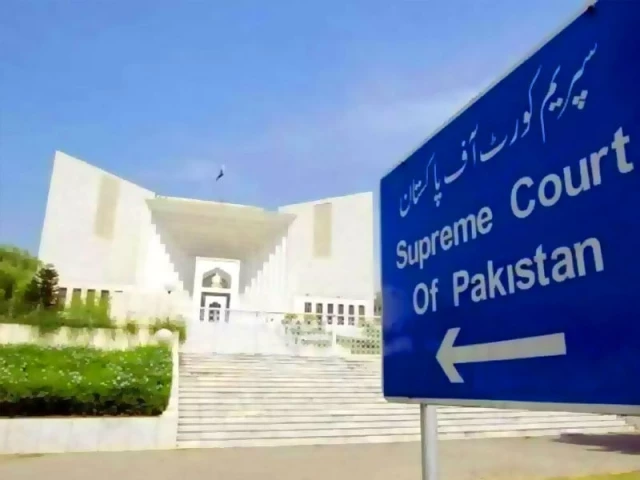
Legal experts have expressed concern over the recent amendment to the National Accountability Ordinance (NAO), which establishes a Federal Constitutional Court (FCC) as a second appellate forum in NAB cases. The FCC was created through the 27th Amendment to the Constitution, under which all judges are appointed by the executive branch exercising its discretion. Earlier, the aggrieved approached the Supreme Court by filing Civil Petition for Leave to Appeal (CPLA) against the Supreme Court’s decisions in NAB cases. However, CPLAs were a form of appeal in criminal cases, especially in cases where convictions were upheld in high courts, says a lawyer. Experts question why the second appellate forum has been assigned to the FCC instead of the Supreme Court, especially when the FCC’s judges are appointed by the government. They also discuss whether the current administration intends to gradually replace the Supreme Court with the FCC. However, it is a fact that the present SC judges, especially the Chief Justice of Pakistan Yahya Afridi, did not make any serious effort to ensure the jurisdiction/powers of the Supreme Court. Advocate Faisal Siddiqi believes that the so-called second appeal is another silent and gradual attempt to destroy the Supreme Court’s criminal jurisdiction and control the fate of politicians through NAB proceedings.
"I am amazed at the tragic short-sightedness of PPP and PML-N, they will fall prey to this second appeal sooner rather than later," he adds. Former lawyer Muhammad Waqar Rana says granting second appeal in NAB cases is apparently ultra vires of the constitution. "Article 185, subsection 2, states that if the High Court intervenes in an acquittal, the appeal must lie with the SC. It is unprecedented as no second appeal has been granted anywhere in the last 200 years and it also contravenes Article 25 which only provides a statutory right of appeal in some cases," says Rana. Counsel for Abdul Moiz Jaferii says this is a logical progression in the dismantling of the structure of the judiciary first envisaged by the 26th Amendment and cemented by the 27th.
"NAB has been used for the past 25 years to carry out political engineering. No such arrangement would be complete without its engineering being handled by technical tribunals. While the Supreme Court is a shell of what it was and supreme in all but name, it still can’t compete with the completely cherry-picked FCC, which is why all of NAB’s second appeals must go," says Jaferii. Barrister Asad Rahim Khan says no unity regime was possible without ensuring that scores of accountability cases magically disappeared, and no unity regime was possible without Justice Qazi Faez Isa and the divestment of the Supreme Court in favor of the FCC.
"It is fitting that these twin threads should now meet. What began with the decision passed by the Qazi and his like-minded judges approving the person-specific breach of the NAB Act, now ends with the FCC, a court that our ruling parties are infinitely pleased with," says lawyer Asad Rahim Khan. However, Hafiz Ehsaan Ahmad Khokhar, defending the amendments to the NAB Act, says the amendments attempt to harmonize NAB proceedings with the principles of the Criminal Procedure Code, 1898, particularly Sections 497, 498 and 499, which empower courts to grant bail.
"By clarifying the powers of accountability courts and the Supreme Court to grant bail in accordance with the general criminal law framework, the amendments aim to strike a balance between effective accountability and the constitutional guarantees of liberty and due process protected under Articles 9 and 10A of the Constitution. Constitutional Court of Pakistan on matters of law. According to Khokhar, this reform is in line with the constitutional structure envisaged under the twenty-seventh constitutional amendment of Pakistan, which provides for a specialized constitutional forum to adjudicate important legal and constitutional issues. Under the constitutional framework – especially Articles 175 and 185 – the interpretation of complex legal issues traditionally rests with the supreme constitutional courts. Giving the Federal Constitutional Court appellate jurisdiction on liability issues would therefore promote uniformity in legal interpretation and strengthen the rule of law"
Khokhar further emphasized that the power to amend accountability laws rests entirely with Parliament, which is constitutionally empowered to legislate in the public interest. The amendments to the National Accountability Bureau Ordinance – particularly those relating to jurisdictional boundaries, bail provisions, appellate review and institutional structure – represent an attempt to modernize Pakistan’s accountability framework while encouraging constructive constitutional debate on transparency, fairness and institutional independence"he adds. Waqas Ahmad, the lawyer, believes that through recent amendments and the FCC’s jurisprudence following the 27th Amendment, the wings of the Supreme Court of Pakistan have been effectively clipped by limiting its power to decide questions of law – the very function that defines an apex court.
"The result is a peculiar situation: a high court, although subordinate, can decide legal questions, yet the Supreme Court faces limitations. From a rent controller or magistrate to the Federal Constitutional Court, direct petitions can be made across the judicial hierarchy, but the Supreme Court stands almost alone as the only forum where a direct petition cannot normally be made"he adds. A PTI lawyer expressed disappointment over the changes in the NAB Act.
"Obviously these are tailored for Imran Khan as his release and bail is ripe and there are no more cases in the pipeline. IHC will reject and cases will be parked in FCC," Imran Khan’s lawyer Salman Safdar said and added that the appeal is never limited.


