- Taliban elements “opted in” with TTP, BLA, Daesh Khorasan.
- Pakistan has lost thousands of lives; 175 were killed last month in attacks.
- Counter-terrorism carried out following Taliban attacks on border posts.
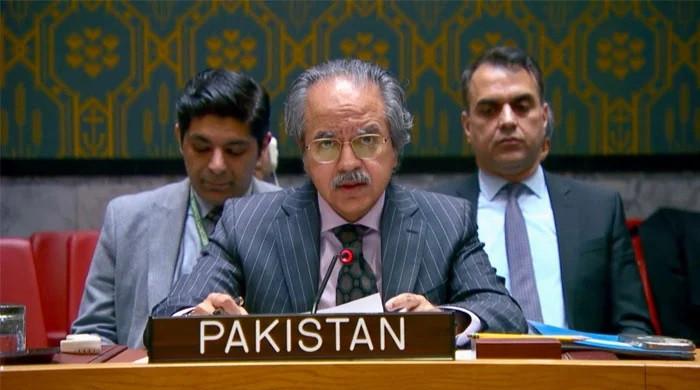
Terrorism emanating from Afghan soil poses a “serious threat not only to its immediate neighbors but also to the wider region and beyond,” Pakistan’s permanent representative to the UN, Ambassador Asim Iftikhar Ahmad, said Monday at a UN Security Council meeting on Afghanistan.
Speaking at the meeting, Ambassador Ahmad highlighted that elements within the Taliban regime have “chosen the path of complicity and active support” to terrorist groups, including Tehreek-e-Taliban Pakistan (TTP), Balochistan Liberation Army (TTP), Majeed Brigade, Daesh Khorasan, Al-Qaeda and Move Turkestan, where they launch a Safe Harbor in Afghanistan (ETIM) cross-border infiltration, violent attacks and suicide bombings.
“As an immediate neighbor, to ensure a peaceful and stable Afghanistan, Pakistan regularly facilitated dialogue and engagement with the Taliban authorities,” the ambassador said, noting that Pakistan had put forward initiatives, assisted with humanitarian relief, offered bilateral trade incentives, liberalized visa regimes and participated in regional platforms to help Afghanistan integrate with the region.
Despite these efforts, Ambassador Ahmad said, “unfortunately, they have failed on all three counts” of the international community’s expectations under the Doha-III process: counter-terrorism, human rights and inclusive governance.
The statement also cited recent attacks originating in Afghanistan. “Pakistan has since witnessed an increase in terrorist attacks, planned, financed and orchestrated from Afghan soil under the Taliban regime’s direct watch. We have lost thousands of lives to terror-related incidents since the Taliban came to power, and last month alone more than 175 innocent Pakistani lives were lost, including in three suicide attacks,” he said.
Highlighting Pakistan’s defensive actions, the ambassador said: “After exercising maximum restraint, on February 21-22, Pakistan carried out intelligence-based selective targeting of seven terrorist camps and hideouts of TTP and its affiliates and ISIL-K in the bordering regions with precision and accuracy, but in February publicly declared its decision. hostilities against Pakistan across several border locations with unprovoked shelling and shelling of border posts and military installations In exercising its right to self-defense, Pakistan took retaliatory measures against enemy targets and logistical bases used by terrorist groups, based on careful planning with necessary due diligence and exclusively targeting terrorist camps.
Ambassador Ahmad warned that Pakistan will continue defensive measures to protect its citizens, territory and sovereignty. “Our counter-terrorism operations will continue as long as it takes to degrade the terrorist groups’ combat capabilities and support infrastructure,” he said.
He also drew attention to Afghanistan’s domestic situation, noting the suffering of ordinary Afghans under Taliban restrictions. “Ordinary and vulnerable Afghans are suffering under the Taliban’s inhumane restrictions and misplaced priorities. Sanctions, a dysfunctional banking system, drying up of foreign aid, poverty, terrorism, narcotics and human rights abuses weigh heavily on Afghanistan’s socio-economic landscape, a direct result of the Taliban ambassador’s actions,” the Taliban ambassador said.
Addressing the wider international community, he called for continued engagement to stabilize Afghanistan. “Pakistan has consistently advocated sustained engagement with Afghanistan. We look forward to the next steps in the UN-led Doha Process and Action Plan for its mosaic approach, to address Afghanistan’s multifaceted challenges comprehensively, with well-defined goals and a realistic roadmap as the only viable path to lasting peace in Afghanistan. Without reciprocity from the Taliban regime, we fear nowhere from Afghanistan,” he said.
Ambassador Ahmad concluded by emphasizing Pakistan’s role and its expectations from the Taliban. “No country wants peace and stability in Afghanistan more than Pakistan. And no country has suffered more from the consequences of decades of conflict and instability in Afghanistan than Pakistan. The Taliban must first and foremost ensure that their territory is not used for terrorism against neighboring countries and take demonstrable steps to deny space to terrorist groups and proxies,” he said.