
Leaders discuss regional developments and emphasize stability, cooperation and continued diplomatic coordination
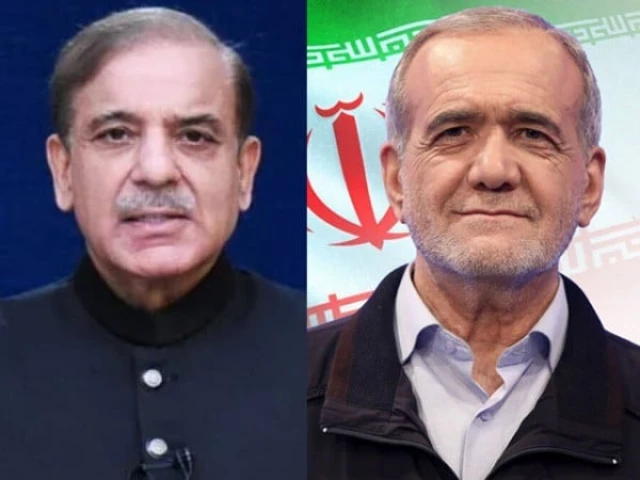
A combination photo of Prime Minister Shehbaz Sharif and Iran’s President Masoud Pezeshkian. PHOTOS: FILE
Prime Minister Shehbaz Sharif and Iranian President Masoud Pezeshkian discussed the prevailing regional situation during a telephone conversation on Wednesday, according to an official state
The discussion focused on recent developments in the region and other issues of mutual interest, with both leaders exchanging views on maintaining stability and cooperation. They also reaffirmed the importance of continued diplomatic engagement and coordination between Pakistan and Iran.
A day earlier, Prime Minister Shehbaz congratulated Iran’s new Supreme Leader Mojtaba Khamenei on his assumption of leadership following the assassination of his father, Ali Khamenei, while expressing condolences over Ali Khamenei’s death.
In his letter, released by the Prime Minister’s Office, Shehbaz expressed hope that the new leader would guide Iran towards “peace, stability, dignity and prosperity” and reaffirmed Pakistan’s commitment to strengthening bilateral cooperation.
President Asif Ali Zardari also extended his good wishes to Mojtaba. The gesture was followed on 11 March by a telephone call between Prime Minister Shehbaz and Mojtaba Khamenei, in which the leaders discussed the prevailing regional situation and reaffirmed the importance of continued diplomatic engagement between Pakistan and Iran.
The war began last month when the United States and Israel launched coordinated attacks on Iran, an attack that killed Iran’s longtime Supreme Leader Ali Khamenei. The escalation quickly turned into a wider regional conflict as Tehran vowed retaliation and began launching missile and drone strikes against Israeli targets and sites linked to US forces across the Middle East.
Read: US-Israel gamble in Iran
On Wednesday, Iran launched new missile and drone strikes targeting Israeli cities and Gulf infrastructure, including a Saudi oil field. Explosions were reported in Doha as air defense systems intercepted Iranian missiles, while Israel responded with heavy strikes across Lebanon, killing at least 16 and wounding dozens in Beirut and southern regions. Iranian forces also targeted Bahrain and Iraqi Kurdistan, both regions with a heavy US military presence.
The conflict has sent global energy markets into turmoil. The International Energy Agency is reportedly preparing its largest-ever release of oil reserves, while G7 countries plan to meet by video conference to address rising fuel costs and economic instability.
Iranian threats effectively closed the Strait of Hormuz, through which a fifth of the world’s oil passes. The US military destroyed 16 Iranian minelaying vessels in the strait, aiming to secure energy shipping lanes and prevent further disruptions.
Civilian life throughout the region remains under extreme strain. In Tehran, residents reported distress over constant bombing, even where ordinary buildings were not targeted.
The Gulf nations, including the United Arab Emirates and Qatar, saw attacks on critical energy infrastructure, forcing the temporary closure of refineries and the suspension of LNG exports, sending global oil prices soaring.
The UN warned that rising fuel and food costs are affecting the world’s most vulnerable populations, with countries such as Egypt reporting up to 30% increases in fuel prices, further compounding economic hardship.


