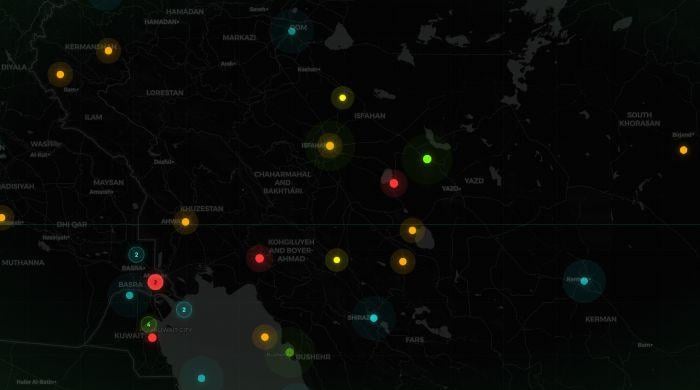
The AI dashboard shows frigates clustered around Cyprus and military aircraft flying towards the Gulf, with a news pin alerting users to unconfirmed reports of a drone attack on Dubai.
At this point on Friday, more than 3,200 people had their eyes glued to “Monitor the Situation,” which tracks everything from the locations of world leaders to internet outages.
It’s one of several free sites that use artificial intelligence to crunch data into interactive world maps that are information-rich but not always reliable.
Interest in these tools has surged since the conflict erupted in the Middle East, along with memes gently mocking the kind of people who seek a movie-like control center experience.
“I think it’s human psychology – they feel like they have God’s vision or something,” said Elie Habib, creator of the AI dashboard “World Monitor”.
This was told by Habib, CEO of the Middle Eastern music streaming platform Anghami AFP “World Monitor” has had 4.4 million visits since he built it in January.
“I just want to understand what’s going on in the world,” said the Dubai-based 53-year-old, who originally envisioned his tool as a “Bloomberg Terminal for geopolitics.”
Despite the war driving a surge in interest, Habib said he hasn’t put ads on the site because he doesn’t want to profit from the conflict.
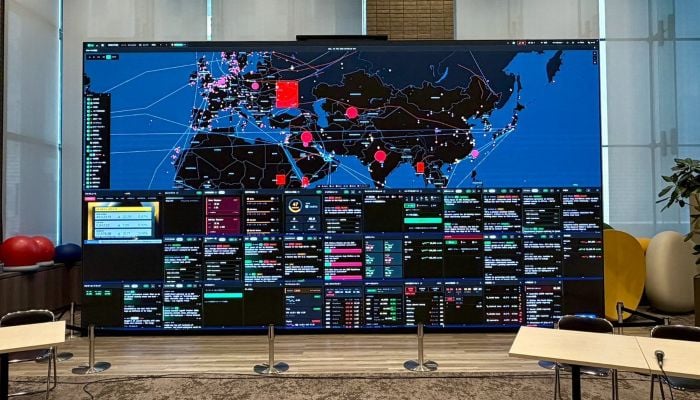
“World Monitor” displays more than 450 data sources on a crowded, customizable screen that includes live webcams from strategic global locations and AI-selected headlines from real news outlets.
Among a constellation of options on their map, users can see where protests, GPS jamming and earthquakes are happening in real time.
Habib said he was “trying to move on to the next step, which is to extract the signals from the noise. Otherwise, to me, it’s just too much noise.”
‘Not just eye candy’
Habib, a trained engineer based in Dubai, used AI to “vibe-code” his website over a weekend – a task he says would have taken at least a year if he had written the computer script by hand.
The inner workings of “World Monitor” are open source, so other programmers have made tweaks and suggestions that Habib has since incorporated.
Sites like “World Monitor” and “Monitor the Situation,” created by an employee of the US venture capital firm Andreessen Horowitz, have many flashy features, but experts said users should not treat all their insights as credible.
“They’re not just eye-candy…but they’re also not truth engines,” Wei Sun, chief analyst for AI at Counterpoint Research, told AFP.
“The hallucination risk is real” when an AI model is tasked with determining the meaning of information or causal relationships, she said.
Despite the risk of false data points, these AI dashboards fulfill “a very modern psychological need,” Sun said.
“In a crisis, people want speed, synthesis and a sense of control when headlines are fragmented and overwhelming.”
Some of the sites have chat rooms where users can interact, noted Sun Sun Lim, professor of communication and technology at Singapore Management University.
It’s “especially engaging during unfolding events,” she said.
“Interest in global events has also been fueled by the rise of prediction markets, where people have placed bets on events” from national elections to whether Iran’s supreme leader would be ousted, Lim said. Live feeds of these bets are sometimes shown on AI dashboards.
So should news wires like AFP or Reuters be concerned that people are turning to such sites for their updates on the global situation?
“They should worry somewhat, but not existentially,” said Counterpoint’s Sun.
“In my opinion, the real disruption comes not from AI dashboards replacing these news wires, but how it pushes them upmarket, towards being the most trusted validators and explainers.”