
The ongoing war in the Middle East has not only disrupted the flow through the Strait of Hormuz, but it has also affected a host of high-profile business events in the region, including major crypto conferences.
TOKEN2049 Dubai, one of the largest crypto conferences in the world, will not take place this year. Organizers said the event, originally scheduled for late April, has been postponed to April 21-22. April 2027 due to ongoing uncertainty in the region.
The conference typically attracts more than 15,000 attendees, including founders, venture investors, developers and stock market managers.
Organizers said concerns about security, international travel and logistics played a central role in the decision. Tickets and registrations remain valid for next year’s event.
And this is just one of the crypto events.
TON Gateway Dubai, another crypto fundraiser, has been cancelled. The event focused on The Open Network ecosystem and was expected to bring developers and partners working on the TON blockchain together in early May. The team behind the event said it scrapped the in-person conference due to increased security risks in the region and that those who bought tickets received full refunds.
The impact has also reached global sports. The Bahrain Grand Prix, scheduled for April 12 and the Saudi Arabian Grand Prix on April 19, are set to be canceled due to security risks associated with the conflict, including nearby military attacks, disrupted airspace and travel complications for teams and staff.
Formula 1 and the FIA are expected to formally confirm the decision during the weekend.
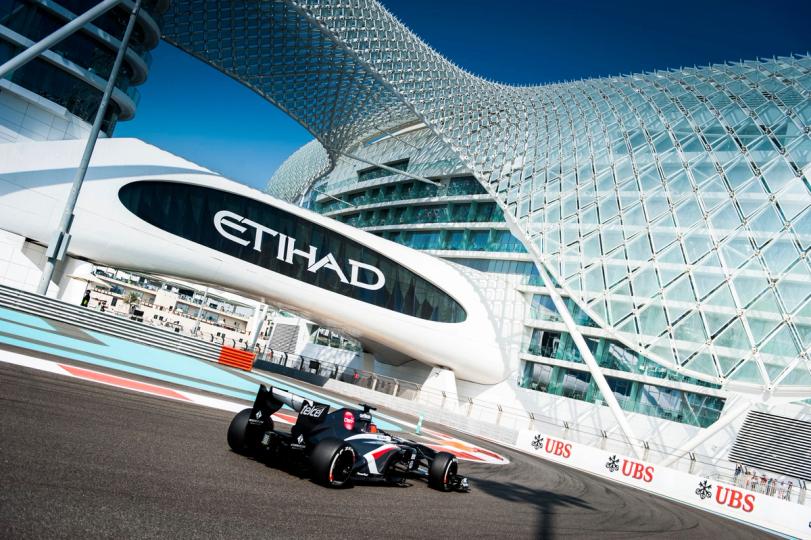
Later Middle East races are still scheduled for now, including the Qatar Grand Prix and the season-ending Abu Dhabi Grand Prix in December. However, the organizers are closely monitoring the regional security situation, as travel and logistics remain uncertain across the Gulf.
The disruptions extend beyond crypto and motorsports. Several major business events in the UAE have also changed dates. Middle East Energy Dubai, a major trade fair that usually draws tens of thousands of attendees, has been moved to September. Affiliate World Global postponed its Dubai edition to 2027, while the Dubai International Boat Show has delayed its next event without announcing new dates.
Some sporting events across the region have also been postponed, including tennis tournaments in the UAE and football matches linked to Asian competitions.
Impact on the crypto industry
The Formula One cancellations have further ramifications for the cryptocurrency industry, which has become one of the sport’s biggest sponsorship categories.
Stock exchanges and blockchain companies have spent tens to hundreds of millions of dollars on F1 partnerships to reach a global audience and target fast-growing markets in the Middle East.
Cryptocurrency exchange OKX, which was recently valued at $25 billion, has been a primary partner of McLaren since 2022. It maintains prominent branding across the team’s cars, drivers’ suits and on-track activations.
Crypto.com acts as a global Formula 1 partner through 2030, while exchanges such as Bybit have previously signed deals worth up to $150 million with top teams such as Red Bull Racing. Kraken, Coinbase and Binance are also sponsors of motorsports that may be affected.
OKX and Crypto.com did not immediately respond to requests for comment.
When a sponsored team reaches the podium, logos are displayed during televised ceremonies, interviews and trophy presentations, moments watched by a global audience of more than a billion viewers each year.
For Dubai-based and regional exchanges, the races in Bahrain and Saudi Arabia were particularly valuable because they connect global broadcasts with a local audience in the Gulf, one of the world’s most active crypto markets.
The hit is heavy due to Dubai’s role in the global crypto industry. Over the past few years, the emirate has positioned itself as one of the world’s most active crypto hubs.
A tax-friendly environment and the creation of the Virtual Assets Regulatory Authority, an independent regulator for the sector, helped attract exchanges, venture funds and startup teams seeking clearer rules than those found in many other jurisdictions.
Companies including Binance have built large operational footprints in the city, making Dubai a central hub for the global Web3 sector.


